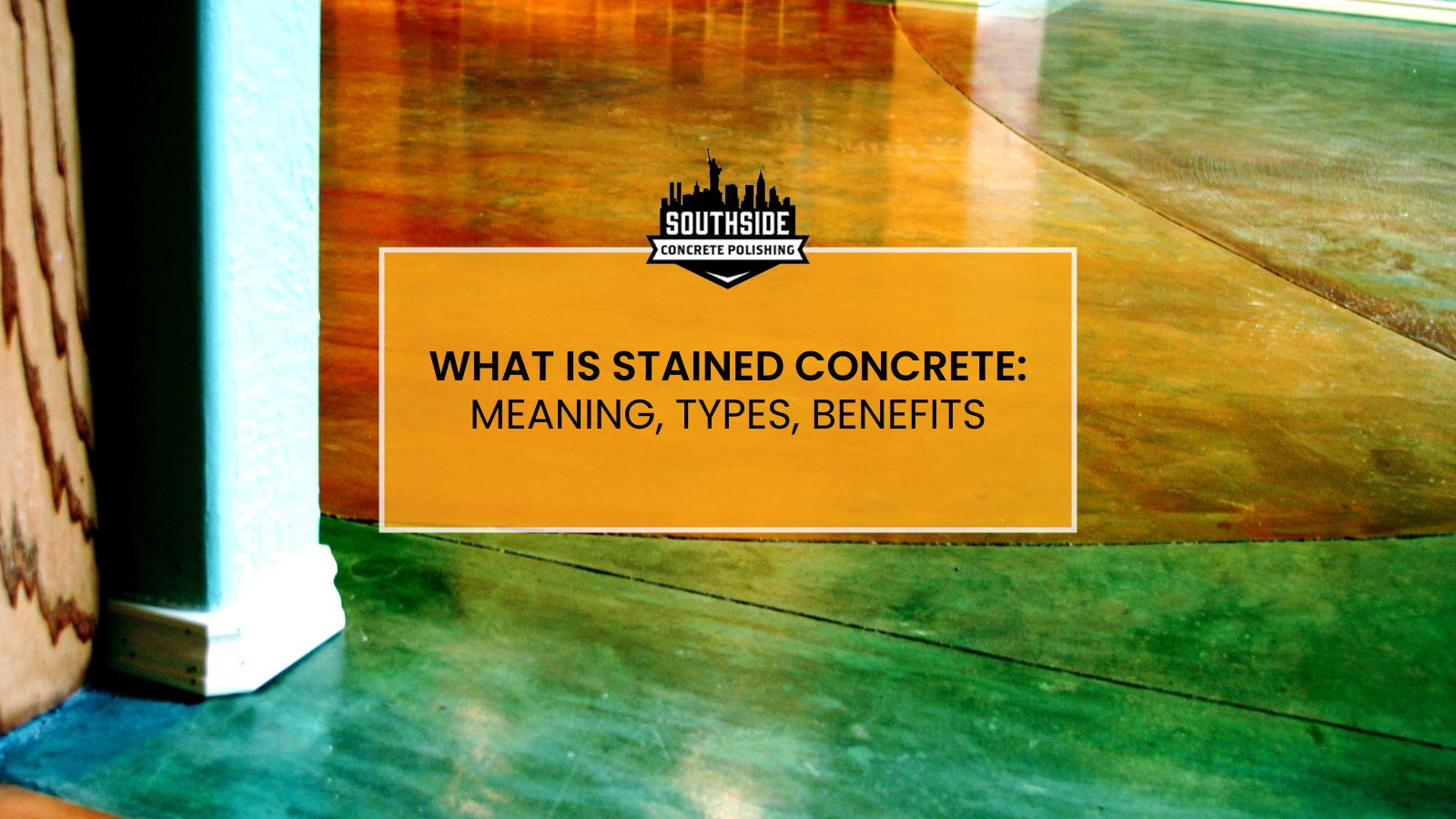
Stained concrete is a decorative technique that adds color and visual appeal to concrete surfaces. It involves applying a semi-transparent stain that penetrates the concrete, creating effects that mimic natural stone, marble, or other textures. In commercial properties across New Jersey, stained concrete has become a popular trend for transforming plain floors into stylish, durable, and professional-looking surfaces. It makes it ideal for offices, retail spaces, and hospitality venues.
The uses of stained concrete include flooring, countertops, and outdoor patios, providing a versatile design option for various commercial settings. The benefits of stained concrete include long-lasting durability, low maintenance, cost-effectiveness, and environmental friendliness. Additionally, it allows for creative designs with acid-based or water-based stains, offering marbled patterns or uniform colors to suit any aesthetic. These attributes make stained concrete a practical and visually appealing choice for modern commercial spaces in New Jersey.
What is Stained Concrete?
Stained concrete is a decorative concrete technique that enhances the appearance of plain surfaces by adding semi-transparent color. Unlike paint, the stain penetrates the concrete, creating rich, translucent tones while preserving the surface's natural texture. It produces a wide range of effects, from subtle earthy hues to vibrant colors, and even mimics the look of natural materials like marble, stone, or wood. This method not only improves aesthetics but also adds depth and character to commercial and residential spaces. With its versatility and durability, stained concrete has become a popular choice for modern flooring and interior design.
Why Do People Choose Stained Concrete?
People choose stained concrete because it combines durability with aesthetic appeal, making it ideal for commercial and high-traffic spaces. It offers a wide range of colors and patterns, allowing designers to create unique, custom looks that mimic natural materials like stone or marble. Stained concrete is also low maintenance, easy to clean, and resistant to wear, which reduces long-term upkeep costs. Additionally, it is a cost-effective and environmentally friendly flooring option, making it a practical choice for businesses in New Jersey and beyond.
What are the Types of Stained Concrete?
The types of stained concrete include several options, each offering unique aesthetics and performance qualities. These variations allow commercial property owners and designers to achieve customized looks while ensuring durability and functionality. Choosing the right type depends on the desired color, pattern, and application environment.
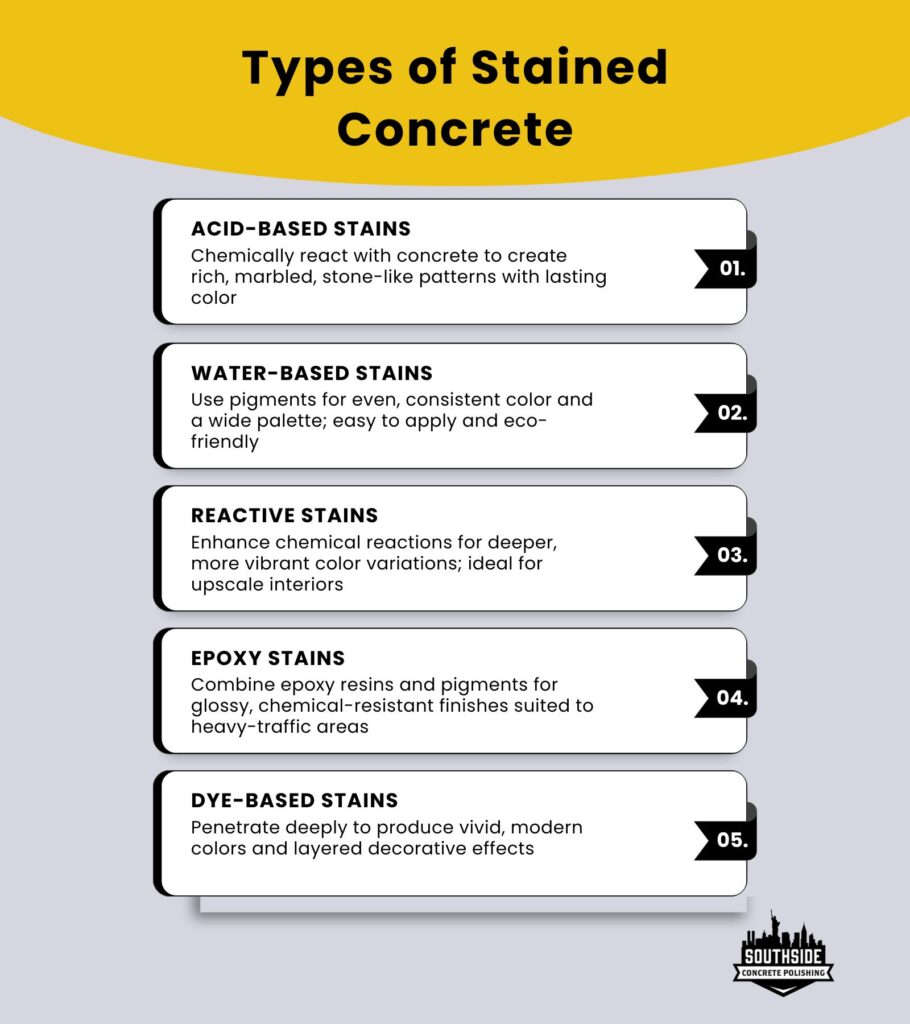
Here are the main types of stained concrete:
Acid-Based Stains:
These stains use a mixture of water, hydrochloric acid, and metallic salts that chemically react with the concrete minerals, producing rich, variegated colors and natural marbled patterns. They are highly durable and ideal for creating sophisticated, stone-like finishes.
Water-Based Stains:
Using pigments rather than chemical reactions, water-based stains provide uniform coloration and a wider color palette. They dry quickly, are environmentally friendly, and are easier to apply, making them suitable for both DIY and commercial projects.
Reactive Stains:
Similar to acid stains but formulated to intensify the chemical reaction, reactive stains produce deeper and more vibrant color variations, perfect for high-end commercial interiors.
Epoxy Stains:
These stains combine epoxy resins with pigments to create highly durable, glossy, and vibrant finishes. They are resistant to chemicals and heavy traffic, making them suitable for industrial and retail spaces.
Dye-Based Stains:
These stains penetrate quickly and produce bright, vivid colors that complement modern commercial designs. They are ideal for creating bold accents or layered effects.
What is the Process of Doing Stained Concrete?
The process of staining concrete includes several careful steps to achieve a durable and visually appealing finish. Proper preparation, precise stain application, and effective sealing are key to ensuring the stained concrete looks professional and lasts for years. This method is widely used in commercial properties for flooring, countertops, and decorative surfaces due to its versatility and long-term performance.
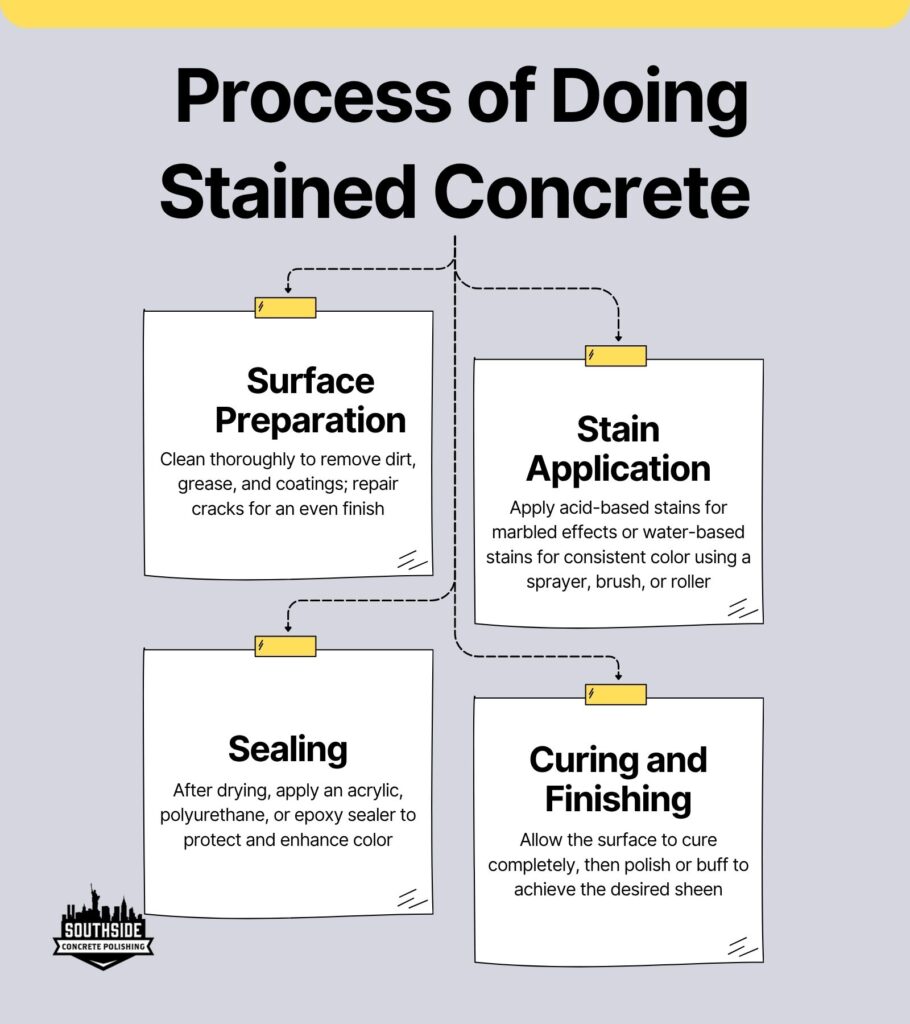
Here is a step-by-step overview of the concrete staining process:
1. Surface Preparation:
The first step involves thoroughly cleaning the concrete to remove dirt, grease, or old coatings. Pressure washing or chemical cleaning ensures a smooth surface, while repairing cracks or imperfections guarantees an even stain application.
2. Stain Application:
The chosen stain is applied using spraying, brushing, or rolling techniques. Acid-based stains react chemically with the concrete to create variegated, marbled effects, while water-based stains provide uniform color with a wide range of hues.
3. Sealing:
Once the stain has dried, a sealant is applied to protect the surface from stains, moisture, and wear. Options include acrylic, polyurethane, or epoxy-based sealers, which also enhance the color depth and overall appearance of the stained concrete.
4. Curing and Finishing:
The sealed surface is allowed to cure fully, ensuring maximum durability and longevity. Additional polishing or buffing is performed to achieve a glossy or matte finish, depending on design preferences.
What are the Benefits of Stained Concrete Floors?
The benefits of stained concrete floors include a combination of aesthetic appeal, durability, and practical functionality, making them an ideal choice for commercial properties, offices, and industrial spaces. These floors provide a long-lasting, stylish, and cost-effective solution that enhances the overall value and look of any facility. With customizable colors and patterns, stained concrete allows businesses to create distinctive and professional environments.
Here are the key benefits of stained concrete floors:
Aesthetic Versatility:
Stained concrete offers limitless design options, from subtle, earthy tones to bold, vibrant shades. It mimics natural materials like marble, stone, or wood, allowing businesses to achieve a high-end look without the high-end costs.
Durability and Longevity:
Resistant to chipping, fading, and heavy foot traffic, stained concrete floors maintain their beauty for years. Proper sealing further protects the surface from wear, UV exposure, and daily use, making it perfect for commercial spaces.
Ease of Maintenance:
Routine sweeping and occasional mopping are usually sufficient to keep the floors clean. Periodic resealing ensures long-term performance with minimal effort, reducing maintenance costs for businesses.
Environmental Friendliness:
Staining repurposes existing concrete, reducing waste. Water-based stains have low VOCs and are eco-friendly, making them a sustainable flooring choice for environmentally conscious commercial properties.
Cost-Effectiveness:
Compared to hardwood, tile, or natural stone, stained concrete offers lower material and installation costs while delivering a premium look, providing excellent return on investment.
Slip and Stain Resistance:
When properly sealed, stained concrete is resistant to spills and stains, making it safer and more practical for high-traffic commercial areas.
Thermal Efficiency:
Concrete retains heat well, which contributes to energy efficiency in commercial buildings by reducing heating and cooling costs.
Custom Branding Opportunities:
Businesses incorporate logos, patterns, or unique designs into stained concrete floors, enhancing brand identity and professional appeal.
What are the Limitations of Staining Concrete?
The limitations of stained concrete include certain practical and aesthetic challenges that property owners must consider before installation. While it offers durability and visual appeal, achieving consistent results and maintaining the surface requires careful planning and professional expertise. Understanding these drawbacks ensures that commercial and residential spaces make the most of this flooring option without unexpected issues.
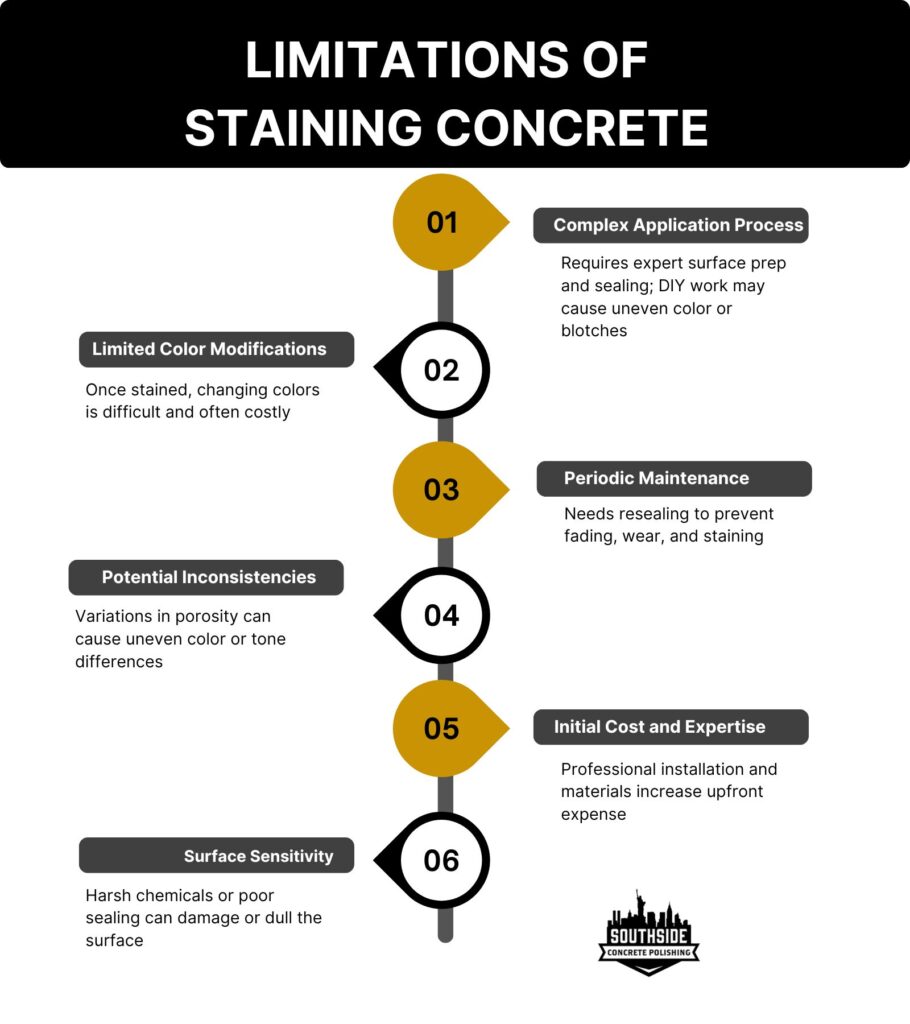
Key limitations of stained concrete include:
-
Complex Application Process: Proper surface preparation, precise application, and correct sealing are vital for a successful finish. DIY attempts without experience lead to uneven coloration, blotches, or an unprofessional appearance.
-
Limited Color Modifications: Once applied, changing the color of stained concrete is difficult. Minor adjustments are possible, but dramatic color changes require extensive preparation or additional coatings, increasing time and cost.
-
Periodic Maintenance Requirements: Although relatively low-maintenance, stained concrete requires periodic resealing to preserve its color and protective qualities. Neglecting this step causes fading, wear, and vulnerability to stains or damage.
-
Potential for Inconsistencies: Variations in concrete porosity or surface conditions result in uneven stain absorption. Large areas or multiple surfaces show color differences without careful professional attention.
-
Initial Cost and Expertise: High-quality staining, especially for commercial spaces, involves higher upfront costs due to professional labor, specialized materials, and intricate designs.
-
Surface Sensitivity: Improper sealing or harsh chemical exposure damages the stained surface, affecting both appearance and longevity.
Can stained concrete be applied to existing surfaces?
Yes, stained concrete can be applied to the existing concrete slab after proper cleaning and preparation. This makes it a cost-effective solution for commercial spaces looking to upgrade their flooring without full replacement. With the right surface preparation and professional application, the stain adheres well and provides a long-lasting, visually appealing finish.
How long does stained concrete last?
Stained concrete lasts for many years, maintaining its appearance and durability when properly maintained and periodically resealed. With the right care, these floors withstand heavy foot traffic, UV exposure, and daily wear. Stained Concrete is a long-lasting and cost-effective flooring solution for commercial and industrial spaces.
Is stained concrete suitable for outdoor use?
Yes, stained concrete is excellent for outdoor use such as patios, driveways, and pool decks. Stained Concrete offers durability and aesthetic appeal in various settings.
Can I change the color of the stained concrete?
No, you cannot easily change the color of stained concrete once it has been applied. While minor adjustments or enhancements are sometimes possible, achieving a significant color change requires extensive surface preparation or the application of additional coatings. This makes it important to carefully select the desired color before staining.
Is concrete staining environmentally friendly?
Yes, concrete staining is environmentally friendly, especially when using water-based stains. These stains have low VOC emissions and a minimal environmental impact, making them a sustainable flooring option. Additionally, staining existing concrete surfaces reduces waste by repurposing materials instead of replacing them.
How can stained concrete help renew an outdoor stained concrete patio?
Stained concrete helps renew an outdoor stained concrete patio by adding vibrant color and enhancing the natural texture of the concrete. Applying a fresh stain or refreshing an existing one effectively renews an outdoor stained concrete patio, giving it a fresh, polished, and long-lasting appearance.
Can concrete engraving be combined with stained concrete?
Yes, concrete engraving can be combined with stained concrete to create custom patterns, textures, or designs. This combination of concrete engraving enhances the visual appeal, allowing homeowners to achieve a decorative, high-end finish on both indoor and outdoor concrete surfaces.