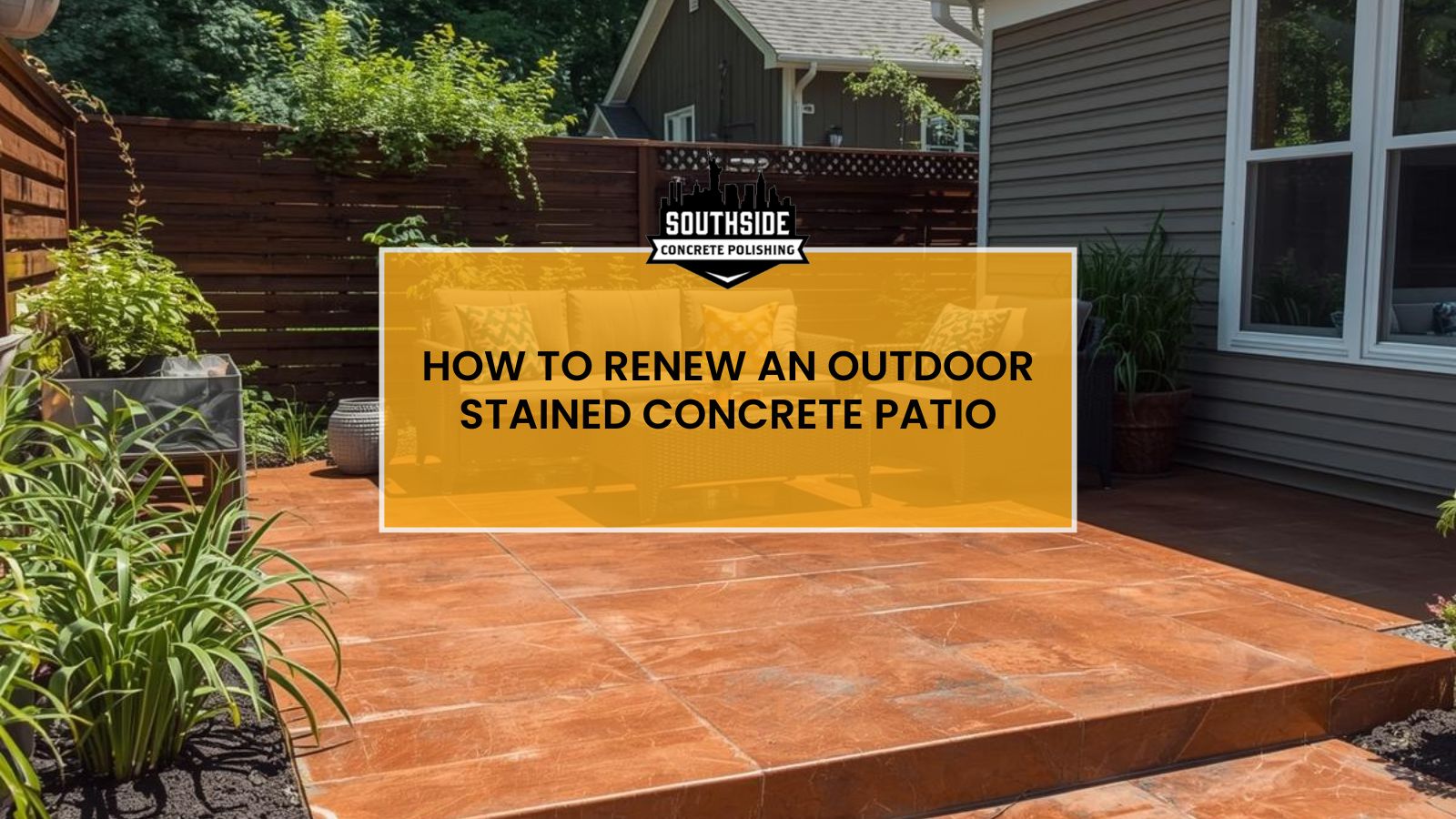
Renewing an outdoor stained concrete patio is an effective way to restore its appearance, protect it from environmental damage, and extend its lifespan. Constant exposure to sunlight, rain, and freeze-thaw cycles causes fading, surface erosion, and color degradation over time. In New York, where annual precipitation averages around 46 inches (NOAA, 2023) and seasonal temperature shifts are frequent, these effects accelerate surface wear.
Proper renewal, through cleaning, restaining, and sealing, restores the patio's color depth and durability, improving its resistance to UV radiation, water penetration, and abrasion. When done correctly, professional-grade restoration increases the lifespan of outdoor concrete surfaces by up to 40%, maintaining both visual appeal and structural integrity.
Regular maintenance and the use of breathable, UV-stable sealers ensure the finish remains vibrant and slip-resistant, transforming an aging patio into a long-lasting, low-maintenance outdoor feature that complements New York's variable climate conditions.
What Tools and Materials Are Used to Restore an Outdoor Stained Concrete Patio?
The tools and materials used to restore an outdoor stained concrete patio include specialized products for cleaning, staining, and sealing that ensure even application, strong adhesion, and lasting protection. The right equipment provides efficiency, precision, and surface compatibility, especially for large or weathered patios.
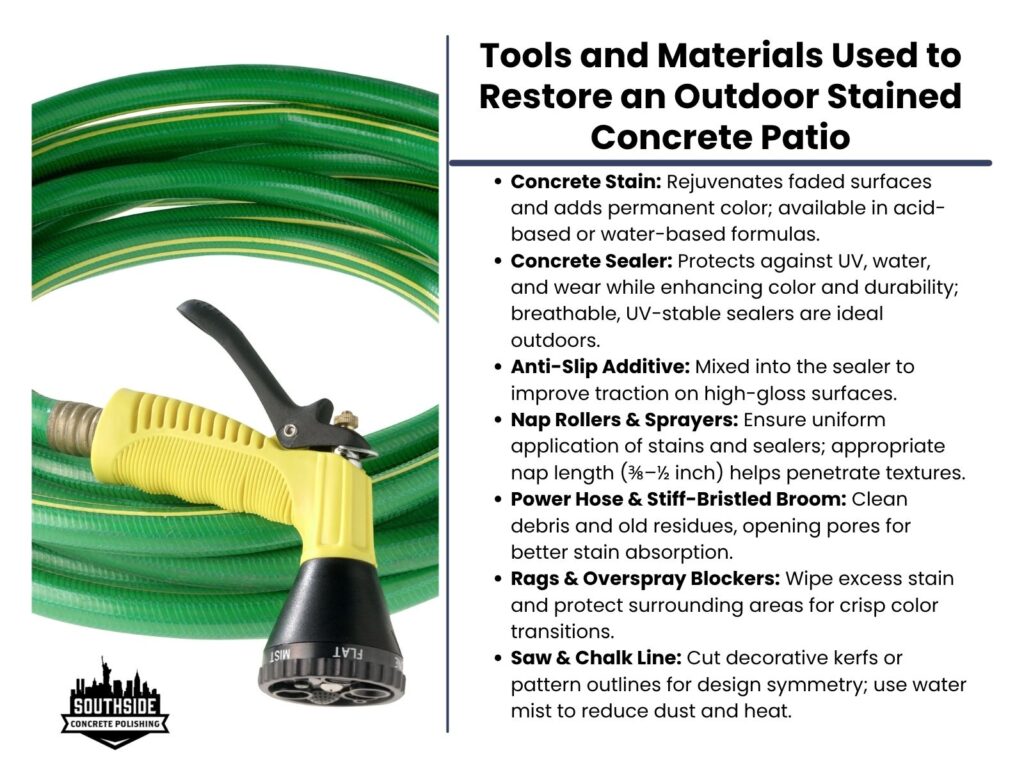
To successfully restore an outdoor stained concrete patio, you need the following tools and materials:
Concrete Stain
Concrete stain is used to rejuvenate faded or discolored concrete surfaces by penetrating the pores and adding permanent color. Stains chemically bond with the concrete, producing natural color variations that resist peeling or flaking. Both acid-based and water-based stains are used depending on the desired opacity and environmental safety considerations.
Concrete Sealer
A concrete sealer is essential to protect the stained surface from UV rays, water infiltration, de-icing salts, and general wear. Sealers enhance color vibrancy while preventing damage caused by freeze-thaw cycles and heavy foot traffic. For outdoor patios, choose a breathable, UV-stable sealer that allows moisture vapor to escape while maintaining surface durability.
Anti-Slip Additive
An anti-slip additive improves traction on sealed concrete surfaces, particularly when high-gloss finishes are applied. This additive is blended into the final sealer coat to reduce slip hazards without compromising visual appeal, ensuring the patio remains safe during wet conditions.
Nap Roller and Sprayers
Nap rollers and sprayers ensure uniform distribution of stains and sealers. Sprayers are ideal for applying even coats over large surfaces, while nap rollers help control film thickness and minimize streaking. Using the right nap length, typically ⅜ to ½ inch, ensures smooth coverage that penetrates surface textures effectively.
Power Hose and Stiff-Bristled Broom
A heavy-duty power hose removes embedded dirt, organic debris, and previous coating residues before restaining. Combined with a stiff-bristled broom, this mechanical cleaning process opens surface pores, ensuring optimal stain absorption and sealer adhesion. Proper cleaning prevents premature failure and uneven coloration.
Rags and Overspray Blockers
Rags are used to wipe away excess stain and blend colors seamlessly, avoiding dark patches or pooling. Overspray blockers, such as cardboard sheets or shields, help control stain boundaries near walls, landscaping, or design sections. These tools ensure crisp pattern edges and professional-looking transitions between colors.
Saw and Chalk Line
A concrete saw and chalk line are used to cut kerfs, narrow grooves that create decorative divisions or pattern outlines. These lines guide color separation and enhance design symmetry across the patio. Using a water mist while cutting minimizes dust and prevents blade overheating, resulting in cleaner lines and safer operation.
Why Should You Cut Kerfs Before Restaining a Concrete Patio?
You should cut kerfs before restaining a concrete patio if you want to create clean, decorative stain patterns or sectioned color variations. Kerfs are narrow cuts made with a concrete saw that help define geometric shapes and prevent random cracking during temperature expansion.
Mark straight lines with chalk as guides and use a straight-edged board to stabilize your saw to cut kerfs properly. Lightly mist the blade with water to reduce dust. This preparation not only adds design structure but also ensures the new stain seeps evenly into each section. Kerf cutting enhances both functionality and aesthetics, especially when combining multiple stain colors for a customized look.
How Should You Prepare a Stained Concrete Patio for Renewal?
Preparing a stained concrete patio for renewal involves cleaning, repairing, and profiling the surface to ensure that new stains and sealers adhere correctly. Surface preparation is the foundation of any successful patio restoration.
Start by pressure washing the entire patio to remove dirt, moss, and grease buildup. For heavily soiled areas, increase the pressure or scrub with a stiff-bristle broom. If residue persists, use a mild concrete cleaner or chemical etching solution, but handle with care and wear protective gear.
Inspect the patio for paint spots, cracks, or flaking sealant. Remove these with a paint stripper or patching compound as needed. Ensure kerfs, if any, are free of debris. After cleaning, allow the surface to dry completely, as moisture prevents stain penetration or causes sealer hazing.
Properly prepared concrete ensures uniform stain absorption and enhances the durability of subsequent seal coats.
How Do You Choose the Right Hue for Outdoor Concrete Stain?
Choosing the right hue for outdoor concrete stain depends on your existing patio color, desired finish, and environmental surroundings. The color choice determines how well your patio blends with landscaping and outdoor décor.
Select eco-friendly water-based stains that are safe for plants, pets, and family members. If you want to match a previous color, reference your earlier stain specifications or test small swatches on hidden areas. For vibrant or artistic finishes, combine complementary colors to create depth and contrast.
Test several stain shades in inconspicuous spots and observe them in natural light. Remember that stains enhance the natural tone of concrete rather than covering it like paint. For outdoor patios, earthy or stone-inspired tones, such as terracotta, walnut, and charcoal, tend to age well and resist visible fading.
How Should You Apply the Renewing Stain on a Dry Patio Surface?
You should apply the renewing stain on a dry patio surface using a controlled, layered approach to ensure even absorption and rich coloration. This process promotes deep penetration, balanced coloration, and a durable, visually dynamic finish.
You should apply the renewing stain on a dry patio surface in the following steps:
-
Confirm dryness: Make sure the patio is completely dry, typically 2--3 hours after washing, to prevent the stain from repelling or diluting.
-
Prepare the stain: Pour the stain into a pump sprayer.
-
Apply evenly: Spray in steady, circular motions, keeping a consistent distance from the surface.
-
Control excess: Use clean rags to absorb puddles or heavy spots.
-
Layer for depth: Apply multiple light coats rather than one thick layer to achieve uniform color.
-
Add effects: For a marbleized finish, spray a secondary color while the first coat is still wet and blend using water.
-
Final check: After drying, inspect for bare or uneven areas and touch up as needed.
Why Do You Apply Concrete Sealer After Staining?
Applying concrete sealer after staining protects your patio from UV rays, moisture, and abrasion while enhancing its color depth and gloss. The step also determines the final texture and durability of the restored surface.
Before sealing, test the concrete's porosity by dropping a few drops of water. If it absorbs within seconds, the surface is ready for sealing. Apply the first coat of transparent high-gloss or matte sealer using a long-handled nap roller. Work in consistent strokes to avoid roller marks. For best results, apply during cooler hours, early morning or evening, to prevent rapid evaporation.
Once the first coat dries (usually within 6--12 hours), mix the second layer with an anti-slip additive and roll it evenly across the surface. This final coat enhances traction and water resistance while preserving color clarity. Allow the sealed surface to cure for 24--48 hours before foot traffic, and up to 72 hours before placing furniture.
What Are Common Mistakes to Avoid When Renewing a Concrete Patio?
The most common mistakes when renewing a concrete patio include applying stain to damp surfaces, skipping surface cleaning, and overusing sealer. These errors compromise adhesion and cause patchy or uneven finishes.
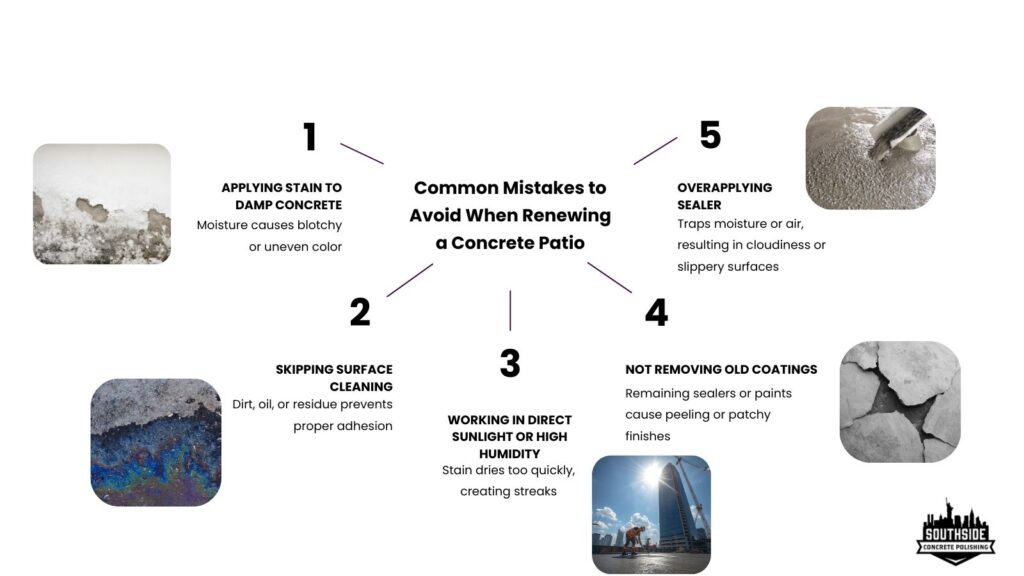
The most common mistakes when renewing a concrete patio are as follows:
-
Applying stain to a damp surface: Moisture prevents proper penetration and causes blotchy or uneven coloration.
-
Skipping thorough surface cleaning: Dirt, oil, or residue interferes with stain adhesion and reduces finish longevity.
-
Working under direct sunlight or high humidity: These conditions make the stain dry too fast, leading to streaks or an inconsistent tone.
-
Failing to remove old coatings completely: Remaining sealers or paints block the new stain from bonding, resulting in peeling or patching.
-
Overusing sealer: Excessive sealer traps air bubbles and moisture, producing cloudy areas or slippery surfaces.
How Long Should You Wait Before Using a Newly Restored Concrete Patio?
You should wait at least 48 hours before walking on a newly restored patio and 72 hours before placing heavy furniture or planters. The curing time allows stains and sealers to bond fully with the concrete, ensuring maximum durability and slip resistance.
Avoid cleaning the patio with detergents or pressure washers for at least 30 days post-sealing to prevent premature wear. This curing period helps sealers harden and achieve their full protective properties against UV radiation, moisture, and foot abrasion.
What Are the Long-Term Maintenance Steps for a Renewed Stained Patio?
Long-term maintenance of a renewed stained patio focuses on cleaning, resealing, and preventing damage from environmental exposure. Regular maintenance ensures the surface retains its color, vibrancy, and protective coating.
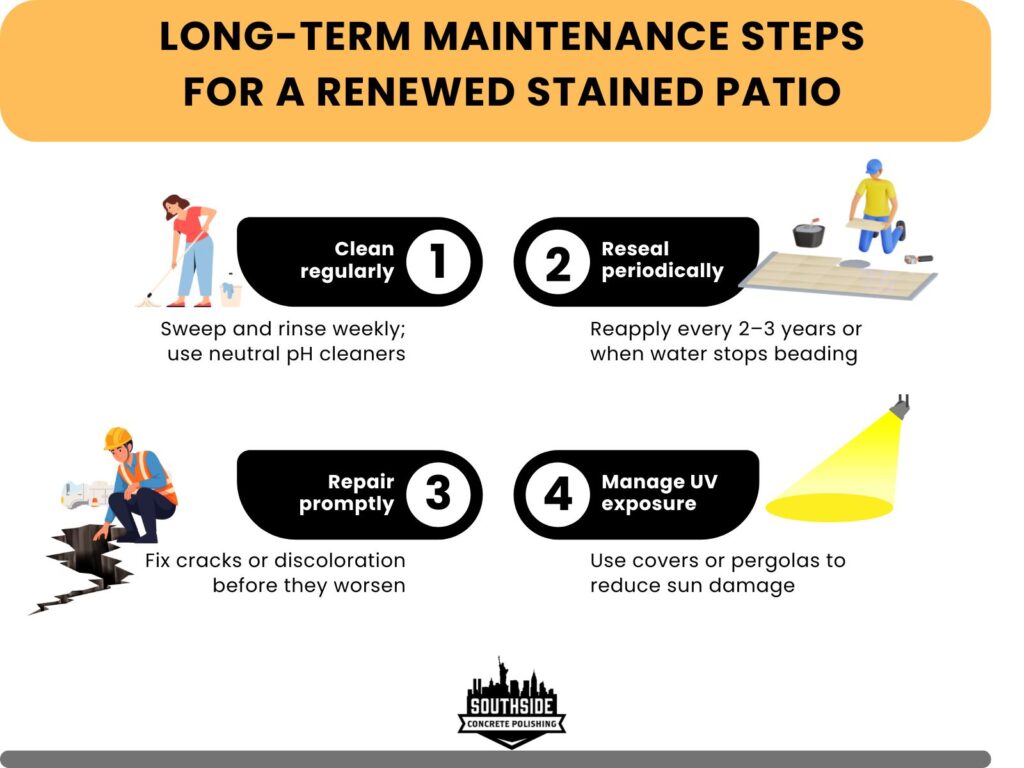
Essential maintenance steps for a renewed stained patio include:
-
Cleaning: Sweep and rinse weekly to remove dirt and organic debris. Use neutral pH cleaners to avoid dulling the sealer.
-
Resealing: Reapply sealer every 2--3 years or when water no longer beads on the surface.
-
Repairing: Address minor cracks or discoloration immediately before they spread.
-
Shade management: Protect from excessive UV exposure with patio covers or pergolas.
Can I DIY a Renewal for Stained Concrete Patio?
Yes, you can renew a stained concrete patio yourself for small touch-ups, but hiring a professional ensures uniform color blending, proper curing, and longer-lasting results. Professionals use industrial-grade sprayers, moisture meters, and UV-stable sealants that outperform retail-grade products.
DIY renewal is suitable for simple single-color restaining projects, while professional services are recommended for multi-color designs, pattern integration, or structural repairs. Partnering with a qualified contractor guarantees safe chemical handling and expert finishing, reducing long-term maintenance costs.
How Does Patio Renewal Improve Property Value and Longevity?
Renewing an outdoor stained concrete patio enhances property value and longevity by restoring curb appeal, structural durability, and weather protection. A newly stained and sealed patio increases aesthetic harmony with landscaping and outdoor architecture, which raises home resale value by 5--10%, according to the report by Zillow, 2024.
A well-renewed patio also prevents moisture infiltration and cracking, reducing repair frequency and preserving concrete strength for decades. Over time, consistent maintenance and timely resealing turn a simple patio upgrade into a sustainable, cost-effective investment for homeowners seeking both beauty and durability.
Can I use epoxy coating instead of stain when renewing my concrete patio?
Yes, epoxy coatings can be used as an alternative to stains, especially when you need a stronger, more protective finish. Epoxy forms a thick, glossy surface layer that resists water, abrasion, and UV damage better than traditional stains.
However, for outdoor patios, you should choose UV-stable or polyaspartic epoxy systems to prevent yellowing and peeling caused by sunlight exposure. Stains are better for maintaining a natural, breathable concrete appearance, while epoxy coating is ideal for achieving a high-sheen, durable surface.
Do I need to waterproof my concrete patio after staining or coating?
Yes, you need to waterproof your concrete patio after staining or coating. Applying a concrete waterproofing sealer after staining or epoxy application helps protect against moisture intrusion, freeze-thaw cracking, and efflorescence.
Waterproof sealers penetrate the concrete and create a moisture barrier, extending the life of both the stain and the substrate. This step is especially important in humid or high-rainfall areas like New York, where water exposure quickly degrades unsealed concrete surfaces.