Concrete engraving is a transformative process that elevates plain concrete surfaces into stunning works of art. It transforms dull concrete into an attractive, customized surface without the need for overlays or replacement. The technique uses specialized tools to carve directly into cured concrete, combined with staining or coloring for a more striking effect. In New Jersey, concrete engraving is gaining popularity in both residential and commercial spaces due to its ability to mimic high-end materials like stone, tile, or brick at a fraction of the cost.
The uses of concrete engraving include enhancing patios, driveways, walkways, pool decks, and commercial floors. The benefits of concrete engraving include improved aesthetics, long-lasting durability, and low maintenance. It's also a cost-efficient solution that rejuvenates existing concrete while offering endless design possibilities for modern architectural trends.
What is Concrete Engraving?
Concrete engraving is a decorative technique used to remodel existing, cured concrete by etching or cutting patterns, textures, and designs directly into its surface. It employs precision tools and equipment to create detailed graphics that mimic materials like stone, brick, or tile. This process transforms plain concrete into an artistic, visually appealing surface without adding overlays or coatings. Concrete engraving not only enhances the aesthetic quality of floors and pavements but also increases their uniqueness and character. It is a durable and cost-effective solution for upgrading both residential and commercial concrete spaces.
What are the Methods for Concrete Engraving?
The methods for concrete engraving include several advanced techniques designed to enhance the appearance of existing concrete surfaces in commercial and industrial spaces. Each method varies in precision, scale, and application, allowing property owners to achieve anything from intricate designs to uniform patterns across large areas. These engraving techniques ensure lasting results that combine functionality with aesthetic value, ideal for offices, retail stores, warehouses, and showrooms.
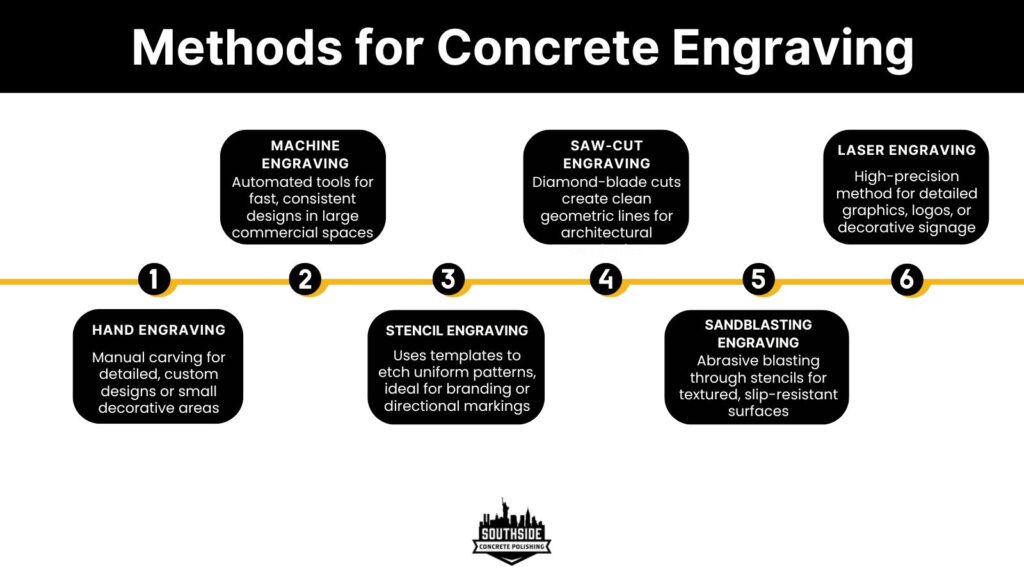
Here are the most common methods for concrete engraving:
-
Hand Engraving: This manual method uses handheld tools to carve designs directly into the surface. It's best suited for detailed custom work, logos, or small decorative areas that require artistic precision.
-
Machine Engraving: Specialized engraving machines automate the process for faster, more accurate results. This technique is ideal for large commercial spaces that need consistent designs and efficient project completion.
-
Stencil Engraving: Pre-cut stencils or templates are placed on the concrete, and the design is etched using engraving tools. It delivers uniform, professional patterns, perfect for branding, borders, and directional markings in commercial environments.
-
Saw-Cut Engraving: A diamond-blade saw is used to cut clean, geometric lines or shapes into the concrete. This method is commonly applied in showrooms, lobbies, and outdoor walkways for a polished, architectural look.
-
Sandblasting Engraving: Involves blasting the surface with abrasive materials through a stencil to etch designs into the concrete. It's an excellent choice for textured, slip-resistant surfaces like commercial patios or entryways.
-
Laser Engraving (Advanced Option): For high-end or precision applications, laser engraving technology creates detailed graphics or logos on polished concrete floors. It is ideal for corporate branding or decorative signage.
What Are the Uses of Concrete Engraving?
The uses of concrete engraving include a wide range of commercial and outdoor applications that combine visual appeal with long-term durability. From driveways and walkways to retail spaces and theme parks, engraved concrete delivers a cost-effective way to enhance existing surfaces without replacement. It's particularly valuable for commercial properties, where branding, aesthetics, and functionality play a vital role in customer experience and space design. Whether used indoors or outdoors, concrete engraving adds character, dimension, and professionalism to any environment.
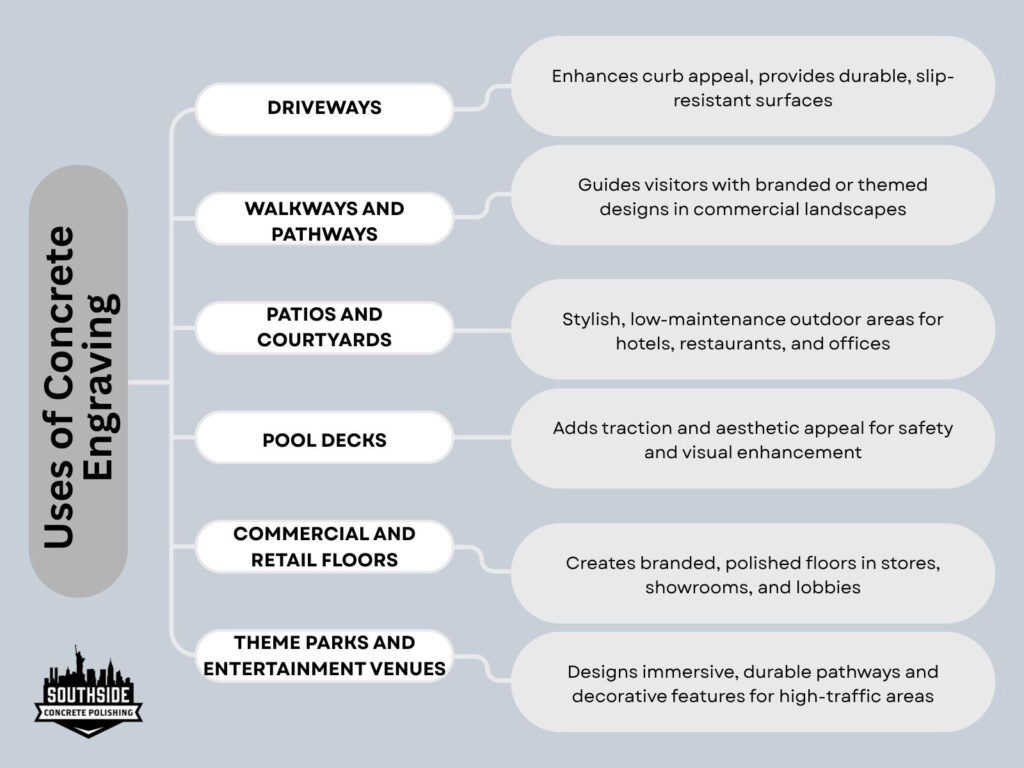
Here are some of the most common applications of concrete engraving:
1. Driveways
Engraved driveways boost the curb appeal of commercial buildings, hotels, or residential complexes. The etched designs not only enhance aesthetics but also provide a durable, slip-resistant surface that withstands weather and heavy vehicle use.
2. Walkways and Pathways
In commercial landscapes, engraved walkways guide visitors with elegance and structure. The customized patterns align with a company's branding or architectural theme, creating a cohesive outdoor layout.
3. Patios and Courtyards
For restaurants, hotels, or office courtyards, engraved patios provide a stylish outdoor seating or relaxation area. They replicate the look of natural stone or tile while remaining low-maintenance and weather-resistant.
4. Pool Decks
Engraved concrete around pools adds texture for better traction and safety while enhancing visual appeal. It's ideal for resorts, recreational centers, or wellness facilities seeking both beauty and practicality.
5. Commercial and Retail Floors
Engraved floors in retail stores, showrooms, and office lobbies create a polished, branded appearance. Logos, patterns, and borders are permanently etched to reinforce brand identity and elevate the customer experience.
6. Theme Parks and Entertainment Venues
In theme parks and outdoor attractions, concrete engraving is used to design immersive pathways, directional markings, or decorative features. It withstands high traffic and exposure while maintaining vibrant, detailed visuals.
What Is The Process For Concrete Engraving?
The process of concrete engraving includes a series of carefully executed steps designed to transform plain concrete into a durable, visually striking surface. Each stage is critical to ensure precision, longevity, and aesthetic appeal, particularly for commercial properties where high traffic and brand image matter. From preparing the concrete to adding color, engraving patterns, and sealing the surface, the process combines technical skill with creative design. Proper planning and execution guarantee professional results that enhance both interior and exterior spaces.
Here are the essential steps in the concrete engraving process:
1. Surface Preparation:
The concrete surface is thoroughly cleaned to remove dirt, debris, grease, or other contaminants. Any cracks, holes, or imperfections are repaired to ensure a smooth, even surface for engraving.
2. Priming (Optional for Certain Projects):
Depending on the type of stain or sealer, a primer is applied to improve adhesion and ensure even color distribution.
3. Staining or Coloring:
Concrete stain is applied to add depth, tone, and richness to the surface. Stains penetrate the concrete to enhance engraved patterns and create a more dynamic visual effect.
4. Engraving:
Using specialized tools with diamond-tipped bits or blades, the desired designs or patterns are carved directly into the concrete. This step requires precision to achieve crisp, clean lines and detailed graphics.
5. Etching (Optional for Texture):
Acid or mechanical etching is applied to add subtle texture or contrast, enhancing the visual depth of the engraved design.
6. Sealing:
A high-quality sealer is applied to protect the engraved surface from wear, stains, moisture, and environmental damage, while also enhancing the color and overall finish.
7. Curing and Finishing:
After sealing, the surface is allowed to cure fully. Any touch-ups are made, and final cleaning ensures the concrete looks polished and ready for use.
This structured approach ensures long-lasting, visually appealing results suitable for commercial driveways, lobbies, patios, or retail spaces.
What are the Benefits of Concrete Engraving?
The benefits of concrete engraving include its ability to transform plain concrete into a visually stunning and highly functional surface. It's a popular choice for commercial and industrial spaces where design, durability, and cost efficiency are key priorities. By engraving directly into existing concrete, property owners achieve custom aesthetics without major reconstruction or expensive materials. This method combines lasting performance with low maintenance, making it ideal for high-traffic environments such as offices, retail stores, and public facilities.
Here are the key benefits of concrete engraving:
Enhanced Aesthetics:
Concrete engraving elevates the appearance of any space by adding patterns, textures, and intricate designs. It replicates materials like brick, tile, or stone, giving commercial spaces a sophisticated and professional look.
Long-Lasting Durability:
Since the designs are carved into the concrete rather than applied on top, they remain permanent and resistant to wear, fading, or peeling, ensuring long-term visual appeal even under heavy traffic.
Design Versatility:
Engraving allows for endless design options, from geometric layouts and corporate logos to custom patterns. It's suitable for both interior and exterior surfaces, offering flexibility across various commercial applications.
Cost-Effectiveness:
Compared to replacing or overlaying concrete with new materials, engraving offers a budget-friendly alternative that delivers a premium finish at a fraction of the cost.
Low Maintenance:
Engraved concrete requires minimal upkeep. The routine cleaning and occasional resealing are enough to maintain its finish and protect it from stains or moisture damage.
Eco-Friendly Solution:
Since engraving works on existing concrete, it reduces waste and the need for new materials, supporting sustainable construction practices.
Slip Resistance and Safety:
Textured engraving improves surface traction, making it a safer option for areas exposed to moisture, such as pool decks, entryways, and public corridors.
Customization and Branding:
For commercial clients, engraved concrete features custom logos, patterns, or directional markers, creating a lasting brand impression while enhancing functionality.
What Are the Popular Engraved Concrete Designs and Patterns?
The popular engraved concrete designs include a wide variety of patterns and textures that elevate the look of commercial and residential spaces. These designs allow property owners to customize floors, patios, driveways, and walkways with creative and durable options. From intricate geometric patterns to realistic simulations of natural materials, engraved concrete combines functionality with aesthetic appeal, making it ideal for both high-traffic commercial areas and elegant residential settings.
Here are some of the most popular engraved concrete designs and patterns:
-
Geometric Patterns: These include squares, diamonds, hexagons, and other repeating shapes. Geometric designs are widely used in commercial spaces like offices and retail stores for a modern, structured look.
-
Brick and Tile Simulations: Engraving replicates the appearance of traditional brick or tile, offering a cost-effective alternative that mimics classic materials without the maintenance issues.
-
Stone and Slate Patterns: Natural stone textures, such as slate or flagstone, are commonly engraved to give patios, walkways, and pool decks a luxurious, high-end appearance.
-
Custom Logos and Branding: Businesses engrave logos, names, or decorative motifs into floors or entryways, creating a professional and branded environment for clients and visitors.
-
Wood Grain Patterns: Concrete is engraved to mimic the look of wood planks, offering the warmth and charm of wood while maintaining the durability and low maintenance of concrete.
-
Abstract and Artistic Designs: Swirls, floral motifs, and other artistic patterns are ideal for plazas, lobbies, and decorative outdoor areas, adding unique visual interest and character.
-
Border and Inlay Designs: Borders and inlays enhance the edges of patios, driveways, or walkways, creating defined spaces and accentuating overall design themes.
These patterns provide flexibility for commercial projects, allowing spaces to be both functional and visually appealing while remaining cost-effective and low-maintenance.
What Tools Are Needed to Do Concrete Engraving?
The tools needed to do concrete engraving include specialized equipment designed to create precise, durable, and visually appealing patterns on concrete surfaces. The choice of tools depends on the engraving technique, the complexity of the design, and the scale of the project. Proper equipment not only ensures accuracy and efficiency but also helps maintain safety and high-quality results, especially in commercial or high-traffic settings.
Here are the essential tools required for concrete engraving:
-
Engraving Machine: A precision concrete engraver or router is used to carve detailed designs and patterns efficiently. It is ideal for large-scale commercial projects or intricate motifs that require consistency and accuracy.
-
Diamond-Tipped Blades or Bits: These blades or bits cut through concrete cleanly, creating sharp, crisp lines. They are essential for both manual and machine engraving techniques to achieve professional-quality results.
-
Templates and Stencils: Pre-cut templates or stencils guide the engraving process, ensuring uniform patterns, logos, or repetitive designs. They are particularly useful for branding or decorative commercial flooring.
-
Surface Preparation Tools: Tools like pressure washers, concrete grinders, and repair kits are necessary to clean, smooth, and repair the concrete surface before engraving, ensuring the design adheres properly.
-
Protective Gear: Safety glasses, gloves, respirators, and ear protection safeguard workers from dust, debris, and chemical exposure during engraving, making safety a top priority.
-
Concrete Stains and Sealers: While not cutting tools, stains and sealers are essential for adding color, depth, and long-term protection to engraved designs, especially in outdoor or commercial environments.
-
Measuring and Layout Tools: Tape measures, chalk lines, and laser levels help ensure accurate alignment and spacing of patterns for a professional, polished finish.
These tools collectively enable commercial and residential contractors to create durable, attractive, and customized engraved concrete surfaces that withstand heavy traffic and environmental exposure.
Can concrete engraving be done on both horizontal and vertical surfaces?
Yes, concrete engraving can be done on both horizontal and vertical surfaces. While it's commonly used on floors, driveways, and patios, it is also applied to vertical surfaces such as walls, retaining walls, and facades to create unique decorative effects.
Is concrete engraving suitable for high-traffic areas?
Yes, concrete engraving is suitable for high-traffic areas. It is highly durable and withstands heavy foot traffic, making it suitable for high-traffic areas like sidewalks, shopping malls, and commercial floors. Proper sealing and maintenance further enhance its longevity and resilience.
Can intricate designs and detailed graphics be engraved on concrete surfaces?
Yes, intricate designs and detailed graphics can be engraved on concrete surfaces. Using advanced engraving tools, diamond-tipped bits, and precise machinery, even complex patterns and logos is accurately carved into cured concrete. Stencils and templates further enhance precision, allowing both commercial and residential spaces to feature customized, professional-quality designs that are durable and long-lasting.
Will engraved concrete surfaces require resealing over time?
Yes, engraved concrete requires resealing over time to maintain its appearance and durability. Resealing helps protect the surface from stains, moisture, and wear, ensuring the engraved patterns remain vibrant and intact for years.
Can concrete engraving be combined with other decorative concrete services?
Yes, concrete engraving can be combined with other decorative concrete** services,** such as staining, stamping, and scoring, to achieve customized effects.
How can concrete engraving enhance decorative concrete overlays for patios?
Concrete engraving enhances decorative concrete overlays for patios by adding intricate patterns, textures, or designs to decorative concrete overlays for patios, elevating their visual appeal. By combining engraving with overlays, homeowners can achieve custom, high-end finishes that mimic natural stone, brick, or tile while adding depth and character to decorative concrete overlays for patios.
Can concrete engraving be combined with stained concrete?
Yes, concrete engraving can be combined with stained concrete. It works beautifully with stained concrete, allowing you to add detailed patterns or textures while showcasing the rich, vibrant colors of the stain. This combination of concrete engraving with stained concrete creates a custom, high-end look that enhances both indoor and outdoor concrete surfaces.