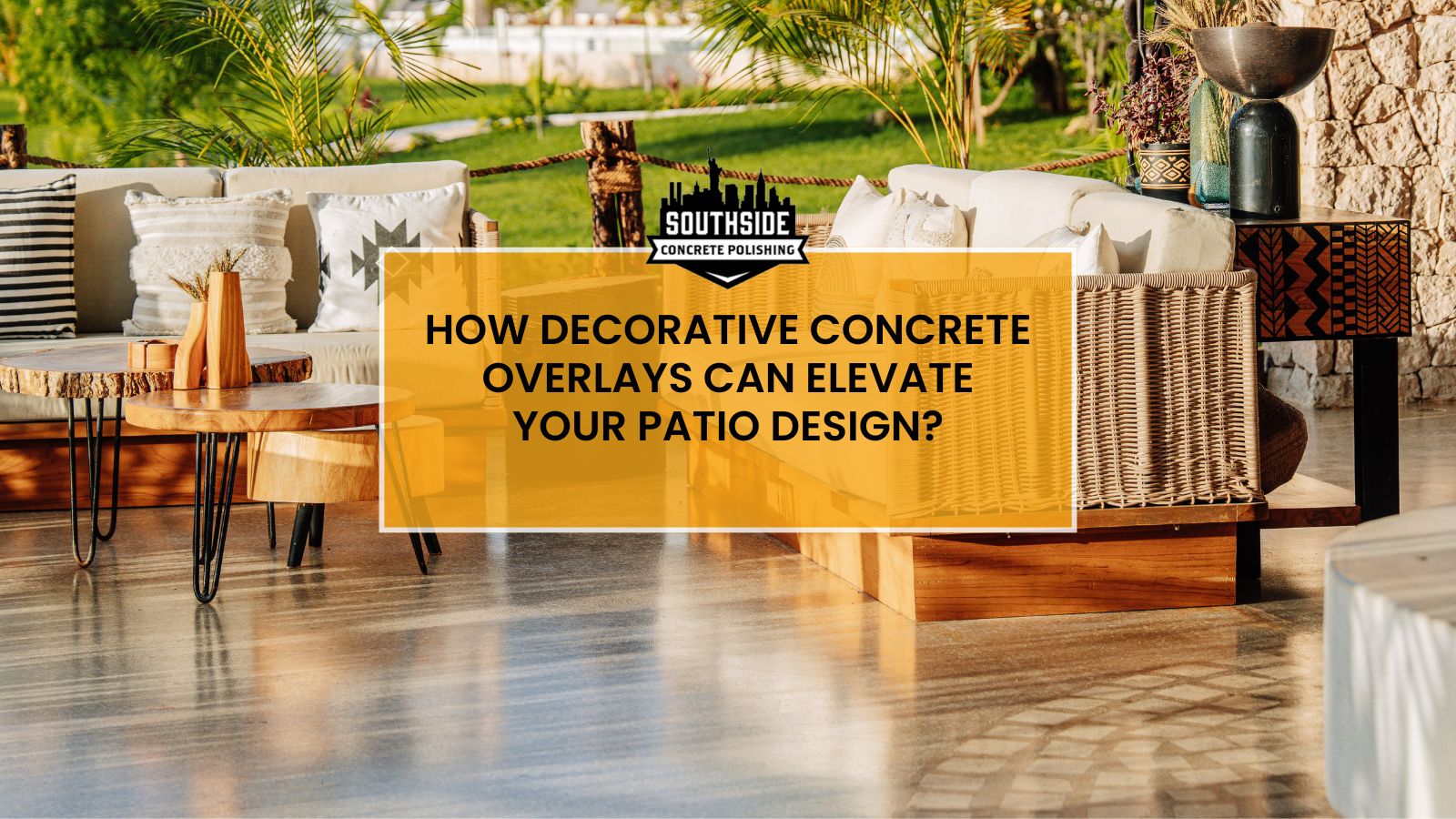
The decorative concrete overlays elevate patio design by offering design versatility, cost efficiency, and surface longevity. These overlays transform dull or worn concrete into elegant, durable outdoor living areas that mimic premium materials like stone, brick, or wood, without the heavy expense. As polymer-modified systems, they bond seamlessly with existing concrete, restoring strength, weather resistance, and aesthetic appeal in one process.
Decorative concrete overlays have become one of the most requested outdoor upgrades in residential landscaping and architectural design. According to the American Concrete Institute (2024), decorative overlays extend the functional lifespan of exterior concrete by 15--25 years while reducing replacement waste by up to 60%.
Concrete overlays align with sustainable home improvement standards prevalent in New York. Whether you want a stamped stone look, a modern minimalist patio, or a stained surface that reflects natural tones, concrete overlays offer the creative flexibility and durability required for year-round use.
What Are Decorative Concrete Overlays?
Decorative concrete overlays are thin, polymer-enhanced resurfacing systems designed to rejuvenate and refinish existing concrete patios without full demolition. Decorative overlays function as both a restorative and design system, combining form and function.
Concrete overlay, between 1/8 and 1/4 inch thick, contains cement, sand, polymers, and bonding agents that improve adhesion, strength, and flexibility. They work by bonding chemically to the old slab, forming a cohesive layer that adds both aesthetic appeal and structural integrity.
Once applied, the surface is textured, stamped, or stained to resemble natural materials like slate, brick, or wood planks. Proper surface preparation is critical. Most contractors use mechanical grinding or shot blasting to remove coatings and ensure a uniform substrate for adhesion.
What Are the Types of Decorative Concrete Overlays for Patios?
The types of decorative concrete overlays for patios include stamped concrete overlays, stained concrete overlays, microtopping overlays, spray-down overlays, and self-leveling overlays. Each type enhances an existing concrete surface in a unique way, offering different aesthetic and functional benefits.
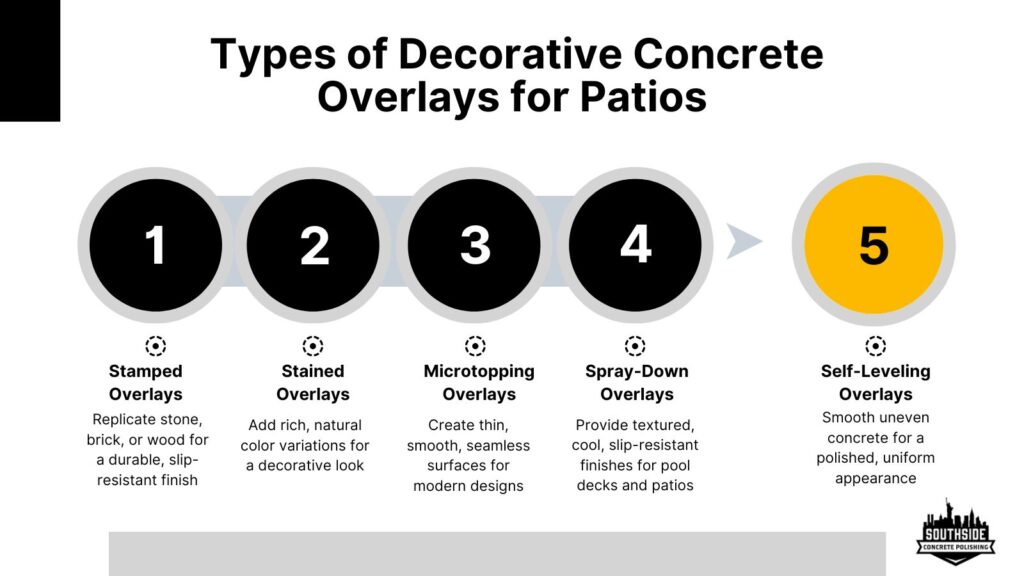
The types of decorative concrete overlays are as follows:
1. Stamped Concrete Overlays
Stamped concrete overlays are polymer-modified mixtures applied over existing concrete surfaces to replicate the appearance of natural materials like stone, slate, brick, or wood. The main purpose of this overlay is to achieve the luxurious aesthetic of high-end paving materials at a much lower cost.
Decorative stamped concreteoverlays combine visual appeal with durability, making them ideal for patios, driveways, pool decks, and walkways. When properly sealed, stamped overlays are resistant to weather, stains, and wear, and are customized in a range of colors and patterns. Their slip-resistant finish also makes them a practical and stylish solution for outdoor environments.
2. Stained Concrete Overlays
Stained concrete overlays transform plain concrete into vibrant, decorative surfaces using chemical or water-based stains. The purpose of this method is to add depth and create translucent color variations that mimic the richness of marble or natural stone.
Acid-based stains chemically react with the concrete to produce earthy, variegated tones like tan, copper, and green, while water-based stains provide a wider, more predictable color palette, including blues, reds, and grays. The stained concrete overlays are well-suited for indoor-outdoor patios, entryways, and open living spaces. The result is a visually rich, low-maintenance finish that elevates the aesthetic appeal of any patio surface.
3. Microtopping Overlays
Microtopping overlays are ultra-thin layers, usually less than 1/8 inch thick, designed to restore or enhance worn concrete without adding significant weight or height. The purpose of microtopping is to rejuvenate surfaces with a sleek, seamless appearance, making it ideal for modern design themes.
Microtopping overlays are commonly used in indoor patios, basements, and commercial environments. It produces a smooth, minimalist finish that is stained or colored to suit various design schemes. Its lightweight composition and fine texture create a clean, durable surface that resists minor abrasions while maintaining an elegant, uniform look.
4. Spray-Down or Knockdown Overlays
Spray-down overlays, also known as knockdown finishes, involve spraying a thin coating of modified cement material onto a concrete surface to create a fine-textured, slip-resistant finish. The purpose of this type is to enhance traction and comfort underfoot, making it ideal for high-traffic or moisture-prone areas such as pool decks, patios, and walkways.
The texture of spray-down or knockdown overlays reflects sunlight, helping keep the surface cool even in hot climates. The result is an easy-to-maintain, durable, and comfortable surface that improves both safety and style in outdoor environments.
5. Self-Leveling Overlays
Self-leveling overlays are advanced resurfacing materials designed to automatically level themselves once poured, producing a smooth, seamless finish. Their primary purpose is to correct uneven or moderately damaged concrete while creating a polished, uniform appearance.
These overlays are ideal for interior patios, commercial showrooms, and residential spaces that require a modern, sleek surface. With high compressive strength and rapid curing time, self-leveling overlays offer both structural reliability and aesthetic refinement. The resulting finish is stained, sealed, or polished for added customization and long-term durability.
What Are the Advantages of Decorative Concrete Overlays for Patios?
The advantages of decorative concrete overlays for patios include long-term durability, design flexibility, and cost efficiency while minimizing environmental impact. Decorative overlays rejuvenate worn patios without full slab replacement, delivering both structural and aesthetic upgrades that withstand heavy use and outdoor exposure.
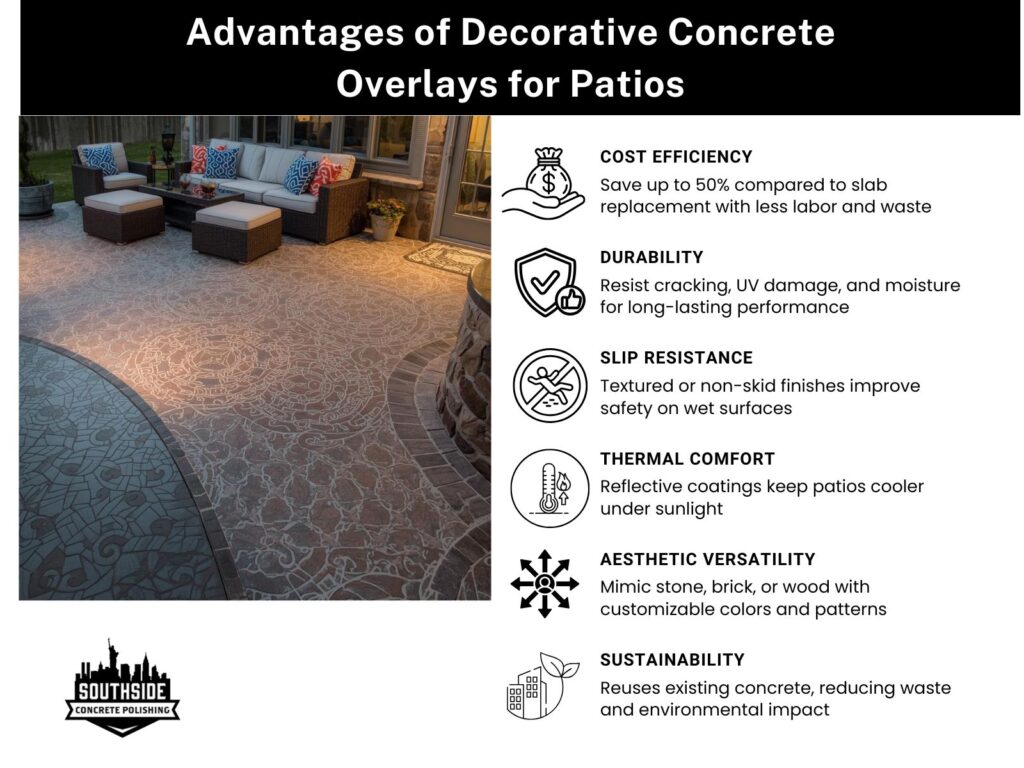
The key advantages of decorative concrete overlays for patios are as follows:
-
Cost efficiency: Installing an overlay instead of replacing the slab reduces overall renovation expenses by up to 50%. The process requires less labor, material, and disposal, making it a sustainable and economical improvement.
-
Durability: High-performance polymer-modified overlays resist cracking, UV damage, and moisture intrusion. When properly sealed, they retain surface integrity and color under continuous foot traffic and fluctuating weather conditions.
-
Slip resistance: Textured finishes or non-skid additives increase traction, ensuring a safe walking surface even when wet, ideal for pool decks or high-traffic patios.
-
Thermal comfort: Light-colored or reflective coatings reduce surface heat absorption, keeping patios cooler under direct sunlight and more comfortable for barefoot use.
-
Aesthetic versatility: Decorative overlays replicate premium materials such as stone, brick, slate, or wood grain. Multiple color pigments and stamping patterns allow seamless blending with landscape and architectural design.
-
Environmental sustainability: By reusing the existing concrete base, overlays reduce waste, conserve natural aggregates, and minimize the carbon footprint associated with demolition and reconstruction.
What Design Options Exist for Decorative Concrete Patio Overlays?
The design options that exist for decorative concrete patio overlays include stamped pattern, stained pattern, and microtopping. Decorative concrete patio overlays come in multiple design systems, each offering different surface effects, textures, and finishes. The customization potential is one of the main reasons homeowners choose overlays for patios and pool decks.
Common decorative systems for patios are as follows:
-
Stamped pattern overlays: Imitate natural materials like slate, flagstone, or wood grain with detailed mold impressions. Ideal for rustic or classic architecture.
-
Stained concrete overlays: Infuse pigment into the surface to create rich, translucent tones that mimic stone or marble.
-
Microtopping and spray textures: Provide a minimalist or modern finish with fine texture control and slip resistance.
-
Custom color blending: Integrates stains, pigments, or aggregates to complement landscaping, furniture, or home exteriors.
How Do Stained Concrete Overlays Enhance Patio Aesthetics?
Stained concrete overlays enhance patio aesthetics by introducing depth, luminosity, and color variation that mimics natural stone or marble. Through chemical or water-based staining, they transform plain concrete into a visually rich surface that complements both contemporary and traditional designs.
Types of concrete stains used to enhance patio aesthetics are as follows:
-
Acid-based stains: React chemically with the concrete surface to create variegated, earth-toned colors like tan, brown, or green. The result is unique for each slab.
-
Water-based stains: Deliver more consistent color control and a broader spectrum, from bold modern tones to soft neutrals.
How Do You Prepare for a Concrete Patio Overlay?
Preparing for a concrete patio overlay involves restoring and conditioning the existing slab to ensure adhesion strength, surface longevity, and consistent appearance retention. Proper preparation determines how effectively the overlay bonds to the substrate and how long it will perform under environmental stress.
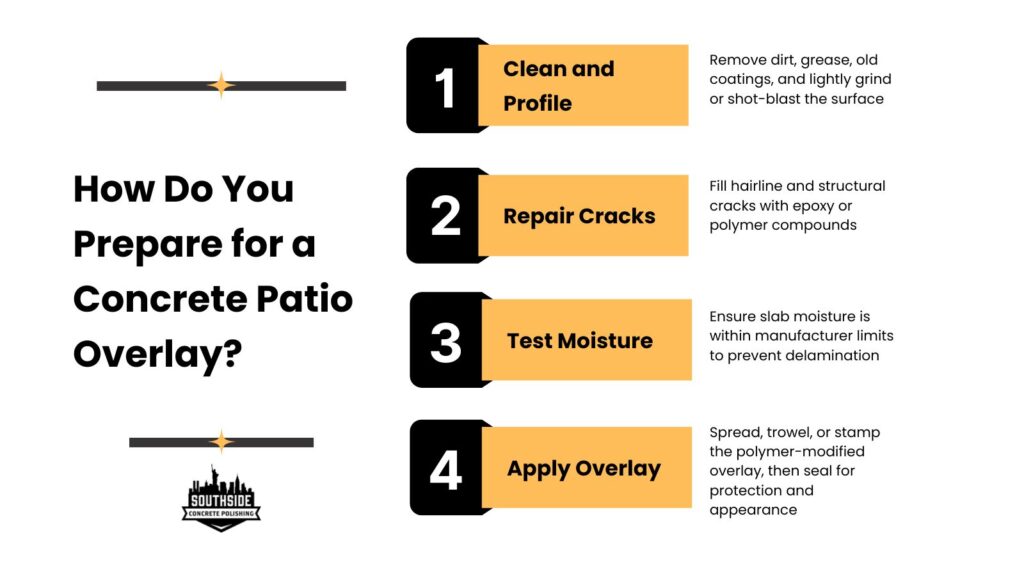
The surface preparation process for concrete overlay for patio includes the following steps:
-
Surface cleaning and profiling: The existing concrete is thoroughly cleaned, degreased, and mechanically ground or shot-blasted to remove old coatings, sealers, or contaminants that hinder adhesion.
-
Crack and defect repair: Structural and hairline cracks are filled with epoxy or polymer repair compounds to stabilize the surface and prevent reflection through the overlay.
-
Moisture testing and conditioning: Before installation, the slab's moisture level is tested to ensure it falls within the manufacturer's acceptable range, reducing the risk of delamination.
-
Overlay application and finishing: The polymer-modified overlay mix is applied, troweled, or stamped according to the desired pattern and texture, then sealed for protection and aesthetic enhancement.
How Do You Maintain a Concrete Patio Overlay?
Maintaining a concrete patio overlay involves consistent cleaning and periodic resealing to preserve its appearance, performance, and resistance to weathering. Regular upkeep prevents surface degradation and extends service life.
The best maintenance practices for a concrete overlay patio include the following:
-
Routine cleaning: Sweep or rinse debris, dirt, and organic matter regularly to prevent abrasion and discoloration.
-
Sealer reapplication: Apply a fresh sealer every 2--3 years to reinforce moisture protection, UV stability, and surface gloss retention.
-
Avoid harsh chemicals: Use only neutral pH cleaners, as acidic or abrasive agents dull the finish or damage the protective coating.
-
Prompt spot treatment: Address oil or food spills immediately to prevent staining and maintain uniform color.
What Is the Difference Between Stamped Concrete and Stamped Concrete Overlays?
The difference between stamped concrete and stamped concrete overlays lies in their depth and application. Stamped concrete is a full-depth poured system where impressions are made into freshly laid concrete before curing, while stamped concrete overlays are applied as a resurfacing layer over existing slabs.
Both stamped concrete and stamped concrete overlays create similar visual textures, such as flagstone, cobblestone, or wood, but overlays are more cost-effective and easier to install.
Stamped overlays use a polymer-modified compound with greater flexibility and bonding power than standard concrete, making them ideal for upgrading patios without removing the underlying structure, which is why understandingStamped Concrete Vs Stamped Overlay is essential for selecting the right solution.
When Stamped Concrete Overlays Outperform Full-depth Pours for Patios?
Stamped concrete overlays outperform full-depth pours for patios when installation efficiency, adhesion strength, and maintenance cost are key priorities. They eliminate the need for excavation or slab removal, allowing the new surface to be applied directly over the existing concrete, which saves both time and labor.
The polymer-modified composition of stamped concrete overlays enhances adhesion strength by chemically bonding with the substrate, ensuring long-term structural stability and resistance to delamination. In terms of maintenance cost, overlays provide a cost-effective advantage because they can be resealed or refinished periodically, extending their functional life beyond 15 years without requiring complete replacement.
Why Choose Decorative Concrete Overlays Instead of Replacing the Patio?
Homeowners choose decorative concrete overlays instead of replacement because overlays offer faster installation, lower cost, and less disruption while providing equal durability and visual impact. Full replacement requires demolition, disposal, and re-pouring, which increases both cost and environmental waste. Overlays eliminate those steps by restoring the existing slab, enhancing both sustainability and property value. According to Home Innovation Research Labs (2024), concrete overlay reduces project time by 40--60% compared to new construction while delivering comparable structural strength when properly sealed and maintained.