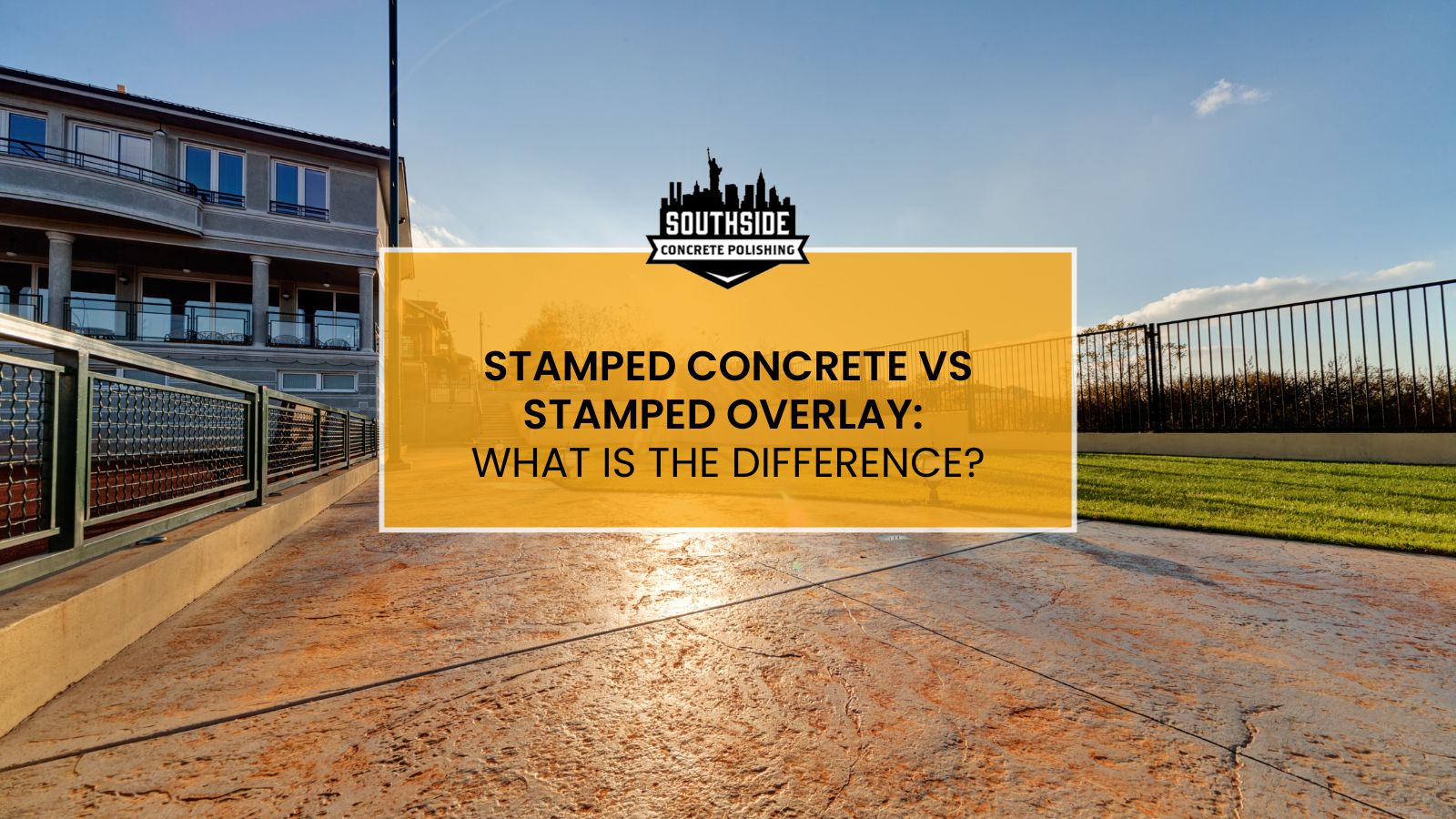
Stamped concrete vs stamped overlay is a common consideration for property managers and business owners looking to enhance commercial spaces. Stamped concrete is a decorative technique where patterns and textures are imprinted onto freshly poured concrete using specialized stamps or molds. In contrast,** a stamped overlay** is a decorative technique where patterns and textures are pressed into freshly poured concrete. Both options have gained popularity in New Jersey's commercial sector for their ability to combine functionality with aesthetic appeal. From office plazas to retail walkways, these solutions provide businesses with modern, durable, and visually appealing surfaces.
The main difference lies in application and longevity. Stamped concrete is integral to the structure, offering maximum durability and design flexibility for new installations. Stamped overlays, while slightly less robust, provide a cost-effective, customizable option for resurfacing and revitalizing existing commercial concrete areas with minimal disruption.
What is Stamped Concrete?
Stamped concrete refers to freshly poured concrete that is patterned, textured, and colored during installation to create a decorative, long-lasting surface. It mimics natural materials like stone, brick, or wood, with customizable colors and textures. This method creates durable, visually appealing surfaces suitable for patios, driveways, walkways, and pool decks. Stamped concrete combines aesthetic appeal with long-lasting functionality for both commercial and residential applications.
What is Stamped Overlay?
Stamped concrete is a thin, decorative layer applied over existing concrete, ideal for restoring worn, damaged, or outdated floors without costly replacement. It replicates natural materials like stone, brick, or wood, with customizable colors and designs. This method creates strong, durable surfaces that are both functional and visually appealing. Commonly used for patios, driveways, walkways, and commercial spaces, it enhances aesthetics without compromising durability. Stamped concrete is a popular choice for those seeking stylish, long-lasting concrete solutions.
What is the Difference Between Stamped Concrete vs Stamped Overlay?
The difference between stamped concrete and stamped overlay comes down to purpose and application. While both enhance the look of concrete surfaces, they serve different needs. One is ideal for new installations, and the other for updating existing surfaces. Choosing between them depends on factors like budget, project scope, and desired longevity. In New Jersey, both methods are increasingly popular for commercial properties seeking stylish yet practical flooring solutions.
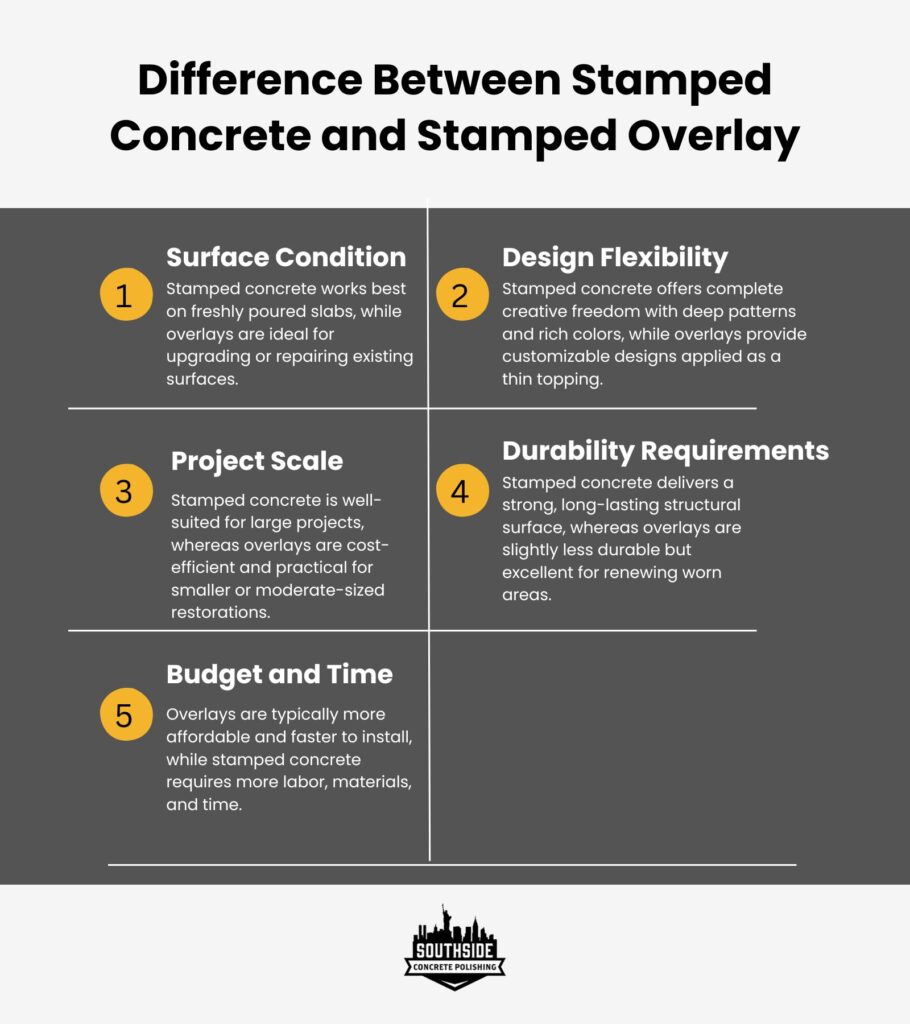
Here are the key differences between them:
Application Surface
-
Stamped Concrete: Imprint patterns are applied directly onto freshly poured concrete, allowing the design to become an integral part of the slab.
-
Stamped Overlay: Applied as a thin layer over existing concrete surfaces, making it ideal for restoring or rejuvenating worn-out floors without replacing the entire slab.
Purpose and Use
-
Stamped Concrete: Used for new concrete projects where full customization of design, texture, and color is possible. It creates permanent decorative patterns as the concrete cures.
-
Stamped Overlay: Primarily used for surface restoration. It revitalizes damaged or aged concrete while providing a decorative finish without the expense of a full replacement.
Design Flexibility
-
Stamped Concrete: Offers greater control over the placement and alignment of patterns during the pouring and stamping process, allowing for highly customized layouts.
-
Stamped Overlay: Provides the ability to replicate patterns and textures seen in stamped concrete, but has limitations in complex design placement due to being applied over existing surfaces.
Cost and Time Considerations
-
Stamped Concrete: Generally requires more time and higher costs due to the need for freshly poured concrete, curing time, and skilled labor for proper stamping.
-
Stamped Overlay: A cost-effective option compared to full stamping on new concrete. It reduces labor, material, and time while still achieving a decorative, attractive surface.
Durability and Longevity
-
Stamped Concrete: Highly durable since the design is integrated into the concrete itself. It withstands heavy traffic and environmental conditions when properly finished and sealed.
-
Stamped Overlay: Provides a durable decorative surface, but the thin overlay layer may be more susceptible to chipping or wear over time if not properly applied or maintained.
Aesthetic Options
-
Stamped Concrete: Offers a wide range of design options, colors, and textures, including stone, brick, wood, or custom patterns.
-
Stamped Overlay: Can mimic the appearance of stamped concrete and other decorative finishes, providing a refreshed look for existing floors.
Surface Preparation
-
Stamped Concrete: Requires freshly poured concrete, which must be leveled and partially cured before stamping. Proper timing is critical to achieve clean patterns.
-
Stamped Overlay: Requires surface cleaning, patching, and priming of existing concrete to ensure proper adhesion and a smooth finish.
Maintenance Requirements
-
Stamped Concrete: Requires periodic sealing to maintain color and protect the surface from stains, weathering, and wear.
-
Stamped Overlay: Also requires sealing and occasional maintenance, but since it is thinner, it needs more careful upkeep in high-traffic areas.
Ideal Applications
-
Stamped Concrete: Best suited for patios, driveways, pool decks, and other new installations where a permanent decorative surface is desired.
-
Stamped Overlay: Ideal for resurfacing existing patios, walkways, garage floors, or worn commercial concrete, giving a cost-effective decorative upgrade.
How to Choose Between Stamped Concrete and Stamped Overlay?
To choose between stamped concrete and stamped overlay,** consider factors such as surface condition, design flexibility, durability, budget, and overall project goals.** Evaluating these elements helps identify the best option for your commercial or residential project.
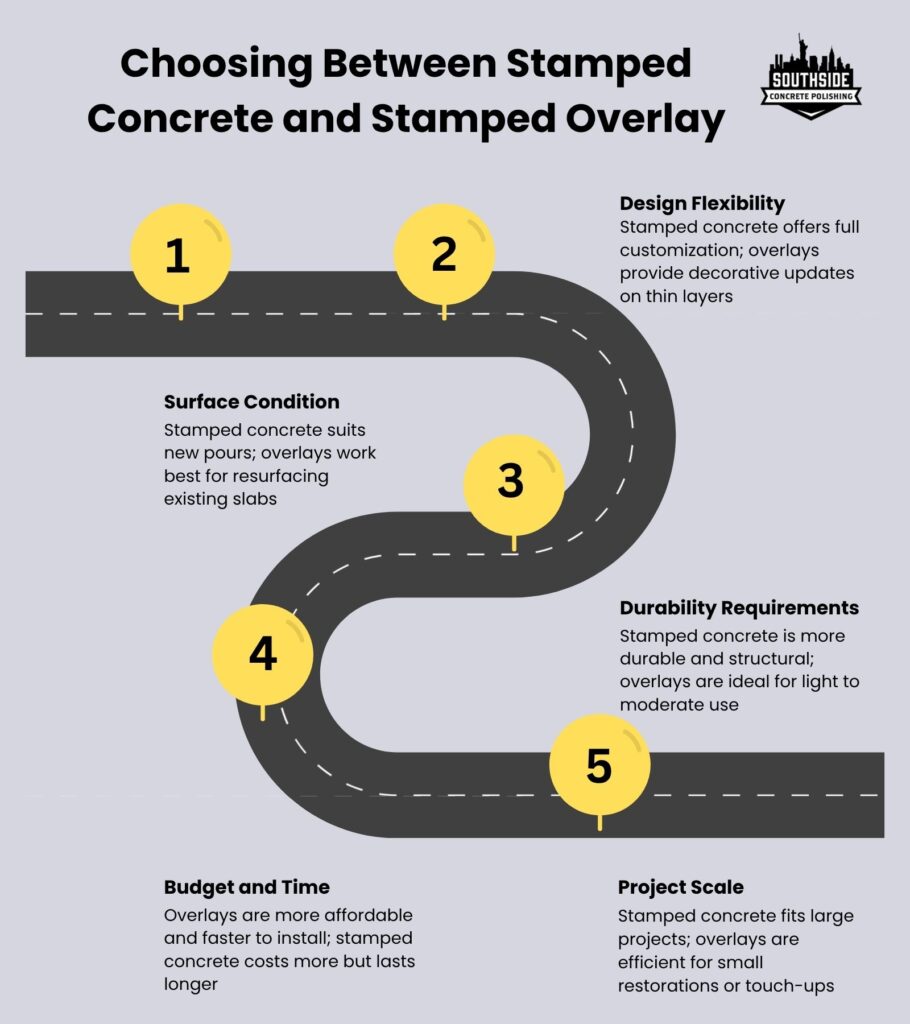
Here are the key factors to consider:
-
Surface Condition: New concrete is ideal for stamping, while existing, worn surfaces are better suited for overlays.
-
Design Flexibility: Stamped concrete allows full control over patterns and colors, whereas overlays offer customization on a thinner layer.
-
Durability Requirements: Stamped concrete provides long-lasting, structural finishes; overlays are less robust but effective for surface restoration.
-
Budget and Time: Overlays are generally more cost-effective and quicker to apply, while stamping requires higher investment and installation time.
-
Project Scale: Large-scale installations benefit from stamped concrete, while smaller restorations efficiently use overlays.
What are the Benefits of Stamped Concrete and Stamped Overlay?
The benefits of stamped concrete and stamped overlay include enhancing the aesthetic appeal of surfaces while providing durability and functionality. Both techniques offer customizable designs, patterns, and colors, making them ideal for commercial and residential projects. They transform plain concrete into visually striking floors, driveways, patios, or walkways. These solutions are also cost-effective alternatives to natural stone or brick installations.
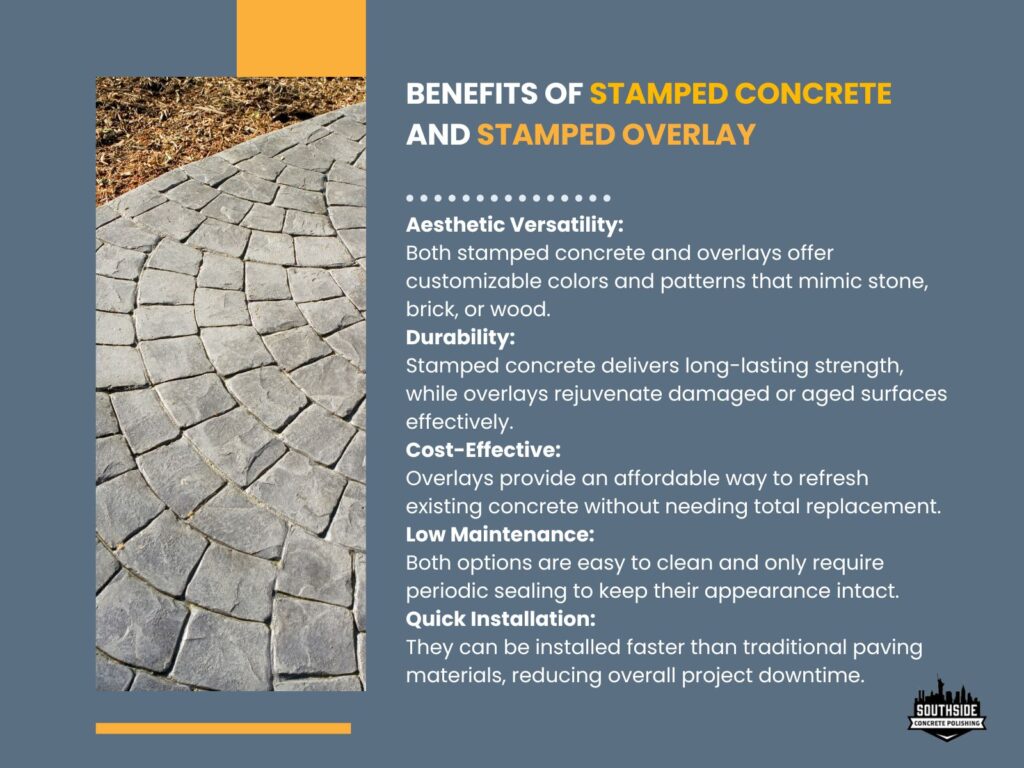
Here are the key benefits of each:
-
Aesthetic Versatility: Both methods allow a wide range of patterns and colors, replicating materials like stone, brick, or wood.
-
Durability: Stamped concrete provides a long-lasting surface, while overlays restore worn or damaged areas effectively.
-
Cost-Effective: Overlays offer a budget-friendly option for updating existing concrete without full replacement.
-
Low Maintenance: Both surfaces are easy to clean and maintain, requiring occasional sealing to preserve their appearance.
-
Quick Installation: These techniques are applied relatively quickly compared to traditional paving materials, minimizing project downtime.
Which technique is more durable between Stamped Concrete and stamped overlay?
Stamped concrete is more durable between stamped concrete and stamped overlay. It offers a stronger, longer-lasting surface since the patterns are integrated into freshly poured concrete. Stamped overlays are more durable, but their longevity depends on the condition of the existing concrete and the quality of the installation. With proper maintenance, both techniques withstand heavy foot traffic and various weather conditions. Consulting a professional contractor ensures the chosen method is installed correctly and performs optimally over time.
How long does it take to complete a stamping project?
It takes from a few days to several weeks to complete a stamping project, depending on its size and complexity. Small areas like patios or walkways are finished quickly, including site preparation, pouring, stamping, and curing. Larger projects, such as driveways or pool decks, require multiple pours and more intricate patterns, extending the timeline. Weather conditions and proper curing also play a role in determining how long the project will take.
Are there limitations to the design options with stamped overlay compared to concrete stamping?
Yes, there are some limitations to the design options with stamped overlay compared to stamped concrete. Since overlays are applied in a thinner layer, they do not achieve the same depth or complexity of patterns. The texture and condition of the existing concrete also influence the final look. While overlays mimic stamped concrete, they do not perfectly replicate intricate designs.
Can you change the design or pattern of a stamped overlay in the future?
No, you cannot easily change the design or pattern of a stamped overlay in the future. Unlike concrete stamping, which allows adjustments during the pouring process, overlays become a permanent surface. To alter the design, the existing overlay must be removed or covered with a new layer, making the process labor-intensive and costly. Specialized equipment and professional expertise are required to achieve a successful update. This limitation is important to consider when planning your project.
Are there specific weather or climate considerations for both concrete stamping and stamped overlay?
Yes, there are specific weather and climate considerations for both concrete stamping and stamped overlay. Extreme temperatures, rain, high humidity, freeze-thaw cycles, and prolonged UV exposure affect installation, curing, and long-term durability. Proper planning and timing are essential to ensure a quality finish and lasting performance. Consulting with a professional helps mitigate weather-related risks during the project.
Is stamped concrete durable enough for outdoor use?
Yes, stamped concrete is highly durable and designed to withstand outdoor conditions such as foot traffic, weather changes, and UV exposure. When properly sealed and maintained, stamped concrete can last for decades while retaining its decorative appearance.
Can concrete engraving enhance the appearance of stamped overlays?
Yes, Concrete engraving enhances the appearance of stamped overlays. Concrete engraving adds fine details and depth to stamped overlays, making patterns more pronounced and giving the surface a high-end, decorative finish without replacing the entire slab.
How do you choose concrete resurfacing vs. concrete replacement for stamped surfaces?
You choose concrete resurfacing vs. concrete replacement for stamped surfaces based on the condition of the existing slab. Resurfacing is best for minor cracks, wear, or faded patterns, restoring the surface without removing it. Replacement is necessary when the concrete is severely damaged or structurally compromised, providing a fresh, stable base for stamping or overlays. This helps homeowners clearly understand when to opt for concrete resurfacing vs replacement.