A self-leveling compound is a liquid mixture used to create a smooth, even surface over concrete or subfloors. It automatically spreads and levels itself, requiring minimal effort and ensuring a seamless foundation. The demand for self-leveling flooring in New Jersey has steadily increased due to the rise in residential renovations and commercial projects. According to Data Bridge Market Research, the U.S. self-leveling concrete market, valued at $1.02 billion in 2024, is projected to reach $1.67 billion by 2032. New Jersey is contributing significantly to the market value through its growing construction and remodeling sectors.
The main types of self-leveling compounds include cement-based, epoxy-based, and polyurethane-based. The process of self-leveling compound includes mixing with water and pouring it onto the surface. It naturally spreads and settles into a flat, even layer. The main benefits of self-leveling compound include a smooth, durable finish that enhances floor appearance and reduces installation time. It also provides excellent resistance to wear and moisture.
What is Self-Leveling Compound?
A self-leveling compound is a specialized liquid mixture made from cement, polymers, and fine aggregates that spreads easily to form a smooth, even surface. It is used to correct uneven or rough subfloors before applying final floor finishes like tiles, vinyl, or epoxy. When poured, the compound flows and levels itself without the need for extensive troweling, creating a flat and durable base. Self-leveling compounds are ideal for both residential and commercial spaces, ensuring long-lasting, professional-quality flooring results.
Why People Choose Self-Leveling Compound?
People choose self-leveling compound because it provides a fast, efficient, and durable flooring solution ideal for commercial properties such as warehouses, offices, and retail spaces. Its ability to create a smooth, seamless surface with minimal downtime makes it perfect for high-traffic and large-scale environments. Additionally, self-leveling compounds enhance floor strength, resist heavy loads, and allow easy application of finishes like epoxy or polyurethane coatings. It ensures long-term performance and a professional appearance in demanding commercial settings. In residential settings, self-leveling compounds are used to fix uneven subfloors, providing a smooth, stable base for finishes like tile, vinyl, or hardwood.
What Are the Types of Self-leveling Compound?
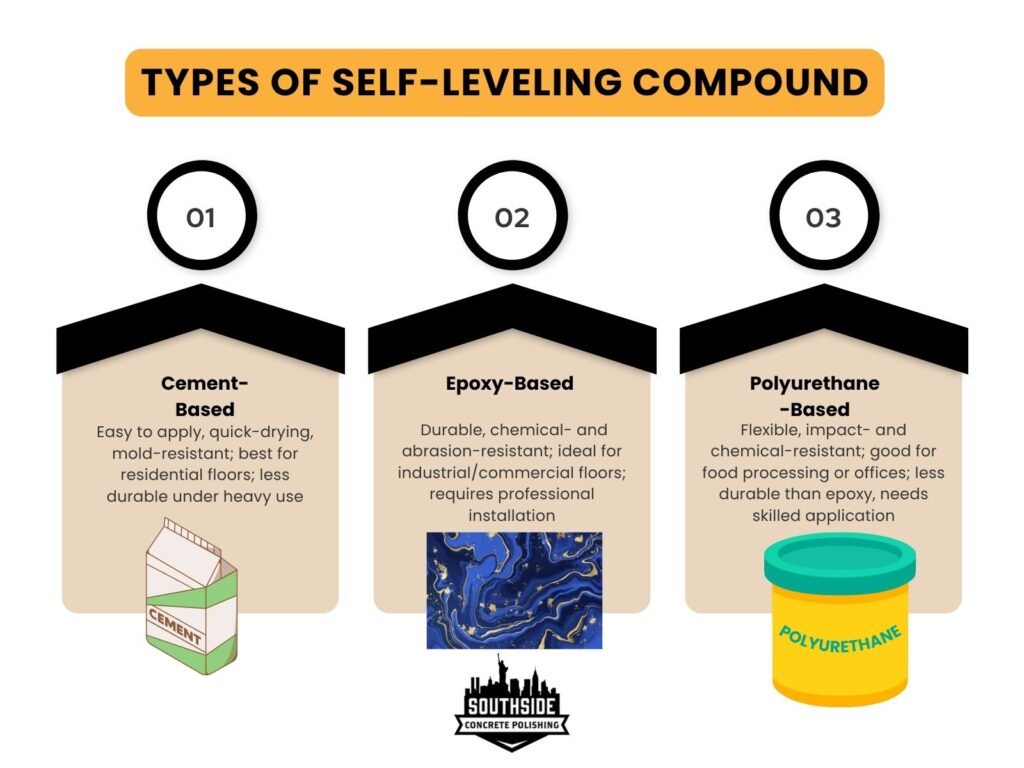
The types of self-leveling compound include cement-based, epoxy-based, and polyurethane-based formulations, each designed for specific flooring needs. These compounds vary in composition, durability, and finish, making them suitable for different environments. Choosing the right type depends on the project's purpose, whether it's for heavy-duty commercial use, industrial spaces, or decorative flooring applications.
Various types of self-leveling flooring include:
1. Cement-based self-leveling flooring
Cement-based self-leveling flooring is made from modified polymer cement that requires little water due to its high fluidity, allowing it to flow easily and create a smooth, even surface. This makes it more efficient than traditional concrete floors, especially for reinforced concrete construction. It is simple to apply, dries quickly, and offers strong resistance to mold and mildew. Depending on the formulation, it is acrylic-based or water-based. Acrylic versions use a liquid polymer for added strength, while water-based types are easier to mix and ideal for beginners. It is poured in a liquid form between ¼ to 1.5 inches thick, and it is leveled using a gauging tool to achieve a uniform surface.
Pros:
-
Reduces manpower needs and overall installation costs.
-
Requires minimal water for proper placement.
-
It is applied over wooden, ceramic, or plywood surfaces.
-
Offers high compressive strength and is hypoallergenic.
-
Resistant to mold and mildew growth.
Cons:
-
Acrylic types are difficult to mix.
-
Dries quickly, requiring fast application.
-
Does not adhere well to dusty surfaces.
-
Prone to damage under heavy use, making it better suited for residential areas.
2. Epoxy-based self-leveling flooring
Epoxy-based self-leveling flooring is composed of durable epoxy resins known for their exceptional resistance to wear, scratches, and abrasion. It makes them ideal for commercial and industrial environments. It is commonly used in manufacturing plants, warehouses, hospitals, aircraft hangars, showrooms, and commercial kitchens. These floors provide a hard, seamless, and glossy finish. Epoxy is a thermosetting polymer that cures when mixed with a catalyst, forming a strong, impermeable surface that resists chemicals, moisture, and heavy loads. It's also a great choice for resurfacing worn or deteriorated concrete floors. It provides a long-lasting and visually appealing foundation.
Pros:
-
Easy to clean and resistant to mold, mildew, and stains.
-
Available in a wide range of colors and patterns for an attractive finish.
-
Slip-resistant surface providing excellent underfoot grip.
-
Exceptional durability against heat, chemicals, and abrasion.
-
Customizable thickness to suit various industrial and commercial needs.
Cons:
-
It produces a contact sound when walked on due to its hardness.
-
Feels cold underfoot without proper insulation or heating.
-
Poor application on uneven substrates may lead to cracks.
-
Requires skilled labor and professional installation for best results.
3. Polyurethane-based self-leveling flooring
Polyurethane-based self-leveling flooring is formulated from polyurethane resin, offering excellent mechanical, thermal, and chemical resistance. This makes it ideal for environments such as cold storage rooms, food processing areas, and industrial facilities. Its natural elasticity allows it to absorb impact and handle temperature fluctuations effectively, making it suitable for both commercial spaces and offices. The coating is typically applied in two layers using a trowel, with a thickness of 2--3 mm, and dries within about 8 hours to create a smooth and durable finish. This flooring type is valued for its aesthetic appeal, flexibility, and hygienic properties, ensuring both functionality and comfort.
Pros:
-
Highly aesthetic with excellent UV resistance.
-
Hygienic and safe for food industry applications.
-
Strong chemical and impact resistance.
-
Flexible and elastic, reducing cracks and surface stress.
-
Withstands heavy foot traffic and temperature variations.
Cons:
-
Less durable compared to epoxy-based flooring.
-
Requires professional installation for proper results.
-
Sensitive to humidity during application.
-
Prone to surface gouging if not properly maintained.
How to Choose the Right Self-Leveling Compound?
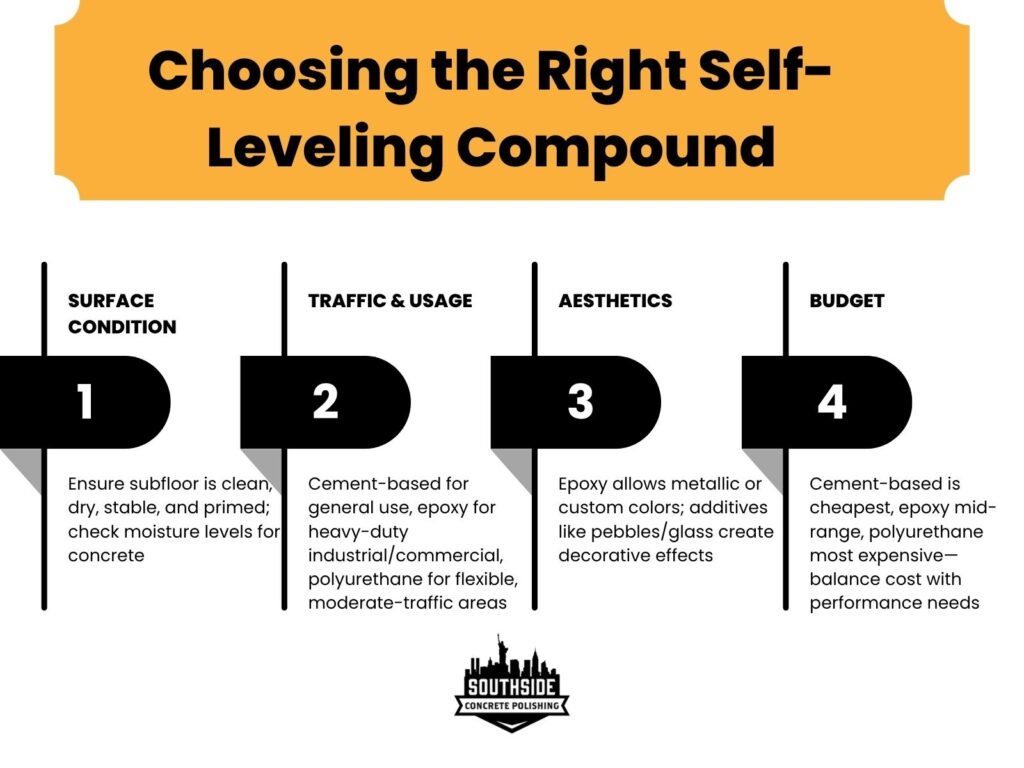
To choose the right self-leveling compound, consider your surface condition, project requirements, and overall design goals. Factors such as floor preparation, expected traffic levels, desired aesthetics, and budget all play key roles in determining the most suitable material. Selecting the right compound ensures a durable, smooth, and long-lasting finish that complements the function and style of your space.
Key Factors to Consider:
-
Surface Preparation and Condition: Ensure the subfloor is clean, dry, and stable, free from dust, grease, paint, or soap that weakens adhesion. Use the right primer for your surface to prevent moisture-related failures. For concrete, test moisture levels according to ASTM F2170 standards before installation.
-
Traffic and Usage: Choose a compound based on durability and load capacity. Cement-based self-leveling floors work well for general use, epoxy-based for heavy-duty commercial or industrial spaces, and polyurethane-based for flexible, moderate-traffic environments.
-
Aesthetics and Design: Self-leveling floors come in various colors and finishes. Epoxy is blended with metallic additives for decorative swirls, while pigments or dyes achieve any custom color to match your design vision. Materials like pebbles or glass can also be added for unique visual effects.
-
Budget: Consider material and installation costs. Cement-based floors are the most affordable ($600--900 per 100 sq. ft.), epoxy ranges from $3--12 per sq. meter, and polyurethane tends to be costlier due to its advanced properties. Choose the option that balances quality and affordability for your project.
What is the Process of Applying Self-Leveling Compound?
The process of applying self-leveling compound includes several key steps to ensure a smooth, durable, and long-lasting surface. Each stage must be done carefully to achieve a flawless finish and proper adhesion.
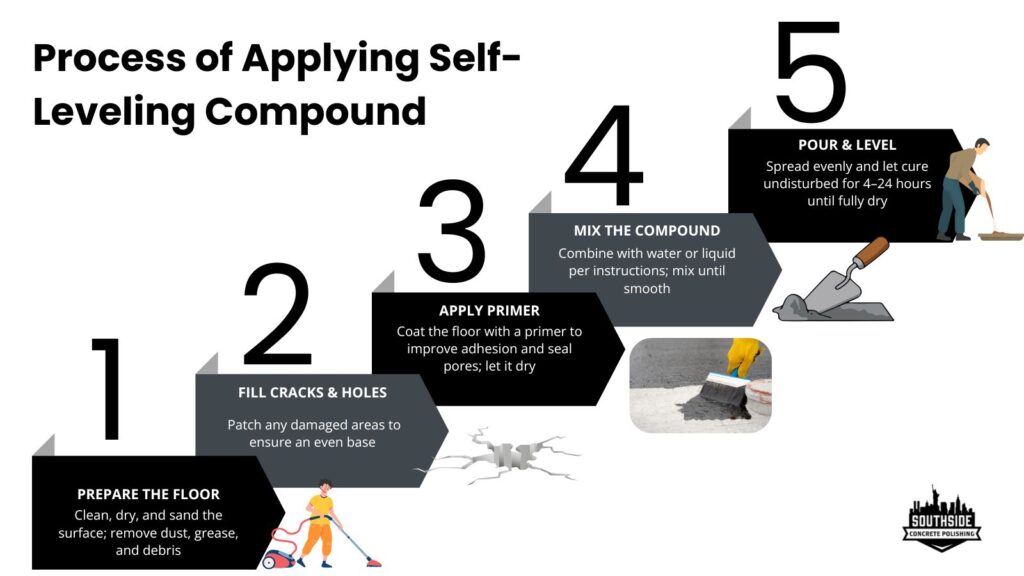
Here is the step-by-step process:
1. Preparing the Floor:
Begin by cleaning the floor thoroughly to remove dust, grease, paint, or debris that affects adhesion. The surface should be dry, stable, and free of any contaminants. For best results, vacuum and lightly sand the area to create a clean bonding surface.
2. Filling Any Cracks:
Inspect the floor for cracks, holes, or damaged areas and fill them with an appropriate patching compound. This prevents the self-leveling mixture from seeping into gaps and ensures an even surface once applied.
3. Applying Primer:
Apply a suitable primer designed for self-leveling compounds. The primer improves adhesion between the substrate and the leveling compound while sealing porous surfaces to prevent moisture absorption. Allow it to dry fully as recommended by the manufacturer.
4. Mixing the Compound:
Follow the manufacturer's instructions to mix the compound with clean water (or the specified liquid). Use a mechanical mixer to achieve a smooth, lump-free consistency. Mix only as much as you apply within the working time, as the compound sets quickly.
5. Allowing to Dry:
After pouring and spreading the compound evenly, allow it to cure undisturbed. Drying takes 4--24 hours, depending on the product and room conditions. Once fully dry, the surface will be smooth, level, and ready for your chosen floor finish.
What Are the Benefits of Self-Leveling Compound?
The benefits of self-leveling compound include its ability to create a flawless, durable, and professional-quality surface with minimal effort. It not only improves the strength and appearance of floors but also ensures a smooth, long-lasting foundation suitable for both commercial and residential projects.
The benefits of self-leveling compound include:
Smooth and Even Finish
Creates a perfectly level surface ideal for installing tiles, vinyl, or epoxy flooring. A smooth and even base not only enhances the visual appeal but also ensures proper adhesion and longevity of the top layer. The benefits of epoxy flooring include enhanced durability, chemical resistance, and a glossy finish that adds both strength and sophistication to any space.
Fast Application
Spreads easily and sets quickly, reducing project time and labor costs. This makes it a preferred option for commercial and industrial facilities that require minimal downtime. The quick-curing nature allows floors to be back in service faster without compromising quality or performance.
Durability
Forms a strong, long-lasting surface that withstands heavy foot and equipment traffic. Its resistance to abrasion, impact, and wear makes it suitable for warehouses, factories, and high-traffic commercial areas where durability is essential.
Moisture and Chemical Resistance
Protects floors from water damage, chemical spills, and stains, especially in commercial or industrial settings. This resistance helps extend the lifespan of the flooring and ensures it remains structurally sound even in moisture-prone or chemically exposed environments.
Versatility
It can be applied over various substrates such as concrete, wood, or ceramic tiles. This flexibility allows property owners and contractors to upgrade existing floors without the need for complete replacement, saving both time and cost.
Improved Aesthetics
Provides a sleek, professional look with options for decorative finishes such as staining, flaking, or metallic effects. The enhanced visual appeal makes it ideal for showrooms, offices, and commercial interiors that require both functionality and style.
Low Maintenance
Easy to clean and maintain, keeping floors looking new for years. Routine sweeping and occasional mopping are typically all that's needed, making it a cost-effective solution for long-term facility upkeep.
Enhanced Adhesion
Ensures better bonding for top floor coatings or finishes, resulting in improved performance and longevity. Strong adhesion prevents peeling or delamination, ensuring that the surface remains smooth, durable, and visually consistent over time.
What is the Cost of Self-Leveling Compound?
The cost of self-leveling compound ranges from $3 to $12 per square meter, depending on the type, quality, and application area. Cement-based compounds are the most affordable option, while epoxy and polyurethane-based compounds tend to be more expensive due to their superior durability, chemical resistance, and glossy finish. Additional factors like floor preparation, thickness, and labor charges also influence the total installation cost.
How long does levelling compound take to dry?
Leveling compound takes 4 to 24 hours to dry, depending on the product type, thickness, and room conditions such as temperature and humidity. Cement-based compounds usually dry faster, while epoxy and polyurethane-based compounds require longer curing times to achieve full strength and a smooth, durable finish.
Do I need to prime my subfloor before levelling?
Yes, you do need to prime your subfloor before leveling. Priming helps improve adhesion between the concrete floor coatings or the subfloor and the self-leveling compound, seals porous surfaces, and prevents moisture from being absorbed too quickly, ensuring a smooth, durable, and crack-free finish.
Can a self-leveling compound be used before applying self-leveling epoxy?
Yes, a self-leveling compound can be used before applying self-leveling epoxy. It helps correct uneven or damaged concrete surfaces, ensuring a smooth foundation for the epoxy coating to properly bond and level.
Is using self-leveling compound compatible with eco-friendly flooring options?
Yes, using self-leveling compound is compatible with eco-friendly flooring options. Many self-leveling compounds are available in low-VOC or eco-friendly formulations, making them a suitable and eco-friendly flooring option for environmentally conscious projects.
Can self-leveling compound be used before stained concrete?
Yes, self-leveling compound can be used before stained concrete. It creates a smooth, even surface that allows stained concrete to achieve a more consistent and professional finish. It helps eliminate imperfections that could affect the appearance of the stain.