Sustainable and eco-friendly flooring materials represent the future of modern living, combining style, health, and environmental responsibility. These materials, such as bamboo, reclaimed wood, polished concrete, linoleum, and recycled glass, are designed to reduce carbon emissions, limit waste, and improve indoor air quality. According to the U.S. Green Building Council, green-certified buildings reduce energy use by up to 25% and water use by 11%. In New Jersey, where eco-conscious construction is steadily growing, over 30% of new residential projects now integrate sustainable materials to meet stricter environmental standards.
Homeowners are becoming increasingly aware that toxic flooring materials cause respiratory irritation, allergic reactions, and even long-term health risks. By choosing eco-friendly alternatives, they not only protect their families but also contribute to a cleaner environment. Sustainable flooring offers durability, aesthetic appeal, and a reduced ecological footprint. This makes it the preferred choice for the homes of tomorrow.
What is Sustainable and Eco-Friendly Flooring?
Sustainable and Eco-Friendly Flooring uses materials that are renewable, non-toxic, and environmentally responsible. It includes options like bamboo, cork, reclaimed wood, and polished concrete that reduce waste and improve indoor air quality. These materials are designed to last longer while minimizing carbon footprints. Choosing eco-friendly flooring helps create healthier homes and a greener planet.
Why People Choose Sustainable and Eco-Friendly Flooring Materials?
People choose sustainable and eco-friendly flooring materials because they are safer for their families and better for the environment. These materials reduce exposure to harmful chemicals, improve indoor air quality, and promote healthier living spaces. They are also durable, energy-efficient, and made from renewable or recycled sources. By choosing eco-friendly flooring, homeowners contribute to sustainability while enjoying long-lasting and stylish floors.
What are the Types of Sustainable and Eco-Friendly Flooring Materials?
The types of sustainable and eco-friendly flooring materials include options made from renewable, recyclable, and non-toxic resources. These flooring choices are designed to minimize environmental impact while offering durability and beauty for modern homes.
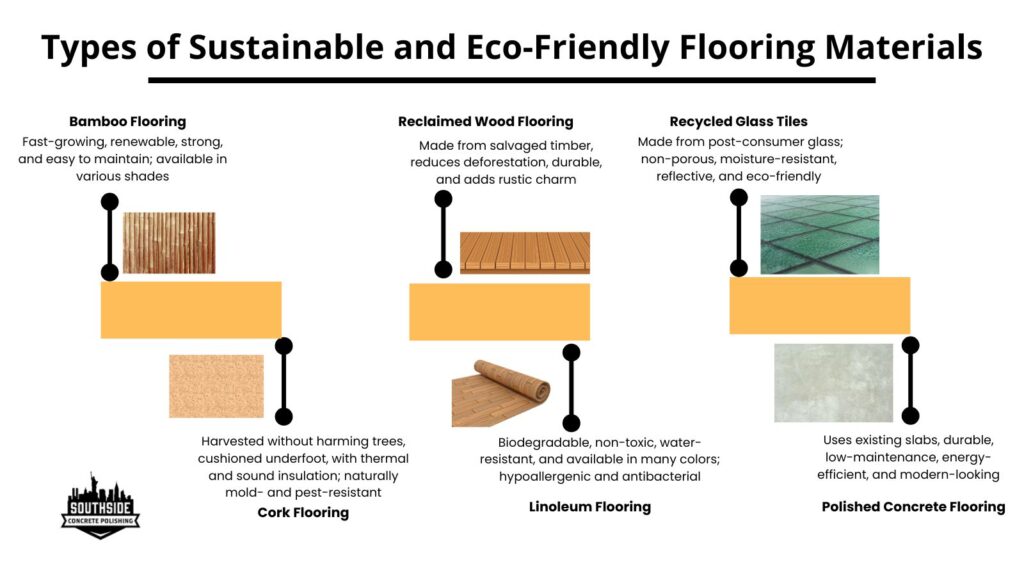
Below are some of the most popular types:
Bamboo Flooring
Bamboo flooring is made from one of the fastest-growing plants on earth, making it a highly renewable material. It offers the natural beauty of hardwood with greater sustainability. Bamboo is strong, easy to maintain, and available in a variety of shades and finishes, making it ideal for both modern and traditional interiors.
Cork Flooring
Cork is harvested from the bark of cork oak trees without cutting them down, allowing the trees to regenerate naturally. It provides a soft, cushioned feel underfoot and has excellent thermal and sound insulation properties. Cork is also naturally resistant to mold, mildew, and pests, making it perfect for homes prioritizing comfort and health.
Reclaimed Wood Flooring
Reclaimed wood uses timber salvaged from old structures such as barns, factories, and warehouses. This process reduces deforestation and gives the wood a second life. It adds a unique, rustic charm to interiors while being incredibly durable and eco-friendly, preserving history and character in every plank.
Linoleum Flooring
Made from natural ingredients like linseed oil, cork dust, wood flour, and jute, linoleum is biodegradable and non-toxic. It's known for being durable, water-resistant, and available in many colors and patterns. Linoleum is also anti-bacterial and hypoallergenic, contributing to healthier indoor air quality.
Recycled Glass Tiles
Recycled glass flooring and tiles are crafted from post-consumer glass bottles and windows. They add a sleek, reflective aesthetic to kitchens and bathrooms while reducing landfill waste. Recycled glass is non-porous, easy to clean, and highly resistant to moisture and stains.
Polished Concrete Flooring
Polished concrete is one of the most sustainable flooring options since it uses existing concrete slabs, eliminating the need for new materials. The polishing process creates a smooth, reflective surface that's durable and low-maintenance. It's ideal for modern spaces and energy-efficient homes, as it helps regulate indoor temperature by absorbing and releasing heat.
What are the Benefits of Sustainable and Eco-Friendly Flooring Materials?
The benefits of sustainable and eco-friendly flooring materials include improved indoor air quality, long-term durability, and reduced environmental impact. These materials are made from renewable or recycled sources, helping homeowners create healthier, greener living spaces. They also offer aesthetic appeal and contribute to sustainable construction practices.
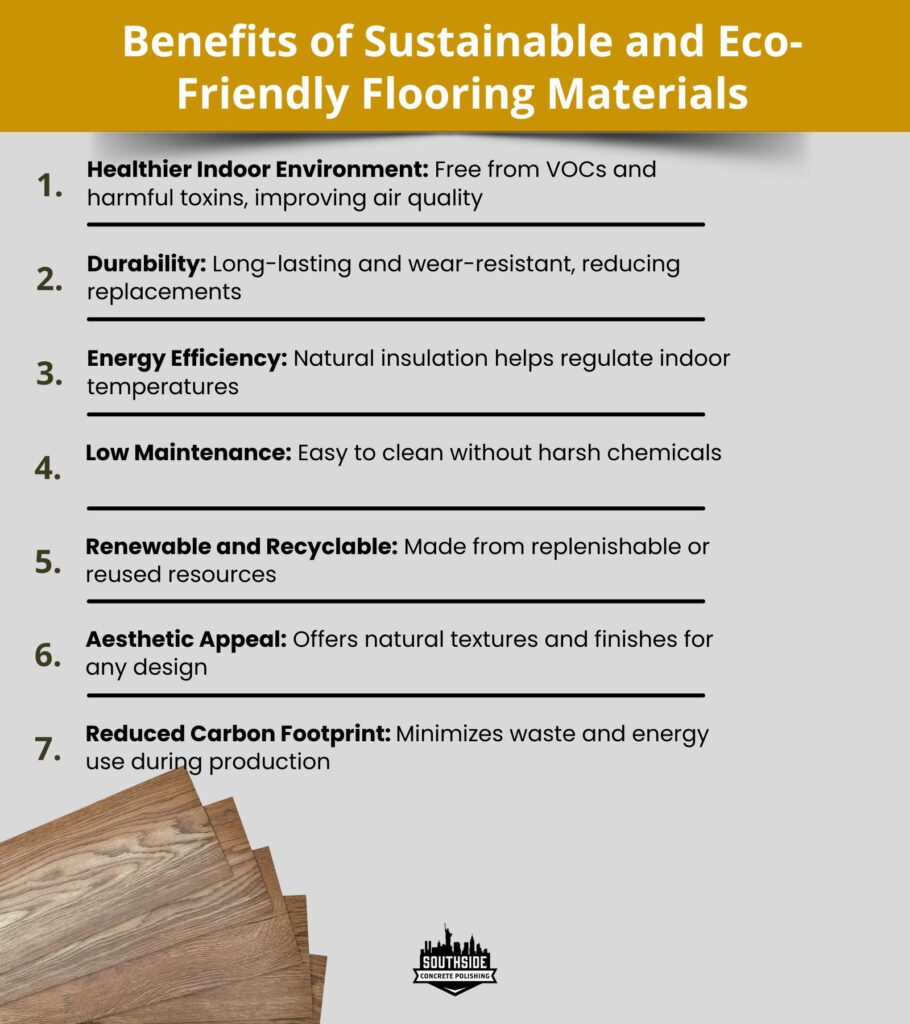
Here are the benefits of sustainable and eco-friendly flooring materials;
-
Healthier Indoor Environment: Free from harmful VOCs and toxins that affect air quality.
-
Durability: Long-lasting and resistant to wear, reducing the need for frequent replacements.
-
Energy Efficiency: Some materials provide natural insulation, helping regulate indoor temperatures.
-
Low Maintenance: Easy to clean and maintain without harsh chemicals.
-
Renewable and Recyclable: Made from resources that is replenished or reused sustainably.
-
Aesthetic Appeal: Available in various natural textures and finishes to suit any design style.
-
Reduced Carbon Footprint: Minimizes waste and energy consumption during production.
How to Choose the Right Sustainable and Eco-Friendly Flooring Material?
To choose the right sustainable and eco-friendly flooring material,** homeowners consider their lifestyle, budget, and environmental goals.** Factors like room usage, moisture levels, and maintenance needs also play a crucial role in determining the best option. Selecting the right material ensures both long-lasting performance and a positive environmental impact.
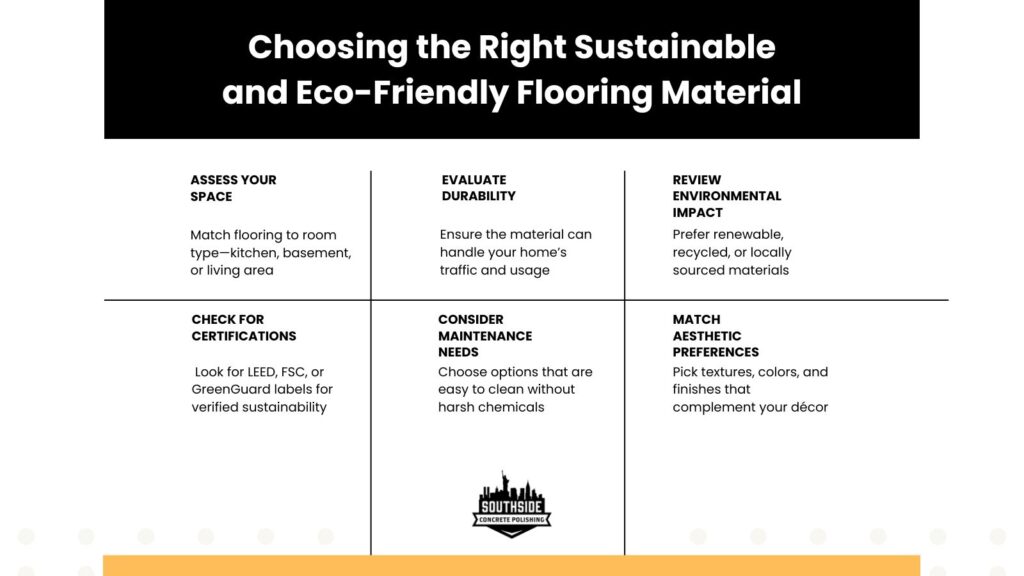
Here are some factors that you must consider;
-
Assess Your Space: Consider where the flooring will be installed, kitchens, basements, or living rooms need different materials.
-
Check for Certifications: Look for eco-labels like LEED, FSC, or GreenGuard to ensure genuine sustainability.
-
Evaluate Durability: Choose materials that withstand daily wear and tear based on your home's activity level.
-
Consider Maintenance Needs: Opt for flooring that's easy to clean without harsh chemicals.
-
Review Environmental Impact: Prefer renewable, recycled, or locally sourced materials to reduce carbon emissions.
-
Match Aesthetic Preferences: Select a texture, color, and finish that complements your home's interior design.
What is the Maintenance of Sustainable and Eco-Friendly Flooring?
The maintenance of sustainable and eco-friendly flooring includes simple cleaning practices that preserve the material's natural beauty and extend its lifespan. These floors are designed to be low-maintenance, requiring minimal effort and avoiding the use of harsh chemicals. Proper care ensures durability, hygiene, and long-term environmental benefits.
Here are some maintenance tips;
-
Regular Cleaning: Sweep or vacuum frequently to remove dust and dirt.
-
Use Mild Cleaners: Choose eco-friendly or pH-neutral cleaning products to prevent surface damage.
-
Avoid Excess Moisture: Wipe spills immediately to protect against warping or staining.
-
Apply Protective Coatings: Use natural sealants or finishes to maintain shine and resistance.
-
Use Furniture Pads: Prevent scratches by placing pads under furniture legs.
-
Periodic Refinishing: Refinish wood or bamboo floors occasionally to restore their natural appearance.
What is the Future of Sustainable and Eco-Friendly Flooring?
The future of sustainable and eco-friendly flooring looks promising as more homeowners and builders prioritize environmentally responsible choices. With growing awareness of climate change and indoor health, eco-friendly flooring is expected to dominate the market, combining innovation, durability, and sustainability for a greener future.
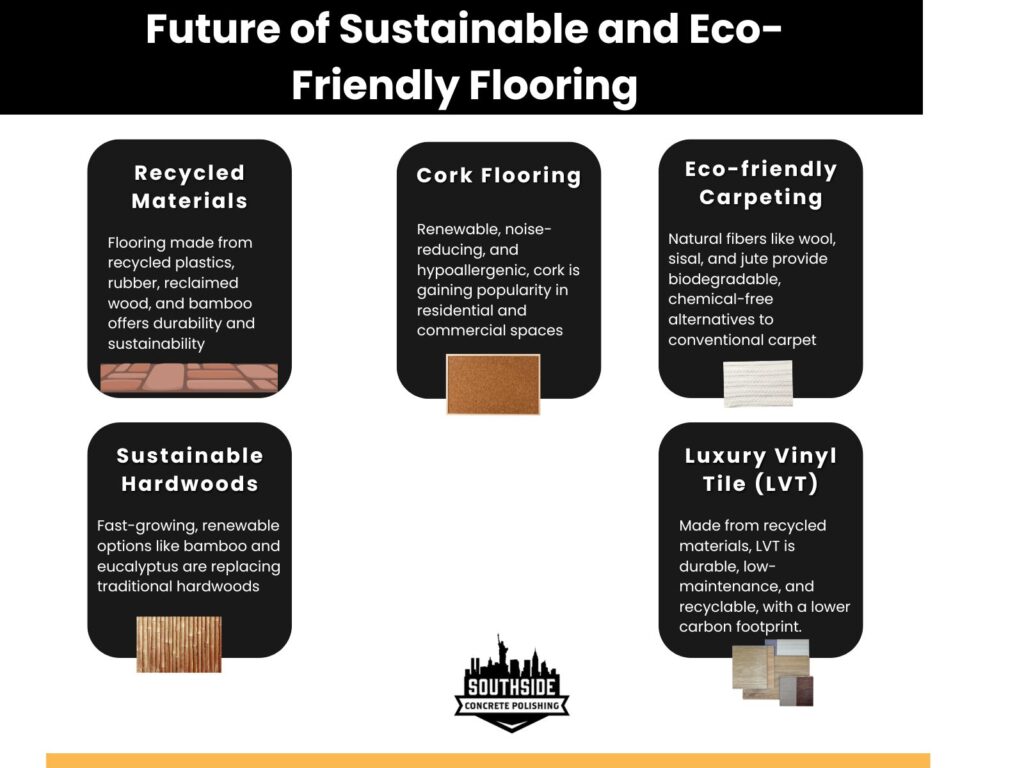
Here are some emerging trends and innovations in eco-friendly flooring:
Recycled Materials:
One of the most popular trends in eco-friendly flooring is using recycled materials. This includes everything from recycled plastic and rubber to reclaimed wood and bamboo. These materials are not only environmentally friendly but also cost-effective and durable.
Cork Flooring:
Cork is a renewable resource that is harvested from the bark of cork oak trees. Cork flooring is becoming more popular due to its durability, noise-reducing qualities, and natural insulation. It is also an excellent option for people with allergies as it is hypoallergenic and resistant to mold and mildew.
Sustainable Hardwoods:
Hardwood flooring is a classic choice that has stood the test of time. However, traditional hardwoods are often sourced from unsustainable forests. Sustainable hardwoods such as bamboo and eucalyptus have become increasingly popular as they are fast-growing and renewable.
Eco-friendly Carpeting:
Carpeting is associated with allergies and poor indoor air quality. However, eco-friendly carpeting made from natural fibers such as wool, sisal, and jute is a great alternative. These materials are renewable, biodegradable, and free from harmful chemicals.
Luxury Vinyl Tile (LVT):
LVT is a synthetic flooring material that is becoming increasingly popular due to its durability, low maintenance, and eco-friendly qualities. It is made from recycled materials and can be recycled at the end of its lifespan. It also has a low carbon footprint due to its lightweight nature.
With more sensitization and the need to make the world livable for us, we take conscious steps to ensure we use recyclable, eco-friendly materials.
How Much Does It Cost to Install Sustainable and Eco-Friendly Flooring?
It costs between $5 and $15 per square foot to install sustainable and eco-friendly flooring, depending on the material and installation complexity. Options like bamboo and cork are affordable, while reclaimed wood or recycled glass cost more due to sourcing and craftsmanship. Though initial costs are higher, these floors offer long-term savings through durability and low maintenance.
Is Sustainable and Eco-Friendly Flooring Material Worth it?
Yes, it is worth investing in sustainable and eco-friendly flooring material because it offers long-term durability, low maintenance, and health benefits. These materials enhance indoor air quality and often increase property value over time. For homeowners looking to install or polish eco-friendly floors, Southside Concrete Polishing is one of the best companies to handle the job, offering expert craftsmanship and sustainable flooring solutions that ensure lasting quality and beauty.
Is stained concrete considered a sustainable and eco-friendly flooring option?
Yes, stained concrete is considered a sustainable and eco-friendly flooring option because it utilizes the existing concrete slab, reducing the need for additional materials and waste. Stained concrete is enhanced with low-VOC stains, providing a durable, long-lasting, and eco-friendly finish that is both stylish and environmentally responsible.
Can epoxy-coated concrete be a sustainable flooring option?
Yes, epoxy-coated concrete can be a sustainable flooring option when applied over existing concrete. Epoxy-coated concrete reduces the need for new flooring materials and extends the life of the slab. Low-VOC epoxy formulations also make it a more environmentally responsible option while providing a durable, long-lasting, and attractive finish.