
Epoxy countertops vs. traditional countertops, the choice comes down to appearance, durability, and cost. Epoxy countertops are made by pouring a liquid resin mixture over a solid base to create a smooth, glossy, and customizable finish, while traditional countertops include materials like granite, marble, tile, or wood known for their natural look and longevity. In New Jersey, epoxy countertop installations have risen by nearly 22% in the past three years as homeowners seek affordable, modern, and low-maintenance design alternatives (Home Remodeling NJ Report, 2024).
Epoxy countertops offer seamless beauty, heat resistance, and easy cleaning, but can be prone to scratching and require skilled application. Traditional countertops provide timeless style and high resale value, though they often demand more maintenance and come with higher installation costs.
What are the Epoxy Countertops?
Epoxy countertops are durable, high-gloss surfaces created by applying a liquid resin and hardener mixture over an existing countertop base, such as wood, laminate, or concrete. Once cured, the epoxy forms a seamless, non-porous finish that resists moisture, stains, and heat. These countertops are popular for their custom designs, offering limitless color blends, metallic effects, and marble-like patterns. Ideal for kitchens, bathrooms, and commercial spaces, epoxy countertops combine both aesthetic appeal and functional durability.
What are the Traditional Countertops?
Traditional countertops refer to surfaces made from classic materials such as granite, marble, quartz, wood, or tile that have been used for decades in kitchens and bathrooms. Each material offers distinct advantages: granite for its strength, marble for its elegance, quartz for its low maintenance, and wood for its warmth. These countertops are cut, polished, and installed as solid slabs or sections to create a durable and stylish workspace. Valued for their timeless appeal and variety, traditional countertops remain a top choice for homeowners seeking long-lasting quality and natural beauty.
What are The Pros And Cons Of Epoxy Countertops?
The Pros and Cons of Epoxy Countertops are centered around their durability, visual appeal, and maintenance needs. These countertops provide a seamless, glossy finish that resists heat, stains, and moisture while offering endless customization options to match any interior style. On the downside, epoxy surfaces scratch or discolor with prolonged use and require careful installation to avoid bubbles or uneven textures. Despite these drawbacks, epoxy remains a popular choice for homeowners seeking a modern, affordable, and highly decorative surface.
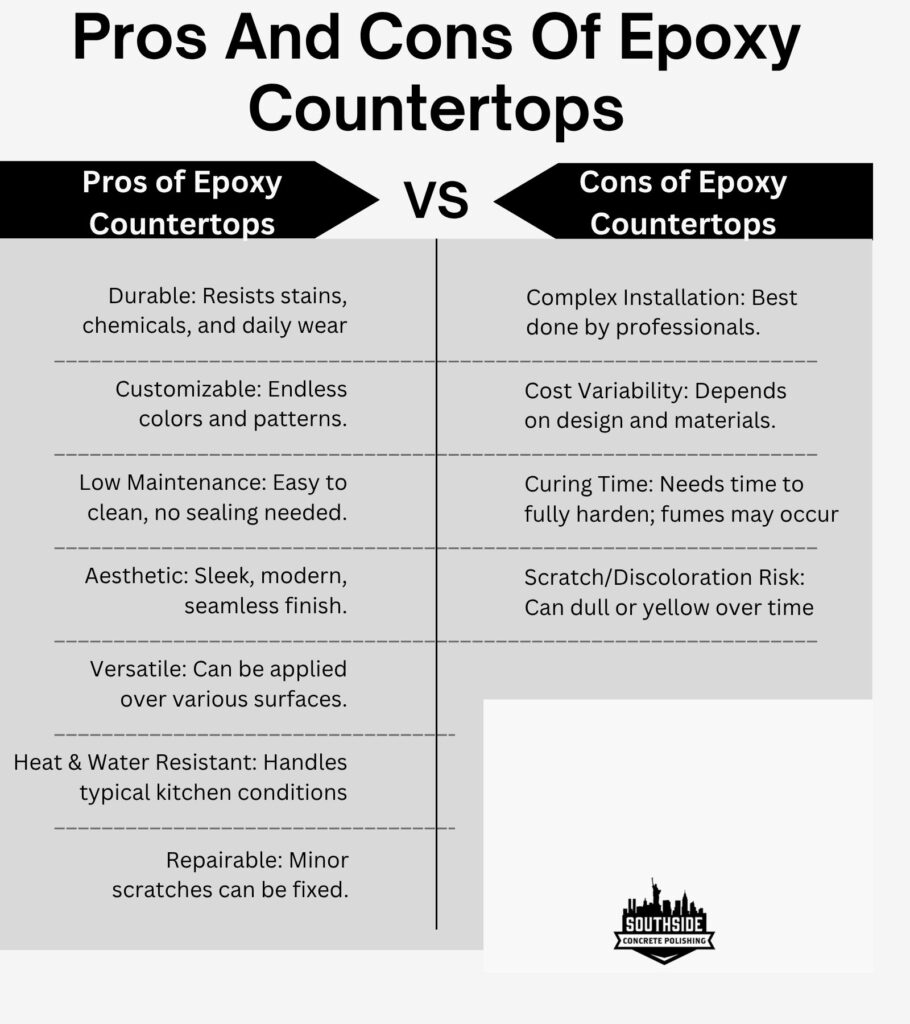
Pros of Epoxy Countertops;
Here are the pros of epoxy countertops;
-
Durability: Epoxy countertops are exceptionally durable, capable of withstanding daily wear and tear without losing their shine. Once cured, the epoxy coating forms a tough, glossy layer that resists stains, chemicals, and abrasions, making it a long-lasting surface choice.
-
Customization: Epoxy offers limitless design flexibility, with countless color combinations, patterns, and artistic effects. Homeowners create personalized looks that mimic marble, granite, or unique abstract designs.
-
Easy Maintenance: These countertops are low-maintenance and easy to clean. Regular wiping with mild soap and water keeps them spotless and glossy without the need for sealing or polishing.
-
Aesthetics: With their sleek, reflective finish, epoxy countertops bring a modern, elegant look to any kitchen or bathroom, often used to achieve high-end, contemporary designs.
-
Versatility: Epoxy can be applied over various base materials like wood, concrete, or existing countertops, offering great flexibility for both new installations and renovations.
-
Seamless Finish: Installed as a single, continuous surface, epoxy countertops eliminate visible seams, creating a smooth, cohesive, and visually appealing finish.
-
Water and Heat Resistance: Epoxy is naturally moisture- and heat-resistant, tolerating temperatures up to 400°F. While not completely heatproof, it performs well under typical kitchen conditions.
-
Non-Toxic: Once fully cured, epoxy countertops are non-toxic and food-safe, making them suitable for everyday kitchen use and meal preparation.
-
Repairable: Minor scratches or surface damage can be easily repaired or refinished, restoring the countertop's original appearance and extending its lifespan.
Cons of Epoxy Countertops
Here are the cons of epoxy flooring;
-
Installation Complexity: Installing epoxy countertops can be challenging and is best handled by professionals experienced with resin applications. The process requires precision to avoid issues such as air bubbles, uneven surfaces, or streaks. DIY attempts often lead to visible imperfections, and since epoxy cures quickly, there's little room for error, mistakes usually mean starting over with a new surface.
-
Cost Variability: Although epoxy countertops are generally more affordable than premium materials like granite or marble, their total cost can vary widely. Factors such as design complexity, customization level, project size, and material quality all influence the final price.
-
Curing Time: Epoxy countertops need adequate time to fully cure and harden before use. During this period, the surface may emit mild fumes and cannot be used immediately, so proper ventilation and scheduling are essential to ensure a smooth installation process.
What are the Pros And Cons Of Traditional Countertops?
The pros and cons of traditional countertops lie in their timeless appeal, durability, and variety. Materials like granite, marble, and quartz elevate a space's aesthetic while boosting home resale value, making them a solid long-term investment. However, these surfaces are expensive and require periodic sealing or polishing to maintain their beauty. For eco-conscious homeowners, exploring sustainably sourced or environmentally friendly options may be a better fit.
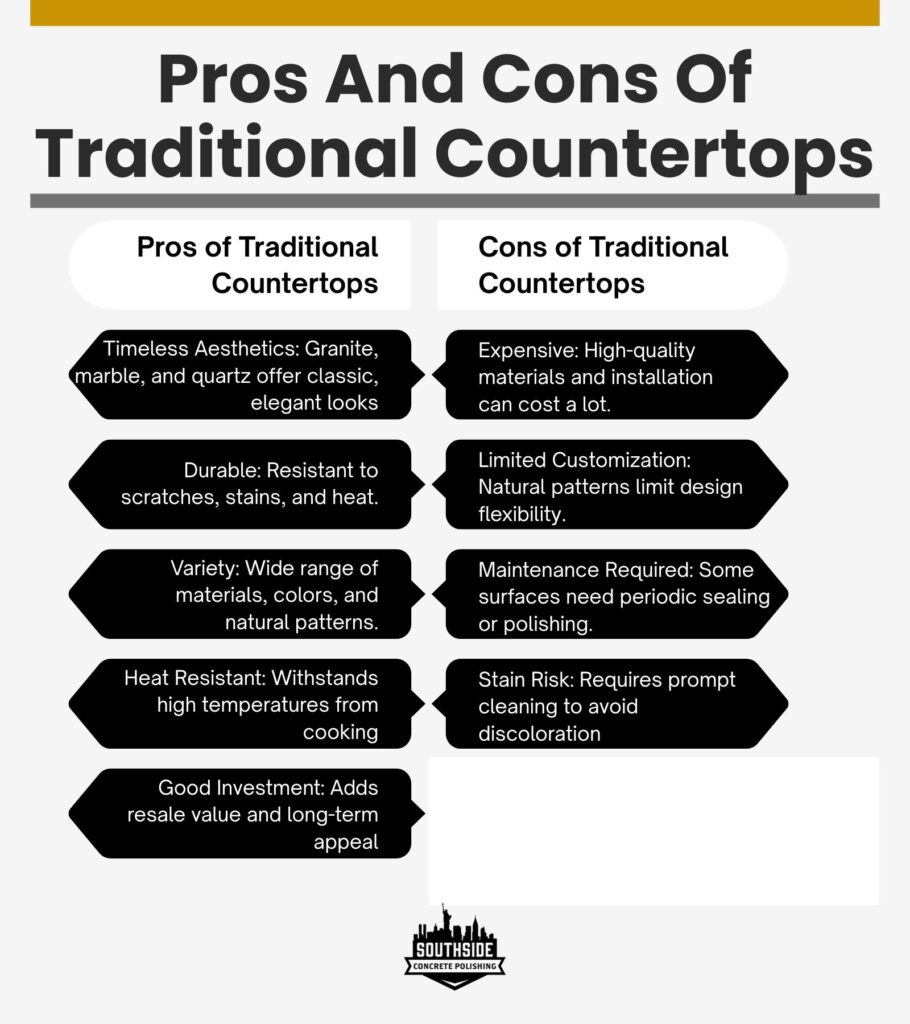
Pros of Traditional Countertops
Here are the pros of traditional countertops;
-
Timeless Aesthetics: Traditional countertops such as granite, marble, and quartz offer a classic, elegant appearance that never goes out of style, instantly elevating the beauty and sophistication of any space.
-
Durability: These materials are known for their strength and longevity, resisting scratches, stains, and heat, making them ideal for high-traffic areas like kitchens and bathrooms.
-
Variety of Options: Traditional surfaces come in a vast selection of materials, colors, and natural patterns, allowing homeowners to find options that perfectly match their design vision and budget.
-
Heat Resistance: Natural stone countertops, in particular, can endure high temperatures, providing a practical and reliable surface for everyday cooking activities.
-
Solid Investment: High-quality traditional countertops not only enhance functionality and aesthetics but also add significant resale value to your home, making them a smart long-term investment.
Cons of Traditional Countertops
Here are the cons of Traditional Countertops
-
Cost: Premium traditional materials such as granite and marble can be costly, with prices varying based on quality, size, and installation complexity. While they offer lasting value, the initial investment can be substantial.
-
Limited Customization: Unlike epoxy, traditional countertops provide limited design flexibility, as their colors and patterns are naturally formed, offering less room for creative or personalized designs.
-
Maintenance: Certain traditional surfaces require routine sealing or polishing to preserve their shine and durability, adding to long-term maintenance and care costs.
-
Susceptibility to Stains: Although many traditional materials are stain-resistant, they still demand prompt cleaning and proper sealing to prevent discoloration or permanent staining over time.
How to Choose Between Epoxy Countertops and Traditional Surfaces?
To choose between epoxy countertops and traditional surfaces for your kitchen or other spaces, following several key metrics can help you make an informed decision.
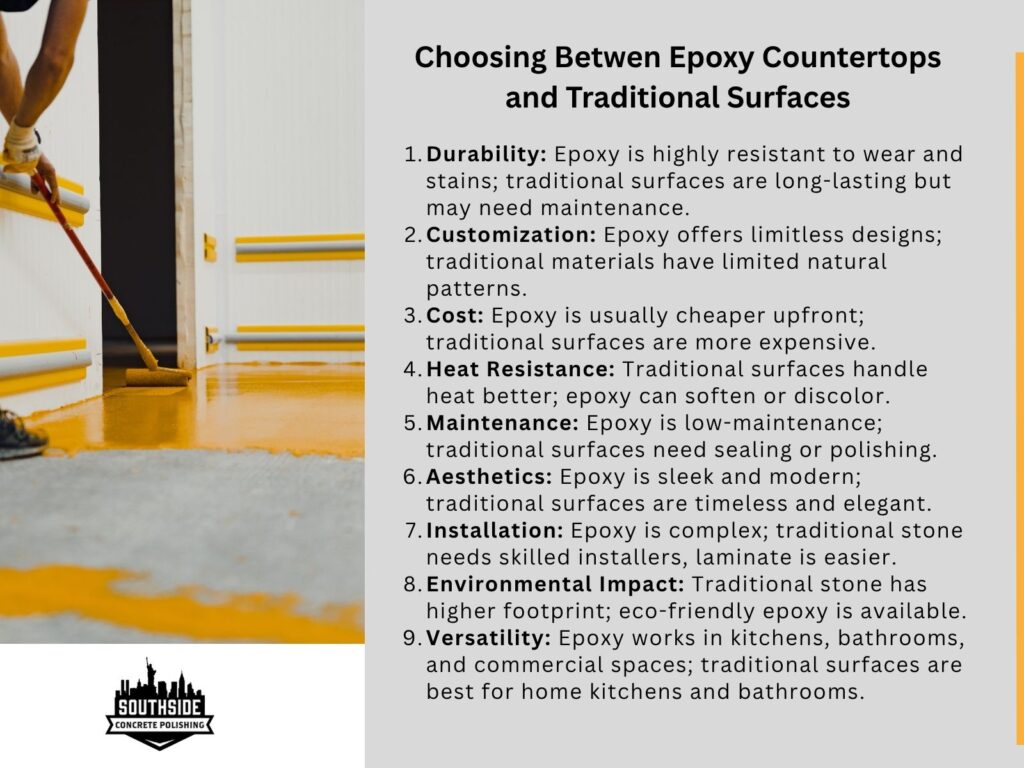
Here are some important points to consider:
1. Durability:
Epoxy countertops are exceptionally durable and resistant to stains, chemicals, and daily wear, making them ideal for busy kitchens. Traditional surfaces such as granite and quartz are also long-lasting but may require periodic maintenance to prevent staining or chipping.
2. Customization:
While traditional materials offer a variety of natural colors and patterns, they have limited customization potential. Epoxy countertops, however, provide limitless design options, allowing homeowners to create unique, artistic finishes that mimic marble, stone, or abstract designs.
3. Cost:
Epoxy countertops are often more affordable upfront compared to premium traditional materials like marble or granite. However, total costs can vary based on factors such as design complexity, surface size, and installation method.
4. Heat Resistance:
Traditional surfaces like granite and quartz excel in heat resistance, easily handling hot cookware. Epoxy countertops, while moderately heat-resistant, can discolor or soften under extreme temperatures, so using trivets or hot pads is recommended.
5. Maintenance:
Epoxy countertops require minimal upkeep; simple cleaning with mild soap and water keeps them looking new. In contrast, traditional materials need occasional sealing or polishing to maintain their finish and prevent damage.
6. Aesthetics:
Epoxy countertops deliver a sleek, modern appearance perfect for contemporary interiors, offering vibrant and customizable designs. Traditional surfaces provide timeless elegance, blending seamlessly into both classic and modern decor styles.
7. Installation:
Installing epoxy countertops is a complex process that demands professional expertise to avoid bubbles or uneven finishes. Traditional countertops, such as laminate, are simpler to install, though materials like granite and marble still require skilled installers.
8. Environmental Impact:
Natural stone surfaces often carry a larger environmental footprint due to quarrying and transport. Epoxy countertops can be a more sustainable alternative, especially when made using eco-friendly resins like EcoPoxy.
9. Versatility:
Epoxy countertops are suitable for kitchens, bathrooms, and commercial spaces thanks to their moisture resistance, easy maintenance, and seamless finish. Traditional materials are equally versatile; granite, quartz, and marble remain top choices for home kitchens and bathrooms, while businesses seeking a luxurious look often opt for stone surfaces. However, wood countertops are less practical in high-traffic commercial settings due to maintenance demands.
Are epoxy countertops more durable than traditional countertops?
Yes, epoxy countertops are more durable and resistant to stains, moisture, and chemicals. However, traditional materials like granite and quartz last longer overall, especially when properly maintained. Just like epoxy countertops, epoxy flooring is an excellent choice for kitchens, offering durability, easy maintenance, and a sleek, modern finish. The benefits of epoxy flooring for commercial kitchen floors include superior slip resistance, easy cleaning, and excellent durability against heat, spills, and heavy foot traffic.
Are epoxy countertops more affordable than granite or marble?
Yes, epoxy countertops are more affordable than granite or marble. They are budget-friendly to install, though costs rise with custom designs or professional installation.
Which countertop type is best for bathrooms?
Epoxy countertops are best for the bathroom. It offers superior moisture resistance and seamless installation, while traditional stone adds elegance and a natural look.
Can the durability of epoxy countertops be compared to epoxy flooring?
Yes, the durability of epoxy countertops can be compared to epoxy flooring. Like epoxy flooring, epoxy countertops offer exceptional durability, chemical resistance, and a seamless, easy-to-clean surface. Both surfaces benefit from epoxy's strength and versatility, making them long-lasting and low-maintenance compared to traditional materials.
How to choose between polyurea vs epoxy countertops?
To choose between polyurea vs epoxy countertops depends on your priorities. Epoxy is ideal if you want a thick, glossy, decorative surface with custom colors and patterns. Polyurea, on the other hand, cures faster and offers excellent durability but has a more industrial look and fewer design options. Consider your desired style, budget, and performance needs when deciding between polyurea vs epoxy.
How to choose between sealed vs polished concrete countertop finishes?
To choose between sealed vs polished concrete countertop finishes depends on the look and performance you want. Sealed concrete offers a more natural, matte appearance with basic stain protection, while polished concrete delivers a glossy, durable, and low-maintenance finish. Consider your preferred style, maintenance needs, and overall durability requirements when selecting between sealed vs polished concrete.