Sealed vs. polished concrete is a popular flooring option, each offering unique benefits. Sealed concrete is treated with a protective coating that prevents stains, moisture, and wear, while polished concrete is mechanically ground and buffed to create a smooth, glossy, and durable surface. Both are trending in commercial and residential spaces in New Jersey due to their low maintenance, longevity, and modern aesthetic appeal, with polished concrete gaining attention for its sleek, high-end look and sealed concrete preferred for practical protection in high-traffic areas.
The difference between sealed and polished concrete includes their surface treatment, durability, appearance, maintenance requirements, and overall aesthetic appeal. The pros of sealed concrete include protection from spills, easy cleaning, and affordable maintenance, while the cons are periodic resealing and less shine. The pros of polished concrete include long-lasting durability, a reflective finish, and minimal upkeep, while the cons include higher initial cost and potential slipperiness when wet. Choosing between them depends on whether durability or surface appearance is the priority.
What is Sealed Concrete?
Sealed concrete is a type of flooring where a protective coating is applied to the concrete surface to shield it from moisture, stains, and daily wear. This treatment enhances the durability of the floor while making it easier to clean and maintain. Sealing also helps preserve the concrete's natural color and adds a subtle gloss or matte finish, depending on the sealer used. Sealed concrete is a practical and cost-effective solution for both residential and commercial spaces.
What is Polished Concrete?
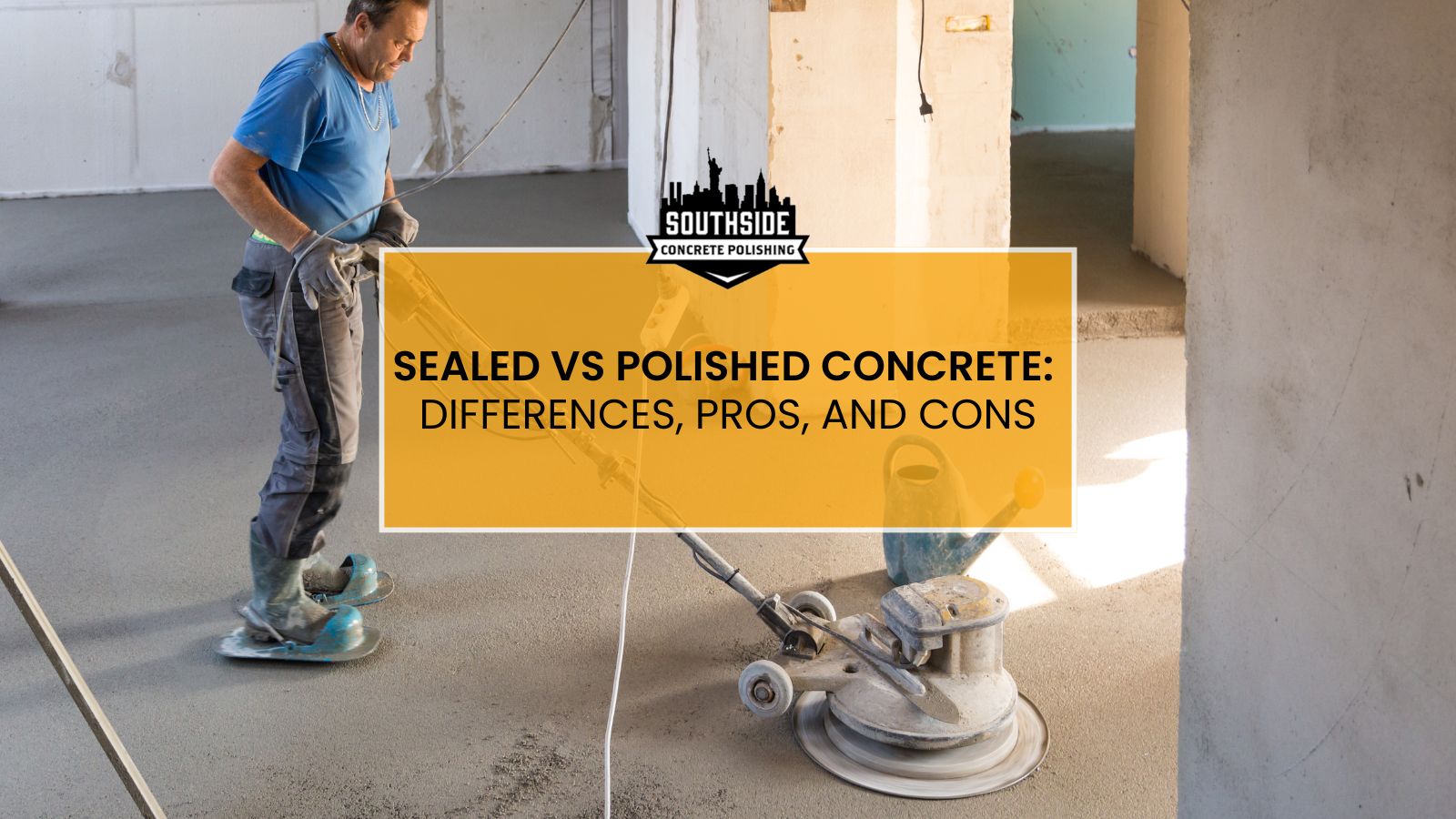
Polished concrete is a flooring solution achieved by mechanically grinding and buffing the concrete surface to create a smooth, glossy finish. This process not only enhances the floor's aesthetic appeal but also increases its durability and resistance to wear. Polished concrete requires minimal maintenance and reflects light, making spaces appear brighter and more spacious. It is a popular choice for both modern residential interiors and high-traffic commercial environments due to its sleek, long-lasting, and low-maintenance qualities.
What Are The Differences Between Sealed vs Polished Concrete?
The difference between sealed and polished concrete lies in how they are treated, finished, and maintained. Each offers distinct visual effects, durability levels, and maintenance needs, making them suitable for different spaces and purposes. Choosing between the two depends on the desired look, functionality, and long-term performance. Both have become popular options in modern flooring trends, especially in residential and commercial projects.
Here are the differences between sealed vs polished concrete:
Process Used
-
Sealed Concrete: Involves applying a protective sealer onto the surface, forming a barrier against moisture, stains, and wear. The process is straightforward and does not alter the concrete itself.
-
Polished Concrete: Achieved by mechanically grinding and polishing the concrete with diamond abrasives. This process smooths and densifies the surface while preparing it for a high-gloss, reflective finish.
Finish and Appearance
-
Sealed Concrete: Offers a variety of finishes, including matte, glossy, or decorative, depending on the sealer used. It enhances color and protects the concrete without significantly changing its texture.
-
Polished Concrete: Creates a sleek, reflective, and high-gloss surface that amplifies natural light. The process also exposes decorative aggregates, giving a modern and premium look.
Durability and Protection
-
Sealed Concrete: Provides moderate protection against stains, chemicals, and water. The sealer can wear off over time, requiring reapplication to maintain its protective qualities.
-
Polished Concrete: Improves the inherent strength of concrete by densifying the surface, making it highly resistant to abrasion, heavy foot traffic, and daily wear.
Maintenance Requirements
-
Sealed Concrete: Easy to clean with routine sweeping and mopping, but periodic resealing is needed to maintain protection and appearance.
-
Polished Concrete: Requires minimal maintenance, regular cleaning to retain its shine, with no need for resealing over time.
Cost Considerations
-
Sealed Concrete: More affordable upfront because it requires less labor and equipment. However, resealing costs add up over time.
-
Polished Concrete: Higher initial cost due to grinding and polishing equipment and labor, but lower maintenance and longevity make it cost-effective in the long run.
Longevity
-
Sealed Concrete: Lasts several years depending on foot traffic and environmental conditions, but the protective layer degrades faster in high-use areas.
-
Polished Concrete: Extremely durable and long-lasting, often lasting decades with proper care, making it ideal for commercial and high-traffic spaces.
Slip Resistance
-
Sealed Concrete: Slip resistance depends on the type of sealer used; some glossy sealers may make the surface slippery when wet.
-
Polished Concrete: Can be treated with anti-slip coatings or finishes, providing both a smooth look and safer traction for high-traffic areas.
Aesthetic Versatility
-
Sealed Concrete: Limited in design options; mostly enhances the natural color of the concrete or adds simple stains and tints.
-
Polished Concrete: Offers more decorative possibilities, including exposed aggregates, patterns, dyes, and metallic effects, giving a customizable and modern look.
What are the Pros and Cons of Sealed Concrete?
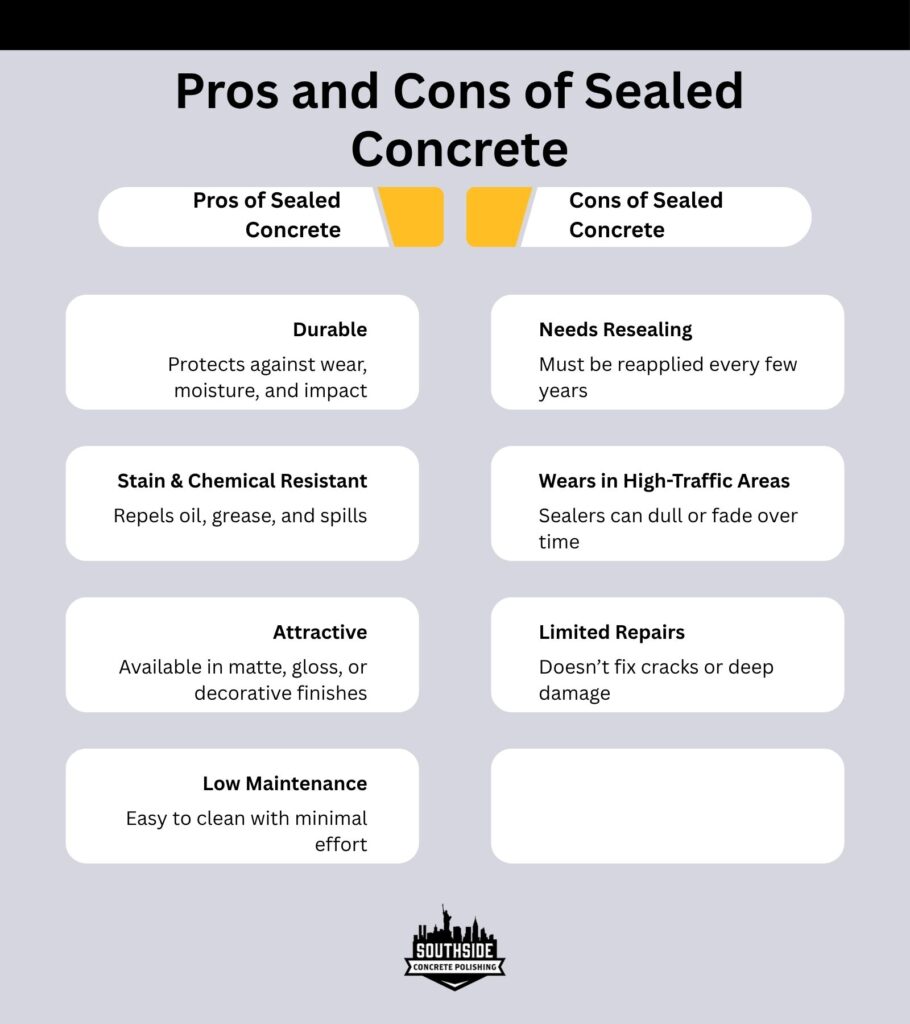
The pros and cons of sealed concrete include its durability, stain resistance, aesthetic versatility, and maintenance requirements. While it offers significant protection and design options, sealed concrete also requires ongoing care and has limitations in repairing deep damage. Understanding these advantages and drawbacks helps in deciding if sealed concrete is the right choice for your space.
Here are the key benefits and drawbacks:
Pros of Sealed Concrete
-
Enhanced Durability: The sealer forms a protective layer that guards against everyday wear, foot traffic, and minor impacts, helping the concrete last longer.
-
Resistance to Stains and Chemicals: Sealed surfaces repel oil, grease, and spills, making them ideal for garages, kitchens, and commercial areas where accidents are common.
-
Aesthetic Versatility: Available in matte, glossy, or decorative finishes, sealers are also tinted or stained, allowing for customized and vibrant designs.
-
Easy Maintenance: The smooth, non-porous surface resists dirt and stains, making cleaning simple with regular sweeping and occasional mopping.
Cons of Sealed Concrete
-
Periodic Resealing: To maintain protection, sealed concrete needs resealing over time, depending on traffic, exposure, and sealer type.
-
Sealer Wear and Reapplication: High-traffic areas wear down the sealer, requiring reapplication to restore stain resistance and durability.
-
Limited Repair Options: While sealers protect the surface, they do not fix structural damage or deep cracks, which require extensive repair or replacement.
What are the Pros and Cons of Polished Concrete?
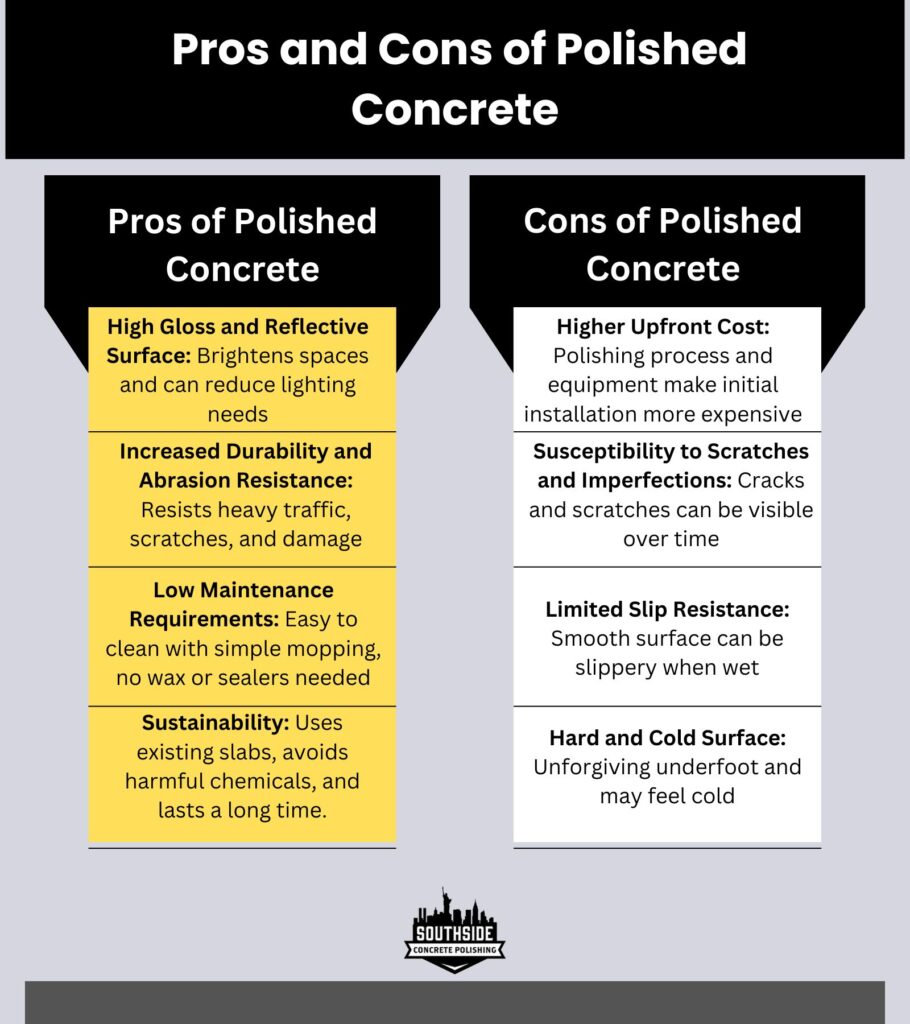
The pros and cons of polished concrete include its durability, low maintenance, high-gloss appearance, and sustainability, balanced against higher upfront costs and potential surface concerns. Understanding these factors helps determine if polished concrete is the right choice for your space.
Here are the key benefits and drawbacks:
Pros of Polished Concrete
-
High Gloss and Reflective Surface: The polished finish reflects light, brightening spaces and potentially reducing the need for artificial lighting.
-
Increased Durability and Abrasion Resistance: Polishing compacts the concrete surface, making it resistant to heavy foot traffic, machinery, scratches, and surface damage.
-
Low Maintenance Requirements: The smooth, non-porous surface is easy to clean with simple dry or wet mopping, without the need for waxes or sealers.
-
Sustainability: Polished concrete uses the existing slab, avoids harmful chemicals, and has a long lifespan, reducing material waste and environmental impact.
Cons of Polished Concrete
-
Higher Upfront Cost: The labor-intensive polishing process and specialized equipment make initial installation more expensive than other flooring options.
-
Susceptibility to Scratches and Imperfections: While durable, polished concrete shows scratches over time, and pre-existing cracks become more visible after polishing.
-
Limited Slip Resistance: The smooth, glossy surface is slippery when wet, which is a consideration for areas prone to spills or moisture.
What are the Factors to Consider Between Sealed and Polished Concrete?
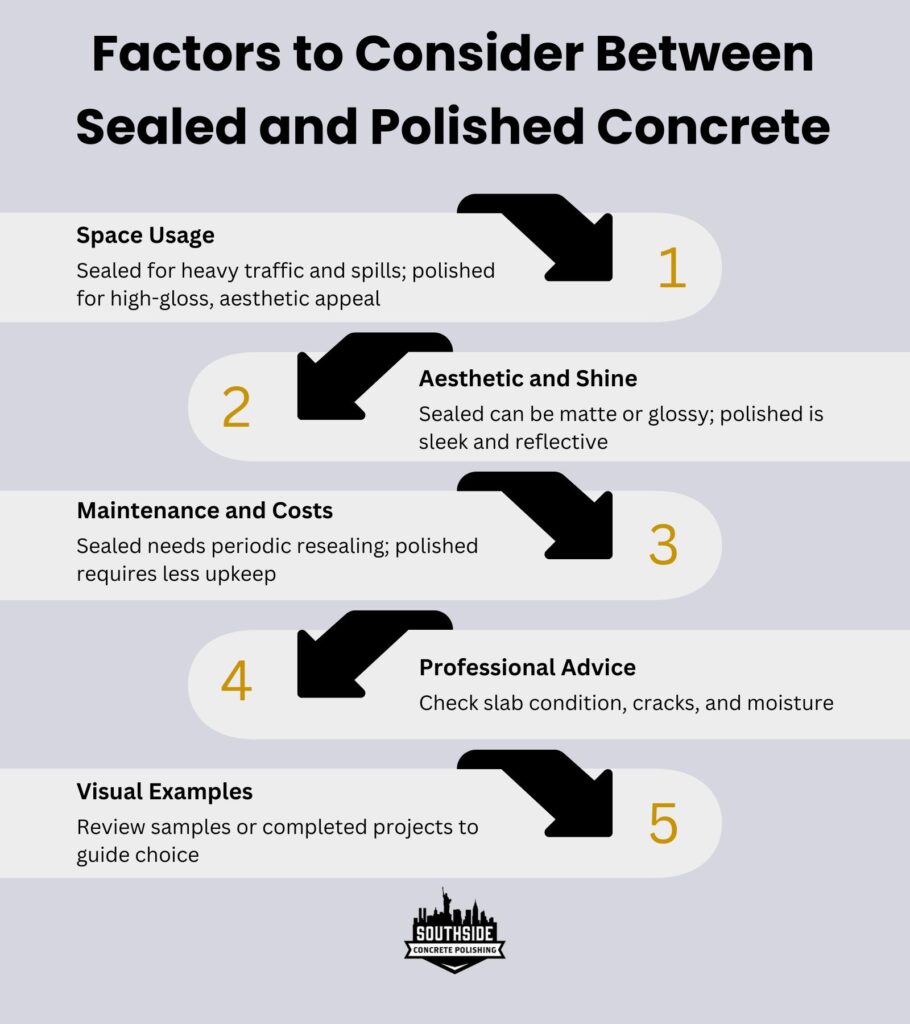
The factors to consider when choosing between sealed and polished concrete require careful consideration of your space's usage, aesthetic goals, and long-term maintenance needs. Each option offers unique benefits, so understanding these factors helps you make an informed decision.
Here are the key factors to consider:
-
Assess the Specific Needs and Usage of the Space: Evaluate how the area is used. Sealed concrete is ideal for spaces exposed to heavy foot traffic, spills, or chemicals due to its protective barrier. Polished concrete is better suited for areas where aesthetics and a reflective, high-gloss finish are a priority.
-
Evaluate Desired Aesthetic and Shine: Consider the overall look you want. Sealed concrete provides matte, glossy, or decorative finishes, while polished concrete delivers a sleek, reflective surface that enhances natural light and creates a modern ambiance.
-
Consult with Flooring Professionals: Experts assess the condition of the existing concrete, check for cracks or moisture issues, and advise on the feasibility of each option, ensuring the best long-term outcome.
-
Consider Maintenance and Long-Term Costs: Sealed concrete requires periodic resealing, whereas polished concrete generally has lower upkeep. Factor in your willingness to manage maintenance and associated costs over time.
-
Review Samples and Completed Projects: Seeing real-world examples helps you visualize the final appearance, ensuring that the chosen option aligns with your design preferences and expectations.
How to Choose Between Sealed Vs Polished Concrete For Your Garage?
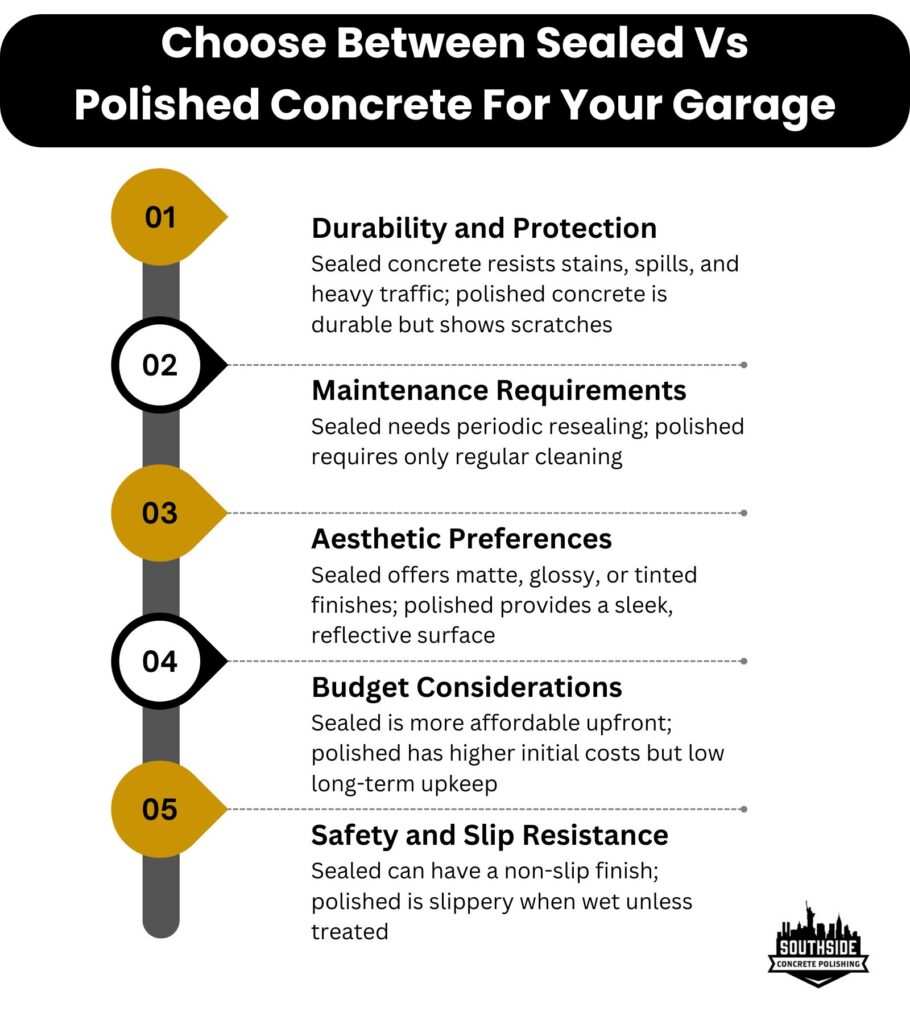
To choose between sealed vs polished concrete for your garage, you must consider factors such as durability, maintenance, aesthetics, and your daily usage. The right choice ensures your garage floor remains functional, visually appealing, and long-lasting. Understanding the differences between the two options helps you make a decision that fits your needs and budget.
Here are key considerations when selecting a garage floor solution:
-
Durability and Protection: If your garage is exposed to heavy traffic, vehicle weight, or potential chemical spills, sealed concrete provides a protective barrier that resists stains and wear. Polished concrete is also durable, but focuses more on aesthetic appeal and shows scratches over time.
-
Maintenance Requirements: Sealed concrete requires periodic resealing to maintain its protective properties, while polished concrete generally has lower maintenance needs, requiring only regular cleaning to preserve its shine.
-
Aesthetic Preferences: Sealed concrete offers options like matte, glossy, or tinted finishes for a customized look. Polished concrete provides a high-gloss, reflective surface that brightens the garage and creates a modern, sleek appearance.
-
Budget Considerations: Sealed concrete is usually more affordable upfront, whereas polished concrete involves higher initial costs due to grinding and polishing, but offers long-term value through durability and minimal upkeep.
-
Safety and Slip Resistance: In garages where spills or moisture are common, sealed concrete with a non-slip finish is safer. Polished concrete is smooth and glossy, which is slippery when wet, so consider adding anti-slip treatments if needed.
How does sealed concrete need resealing?
Sealed concrete requires resealing every 2--5 years, depending on traffic, exposure, and the type of sealer used. Regular resealing helps maintain its protective barrier, preventing stains, moisture damage, and surface wear. Proper maintenance ensures the floor stays durable and visually appealing for many years.
Is polished concrete slippery?
Yes, polished concrete is slippery, especially when wet. Adding anti-slip coatings or mats improves safety in such areas. Choosing the right finish or adding textured treatments further reduces the risk of slips. Regular cleaning to remove dust and spills also helps maintain traction and ensures a safer surface.
Sealed Vs Polished Concrete: Which is better for a garage floor?
Sealed concrete is better for a garage floor due to its stain and chemical resistance, while polished concrete works well if aesthetics and a high-gloss finish are a priority. Sealed concrete withstands vehicle spills, oil, and heavy use, making it highly practical for garages. Polished Concrete, while visually striking, requires extra precautions like anti-slip treatments to ensure safety in such spaces.
Can concrete engraving be used on sealed or polished concrete floors?
Yes, concrete engraving can be used on sealed and polished concrete floors to add custom patterns and textures. On sealed concrete, engraving enhances the surface design, while on polished concrete, concrete engraving creates decorative effects without compromising the glossy, durable finish.
Can epoxy-coated concrete be applied over sealed or polished concrete floors?
Yes, epoxy-coated concrete can be applied over sealed and polished concrete to enhance durability, chemical resistance, and aesthetics. Epoxy-coated concrete provides a protective, glossy finish that extends the life of the floor while adding a sleek, easy-to-clean surface.