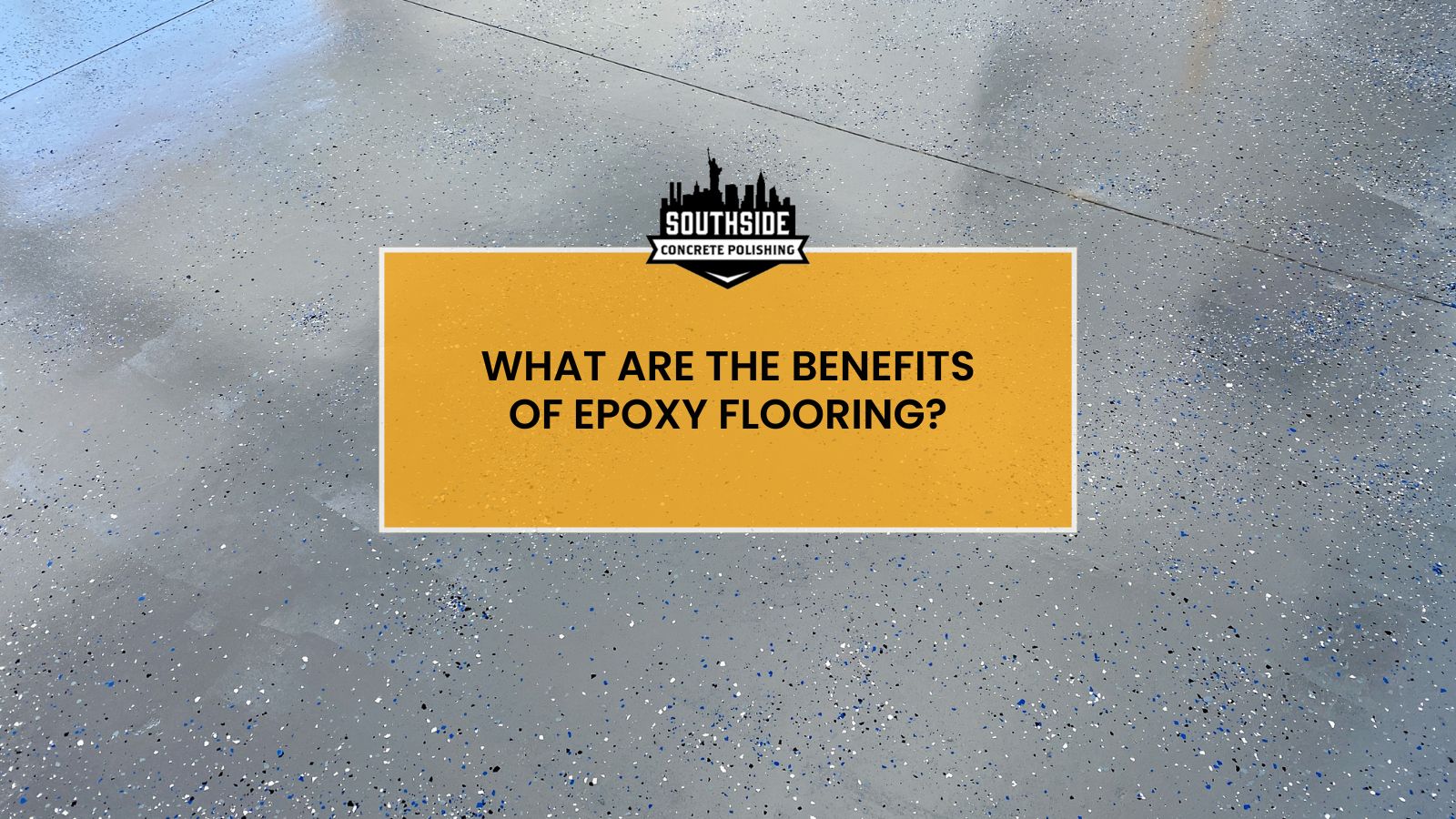
The benefits of epoxy flooring include durability, hygiene, safety, aesthetic flexibility, and long-term cost efficiency. Epoxy systems combine mechanical strength with chemical and moisture resistance, creating a seamless and high-performance surface for industrial, commercial, and residential use.
Epoxy flooring is one of the most durable, hygienic, and visually versatile surface systems available. Formed from a chemical reaction between resin and hardener, it bonds tightly to concrete substrates to produce a dense, non-porous coating that resists impact, abrasion, and chemicals. In both functional and decorative applications, such as garages, hospitals, retail spaces, and manufacturing facilities, epoxy delivers lasting performance with minimal upkeep.
The reflective finish of epoxy flooring enhances interior brightness by up to 30%, lowering lighting energy consumption, as reported by the New York State Energy Research and Development Authority, 2024. Modern low-VOC epoxy systems align with sustainable building standards, extending the life of existing floors while minimizing environmental impact.
What Makes Epoxy Flooring a Durable and Long-Lasting Solution?
Epoxy flooring is a durable and long-lasting solution because it chemically bonds to the underlying concrete, creating a dense, impact-resistant surface. The cross-linked polymer structure resists abrasion, chemical exposure, and mechanical stress better than traditional floor coatings. Properly installed and maintained epoxy floors can last 20--30 years, outperforming conventional concrete sealers or vinyl tile systems.
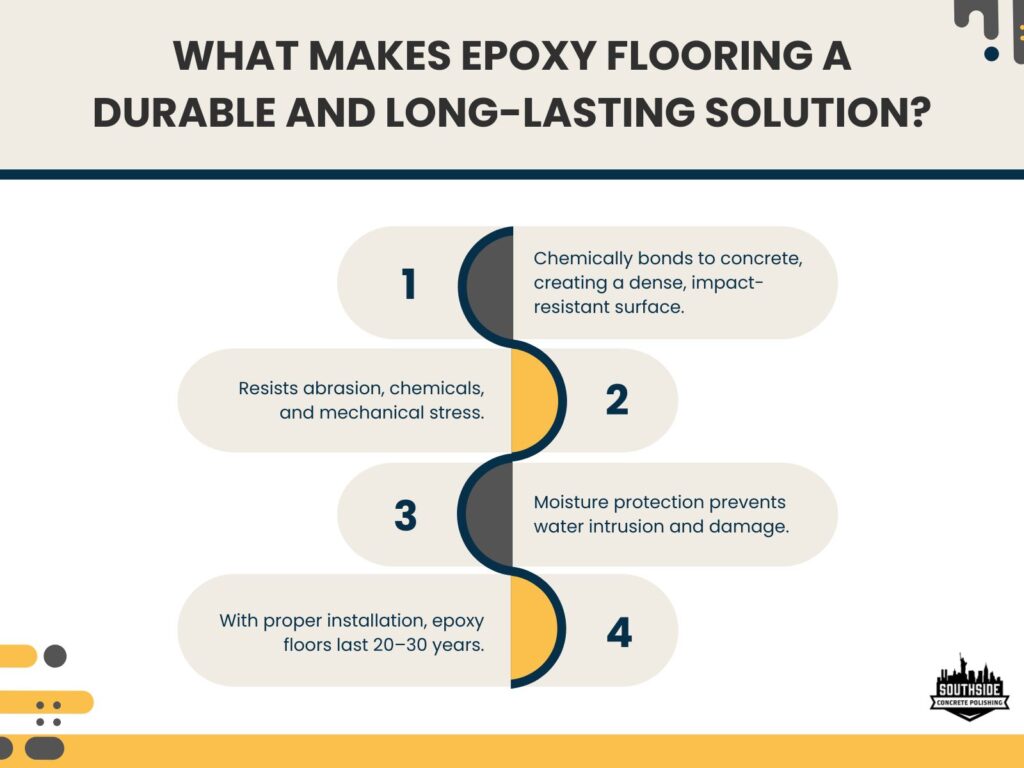
The durability of epoxy flooring is defined by the following factors:
-
Compressive strength: High-build epoxy coatings sustain static and dynamic loads exceeding 10,000 psi. This allows forklifts, vehicles, and industrial machinery to operate without surface deformation or peeling. The load-bearing capacity remains consistent even in temperature-variable environments.
-
Chemical resistance: The inert cured surface forms a non-reactive barrier against oils, fuels, acids, alkalis, and solvents. In industrial and automotive settings, this prevents staining, corrosion, and substrate degradation caused by chemical spills or leaks.
-
Abrasion resistance: Epoxy's dense surface composition minimizes wear from repeated foot and wheel traffic. It maintains its gloss and structural uniformity in manufacturing plants, garages, and warehouses, where constant movement and friction erode lesser coatings.
-
Moisture protection: The impermeable finish blocks vapor migration and water intrusion from below or above the slab. This barrier prevents efflorescence, delamination, and freeze--thaw damage in moisture-prone environments.
-
Impact tolerance: Multi-layer epoxy systems with flexible topcoats absorb shocks from dropped tools, pallets, or heavy equipment, reducing the risk of chipping and surface fracture.
-
Thermal stability: Epoxy coatings maintain dimensional stability under fluctuating temperatures, resisting expansion, contraction, and thermal cycling damage common in production or storage areas.
How Does Epoxy Flooring Improve Hygiene and Cleanability?
Epoxy flooring improves hygiene and cleanability by forming a non-porous, seamless surface that prevents the accumulation of dirt, bacteria, and moisture. Unlike tile or concrete joints that trap grime, epoxy coatings provide a continuous layer that repels contaminants. This hygienic performance makes epoxy ideal for hospitals, laboratories, commercial kitchens, and garages where cleanliness is critical.
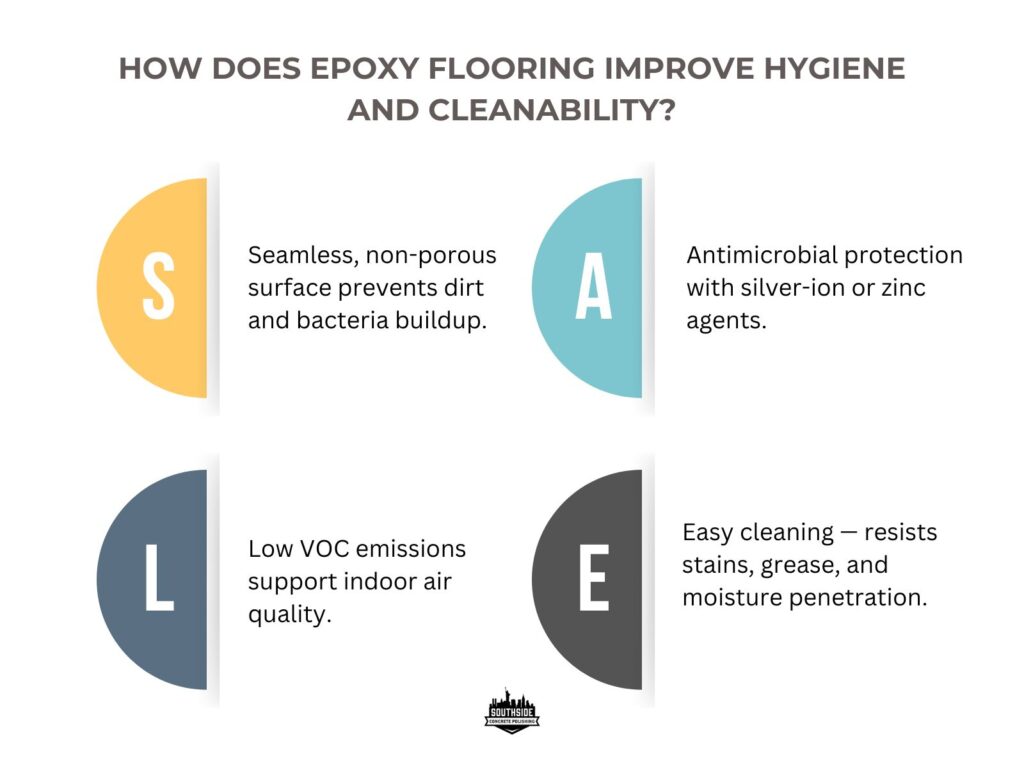
The hygienic advantages of epoxy flooring include:
-
Antimicrobial protection: Advanced epoxy formulations are engineered with silver-ion or zinc-based antimicrobial agents that inhibit bacterial, fungal, and microbial growth on contact. This provides ongoing surface protection in healthcare and food handling environments, reducing the spread of contaminants.
-
Low VOC emissions: Modern epoxy systems emit fewer than 50 grams of volatile organic compounds per liter, supporting better indoor air quality and compliance with LEED and EPA standards. This feature makes epoxy safe for use in enclosed or high-traffic areas where ventilation may be limited.
-
Ease of maintenance: The smooth, non-porous finish allows for efficient cleaning using neutral-pH detergents or automated floor scrubbers. Daily upkeep involves dry dust mopping or damp wiping, reducing maintenance labor and chemical use compared to grout-lined or porous flooring materials.
-
Stain resistance: The chemically inert surface repels oils, dyes, and solvents, preventing discoloration and odor retention. Even substances such as grease, hydraulic fluid, or food acids are easily wiped away without surface etching or damage.
-
Moisture barrier protection: Epoxy's impermeable structure prevents water penetration into the substrate, reducing mold formation and protecting underlying concrete from biological decay.
Why Is Epoxy Flooring Visually Appealing and Customizable?
Epoxy flooring is visually appealing and customizable because it offers a wide variety of colors, textures, and finishes that are tailored to any interior or industrial aesthetic. Beyond its aesthetics, epoxy's light-reflective quality increases brightness in interior spaces by up to 30%, reducing lighting costs and creating a cleaner, more open environment.
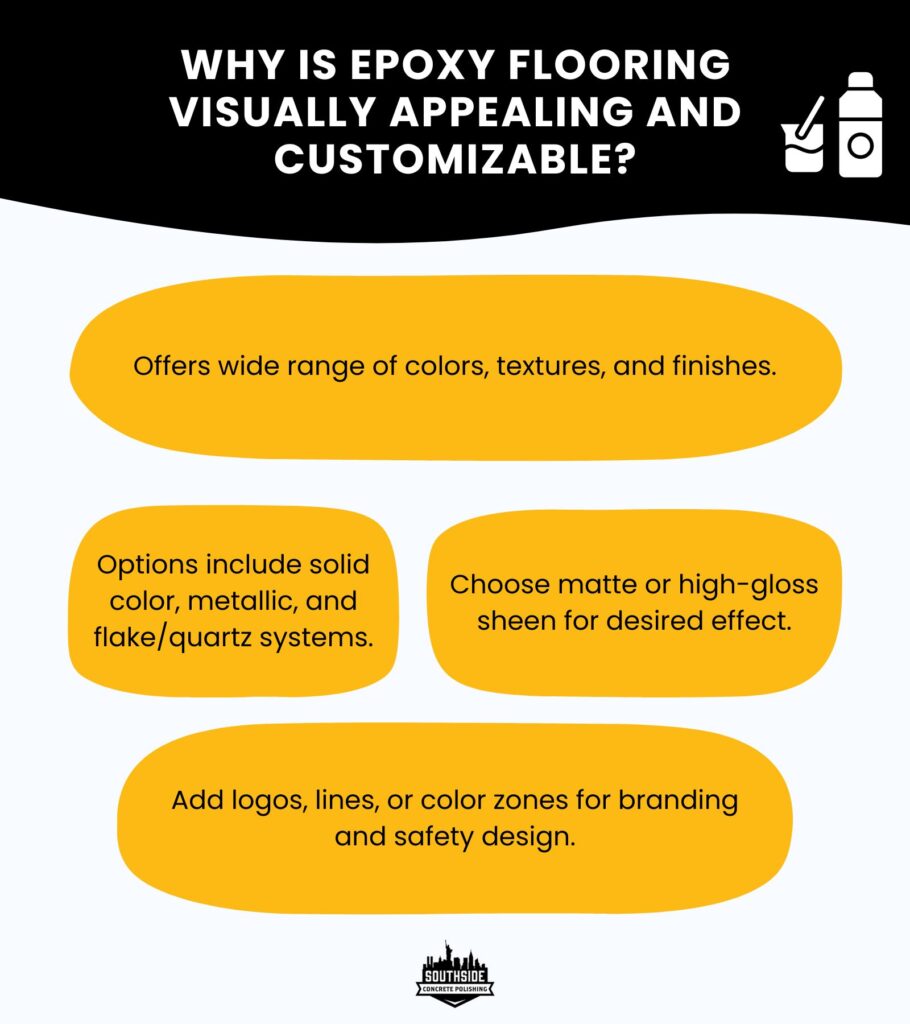
The most common customization options for epoxy flooring are as follows:
-
Solid color coatings: Deliver a sleek, uniform appearance ideal for commercial showrooms, offices, and warehouses. These systems use high-build pigmented epoxy for maximum color saturation and durability.
-
Metallic epoxy finishes: Infused with metallic pigments that produce a three-dimensional, fluid-like visual effect. The result mimics marble, lava, or polished stone, offering a high-end aesthetic suited for lobbies, retail stores, and residential interiors.
-
Flake or quartz systems: Incorporate decorative vinyl flakes or colored quartz granules into the coating to enhance visual texture and provide additional slip resistance. These are widely used in garages, hospitals, and food facilities for both safety and style.
-
Matte to high-gloss finishes: The topcoat sheen is selected to control reflectivity and surface appearance. High-gloss finishes enhance light and depth, while matte finishes minimize glare in high-traffic or industrial zones.
-
Custom patterns and demarcations: Epoxy coatings include embedded logos, directional lines, or color-coded safety zones to define workflows or branding elements without surface seams or decals.
How Does Epoxy Flooring Enhance Safety and Performance?
Epoxy flooring enhances safety and performance through its slip-resistant, fire-retardant, and impact-absorbing properties. In high-traffic commercial environments, these performance traits reduce accident risk and maintain operational efficiency.
The key performance advantages of epoxy flooring are as follows:
-
Slip resistance: Anti-slip aggregates such as quartz sand, aluminum oxide, or polymer flakes are embedded into the coating to enhance traction under wet, oily, or high-traffic conditions. This reduces slip-related accidents without compromising surface aesthetics or cleanability.
-
Fire resistance: Specialized epoxy formulations include fire-retardant compounds that resist ignition and slow flame spread. This property adds an extra layer of safety in environments exposed to flammable substances or elevated temperatures.
-
Marking and zoning: Epoxy's pigment versatility allows for permanent, high-contrast demarcations. Color-coded lanes, safety lines, and designated zones improve spatial organization and visual communication, supporting OSHA-compliant safety layouts.
-
Chemical containment: The seamless, impermeable surface prevents chemical absorption or leakage, isolating hazardous spills before they spread. This containment capability protects both structural integrity and worker safety during industrial operations.
-
Impact and load tolerance: High-performance epoxy systems absorb mechanical stress and resist cracking under heavy equipment, forklifts, or dropped tools, ensuring stable footing and long-term performance.
How Long Do Epoxy Floors Last?
Epoxy floors last 20--30 years, depending on traffic load, substrate condition, and environmental exposure. Residential floors exceed two decades of service life, while industrial floors may require recoating sooner due to heavier use.
What Factors Influence the Epoxy Floor Longevity?
Surface preparation, environmental conditions, maintenance frequency, and UV exposure all influence epoxy floor longevity. When these factors are controlled, and the floor is properly maintained, epoxy retains its gloss, mechanical stability, and structural integrity far longer than conventional coatings or tiles.
The main factors affecting epoxy floor longevity include:
-
Surface preparation quality: Adequate concrete profiling and cleaning before application allow maximum chemical bonding between epoxy and substrate, preventing peeling or delamination.
-
Environmental conditions: Controlled temperature and humidity during installation ensure proper curing, which directly determines coating hardness and adhesion strength.
-
Maintenance frequency: Routine sweeping, neutral cleaning, and immediate spill removal protect the surface from abrasion, staining, and chemical damage.
-
UV exposure: In areas with direct sunlight, applying a UV-resistant topcoat minimizes discoloration, chalking, and surface degradation over time.
Is Epoxy Flooring Suitable for Basements?
Yes, epoxy flooring is highly suitable for basements because it provides a durable, moisture-resistant surface that protects concrete from dampness, stains, and wear. Its seamless finish simplifies cleaning, enhances safety, and supports a hygienic environment in areas prone to humidity. For homeowners looking for a reliable and long-lasting solution,epoxy for the basement floor is an ideal choice.
Where Do You Use Metallic Epoxy Flooring?
Metallic epoxy flooring is used in areas where both aesthetics and durability are important. Its reflective, three-dimensional finish is ideal for lobbies, showrooms, high-end retail spaces, residential living areas, and commercial offices that require a luxurious yet durable surface.
Beyond its visual appeal, metallic epoxy maintains all functional benefits of standard epoxy, including chemical resistance, moisture protection, and easy maintenance, making metallic epoxy flooring a practical and stylish solution for modern interior floors.
Are Epoxy Floors Worth the Investment?
Yes, epoxy floors are worth the investment because they combine longevity, visual appeal, and performance at a lower life-cycle cost compared to other flooring systems.
How Does Epoxy Flooring Contribute to Sustainability?
Epoxy flooring contributes to sustainability by extending the lifespan of existing concrete surfaces and reducing waste. Its low-VOC composition, long service life, and reflective properties align with green building standards.
Can epoxy flooring be installed over damaged concrete?
Yes, epoxy flooring can be applied over structurally sound but cosmetically damaged concrete. Cracks and surface imperfections are first repaired with epoxy fillers or leveling compounds to ensure uniform adhesion and finish quality of epoxy flooring.
Does epoxy flooring require professional installation?
Yes, professional installation is recommended for epoxy flooring. Proper surface preparation, temperature control, and curing management determine coating performance. DIY kits often lack industrial-grade durability and may peel prematurely.
How do epoxy floors perform in cold or humid environments?
Epoxy floors perform well in cold or humid environments when moisture-resistant primers and temperature-controlled curing are used. Specialized formulations maintain adhesion and hardness even under fluctuating environmental conditions.