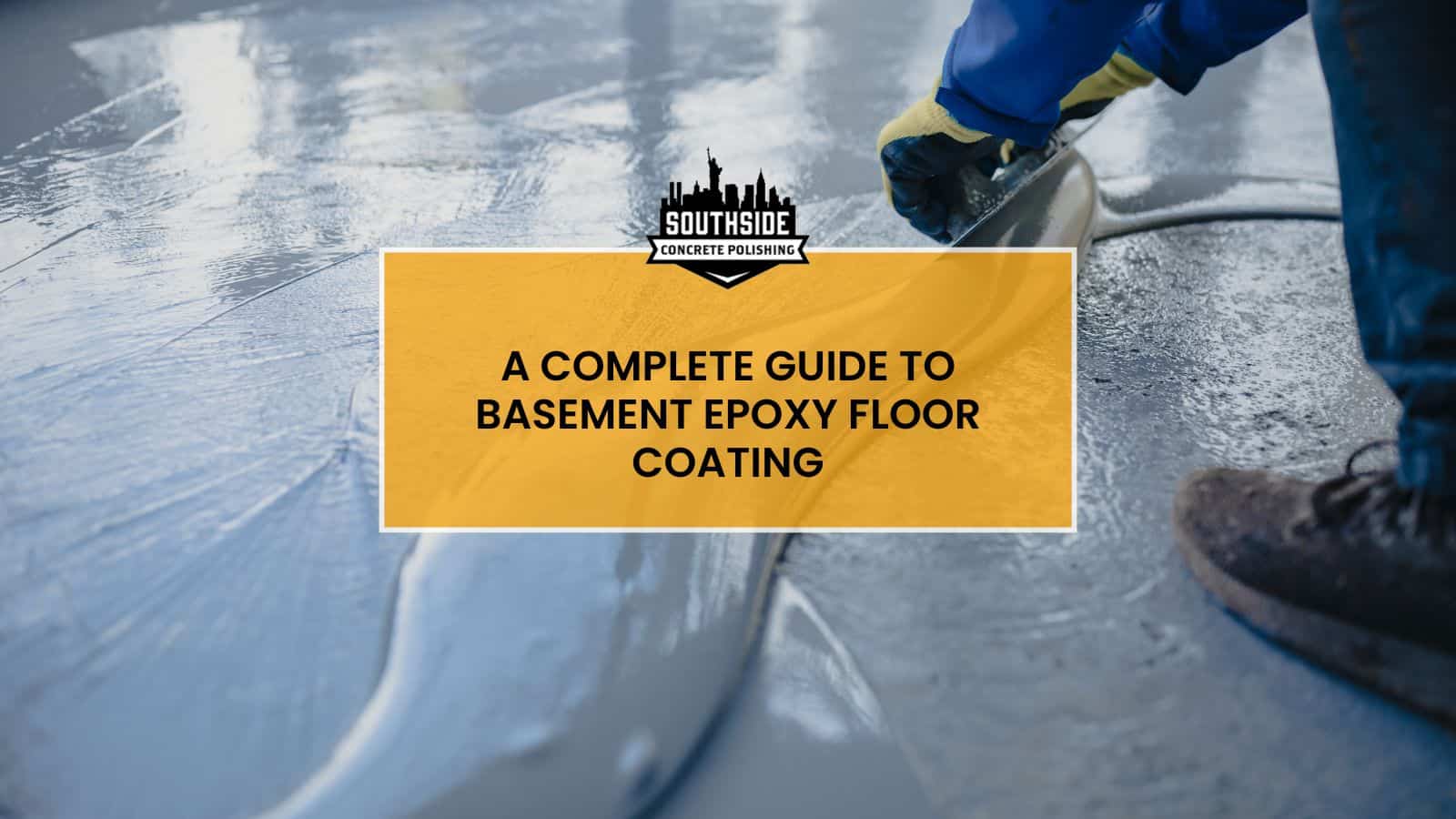
Basement epoxy floor coating is a durable and protective layer applied to basement concrete floors, enhancing their strength, resistance to moisture, and overall longevity. Epoxy coatings are increasingly used in commercial and industrial spaces, such as warehouses, retail outlets, and manufacturing facilities. Most commercial property owners in NJ now choose epoxy systems for their basements and storage areas because of their cost-efficiency and resistance to moisture-related damage.
Epoxy not only enhances the durability of concrete but also improves appearance with its glossy, professional finish. It seals cracks, prevents water infiltration, and resists stains and chemicals, ideal for high-traffic or damp environments. From pure epoxy to epoxy-acrylate and polyester resin systems, this coating provides excellent protection against wear and corrosion. This makes it a practical, long-term investment for commercial basements.
Why Basement Floor Coatings Matter?
Basement floor coatings matter because they protect the concrete surface from moisture, cracks, and chemical damage. It improves the overall durability and appearance of the space. In commercial buildings, where basements are used for storage, equipment, or utility areas, coatings like epoxy create a smooth, non-porous barrier that prevents water seepage and mold growth. They also make cleaning easier and reduce maintenance costs over time. By strengthening the floor and enhancing safety with slip-resistant finishes, basement coatings help businesses maintain a cleaner, more efficient, and professional-looking environment.
What are the Best Floor Coating Options For a Basement?
The best floor coating options for basements include durable and moisture-resistant materials that protect the concrete while improving its appearance and functionality. These coatings help prevent cracks, water damage, and mold growth. Choosing the right coating depends on whether the basement is used for storage, commercial operations, or as a finished workspace.
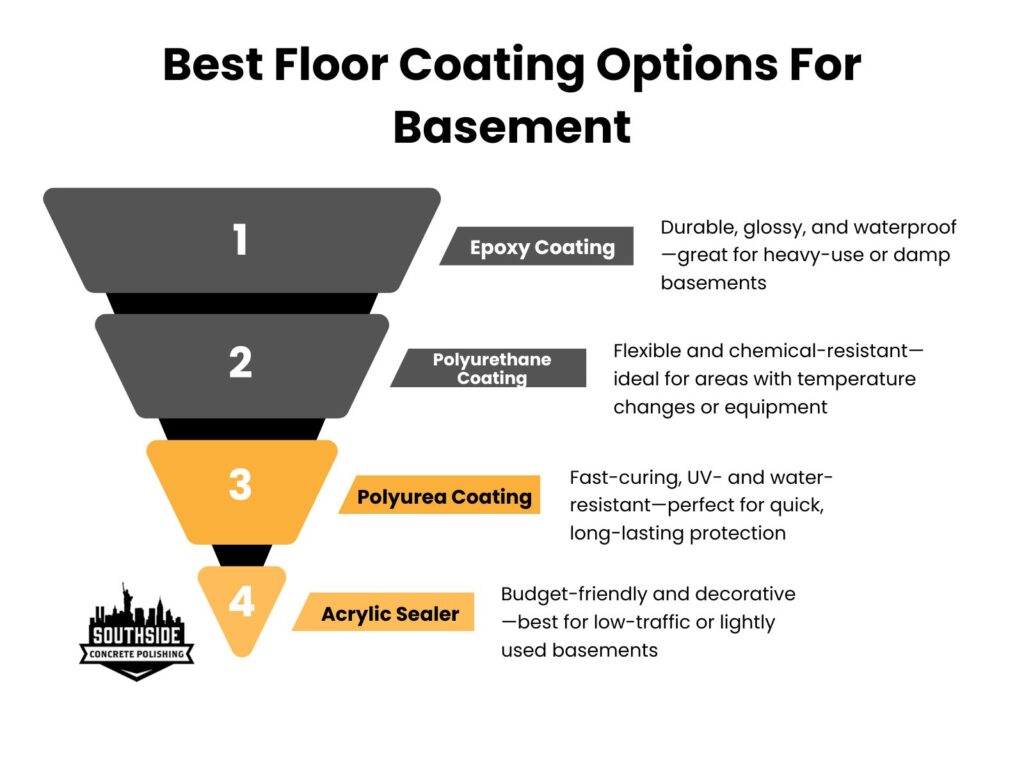
Here are the best floor coating options for basements;
-
Epoxy Coating: Known for its strength and glossy finish, epoxy provides a seamless, waterproof surface ideal for commercial basements exposed to heavy use and moisture.
-
Polyurethane Coating: Offers flexibility and resistance to chemicals and abrasions, making it a great choice for areas with temperature changes or mechanical equipment.
-
Polyurea Coating: A fast-curing option that provides superior durability, UV resistance, and waterproof protection, perfect for basements that need quick installation and long-lasting performance.
-
Acrylic Sealer: An affordable option that enhances appearance and adds a protective layer against stains and light moisture, ideal for low-traffic or decorative basement areas.
How to Choose the Right Epoxy Coating For Your Basement?
To choose the right epoxy coating for your basement, start by considering how the space is used and the conditions it faces. For commercial basements exposed to heavy equipment, foot traffic, or moisture, a high-build or quartz-filled epoxy offers maximum strength and slip resistance. If moisture or humidity is a concern, select a vapor barrier epoxy to prevent water damage and peeling. For areas that require a polished, professional look, such as showrooms or offices, self-leveling epoxy provides a smooth, glossy finish. You must assess curing time, chemical exposure, and maintenance needs before deciding. Consulting a professional installer ensures the right formulation and thickness are applied for long-lasting performance and protection.
How to Prepare Your Basement For Epoxy Floor Coating?
To prepare your basement for epoxy floor coating, you must start with a clean, dry, and smooth surface. Proper preparation ensures strong adhesion and long-lasting results. Any dirt, moisture, or cracks left untreated cause the coating to bubble, peel, or wear out prematurely.
Here's how to prepare your basement floor:
-
Clean the Surface: Remove dust, dirt, oil, or grease using a heavy-duty cleaner or degreaser.
-
Repair Cracks and Holes: Fill any cracks or chips with an epoxy patch or concrete filler to create an even surface.
-
Etch the Concrete: Use an acid etching solution or mechanical grinder to open the concrete pores for better epoxy bonding.
-
Check for Moisture: Conduct a moisture test to ensure the floor is completely dry before coating.
-
Prime the Floor: Apply an epoxy primer to enhance adhesion and improve coating durability.
What is the Step-By-Step Process of Basement Epoxy Floor Coating?
The Step-By-Step Process of Basement Epoxy Floor Coating includes a thorough inspection, surface preparation, proper product selection, and careful application. These steps ensure long-lasting adhesion and performance. Good preparation and correct curing are especially important in commercial basements that face heavy traffic, moisture, or chemical exposure. Follow each stage methodically, skipping or rushing any step risks failures like peeling, bubbles, or poor durability.
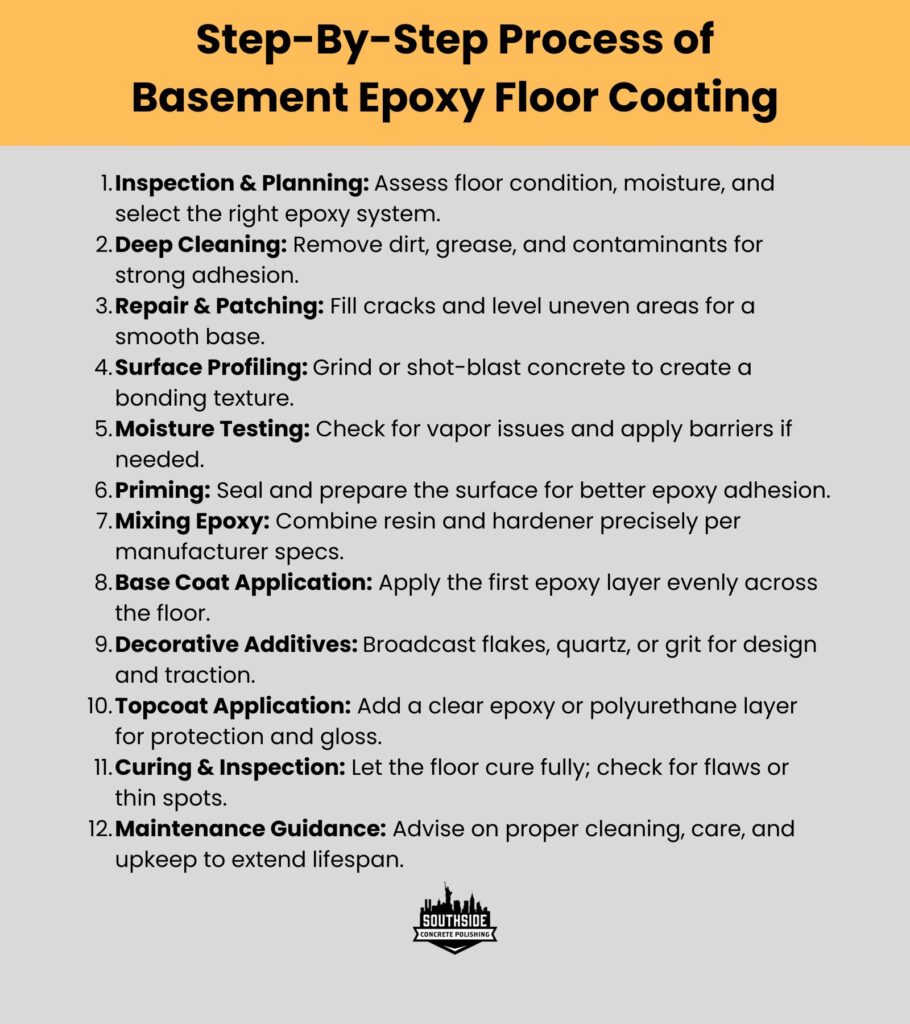
Here is the step-by-step process;
1. Site inspection and planning
Assess the floor use, traffic levels, existing damage, and moisture conditions. Decide on the epoxy system (primer, base, quartz/flake broadcast, topcoat) and schedule work to allow proper curing and minimal business disruption.
2. Deep cleaning
Remove dirt, oil, grease, adhesives, and contaminants with degreasers and mechanical scrubbing. A clean surface is vital for adhesion; any residue left behind reduces bond strength.
3. Repair and patching
Fill cracks, spalls, and holes with epoxy patch or cementitious repair mortar. Level high spots and grind ridges so the substrate is even and stable before coating.
4. Concrete profiling (etching or grinding)
Mechanically grind or shot-blast the concrete (preferred for commercial jobs) to open pores and create an anchor profile. Acid etching is an alternative for small projects, but less consistent for heavy-use areas.
5. Moisture testing and mitigation
Perform moisture/vapor tests (calcium chloride or relative humidity probes). If vapor transmission is high, install a vapor barrier system or use a vapor-resistant epoxy primer to prevent delamination.
6. Priming
Apply an epoxy primer to seal the substrate, improve adhesion, and reduce pinholes. Primers also help the subsequent coat flow and bond uniformly.
7. Mixing the epoxy system correctly
Measure and mix resin and hardener exactly per the manufacturer's instructions. Incorrect ratios or under/over over-mixing ruin the cure and performance. Mix in small batches if working in warm conditions.
8. Base coat application
Roll or squeegee the base epoxy coat to achieve the specified film thickness. Work in sections and maintain a wet edge to avoid lap marks.
9. Decorative broadcast or additives
While the base is wet, broadcast quartz, colored flakes, or non-slip aggregates if required for traction or aesthetics. Allow proper embedment and later remove excess material.
10. Topcoat / clear seal
After the base and broadcast have cured, apply a clear polyurethane or epoxy topcoat to lock in flakes. It enhances chemical/abrasion resistance and provides the final finish.
11. Curing and final inspection
Allow the system to cure for the full manufacturer-recommended time before light use or heavy traffic. Inspect for defects (bubbles, pinholes, thin spots) and touch up if needed.
12. Maintenance and care guidance
Provide the client with cleaning and maintenance instructions, recommended cleaners, how to handle spills, and scheduled inspections. This maximizes the lifespan of the commercial epoxy flooring.
What are the Benefits of Epoxy Basement Floor Coating?
The benefits of Epoxy basement floor coatings include a perfect balance of strength, style, and practicality. It makes them one of the most reliable flooring solutions for commercial and residential basements. They not only enhance the appearance of dull concrete but also protect against moisture, wear, and damage, ensuring long-term performance.
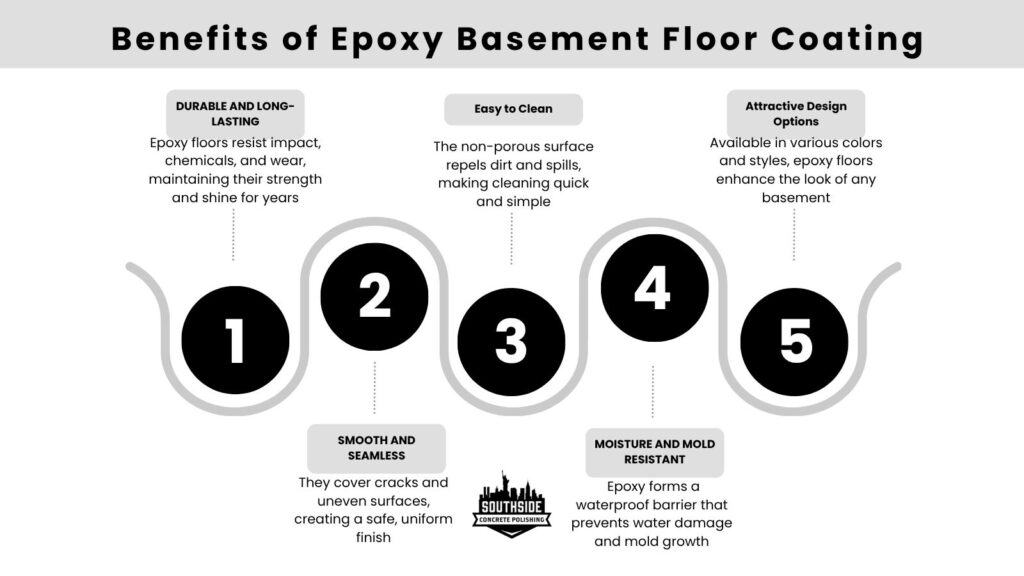
Here are the benefits of epoxy basement floor coating;
-
Durable and Long-Lasting Protection: Epoxy coatings are designed to withstand heavy use, impact, and chemical exposure. It makes them ideal for commercial or industrial basements. When properly applied, they resist peeling, cracking, and abrasion for years without losing their glossy finish.
-
Smooth and Seamless Finish: Epoxy fills and covers damaged or uneven concrete, creating a smooth, uniform surface. This helps prevent further deterioration while improving safety and functionality.
-
Easy to Clean and Maintain: The non-porous surface of epoxy floors prevents dirt, dust, and liquids from penetrating. Spills can be easily wiped up, and routine cleaning requires only sweeping and mopping, saving time and effort.
-
Moisture and Mold Resistance: Epoxy forms a waterproof barrier that protects the underlying concrete from water damage, mold, and mildew. This makes it especially beneficial for damp or flood-prone basements.
-
Attractive Decorative Options: Available in a wide range of styles, such as metallic, flake, quartz, or solid colors, epoxy coatings are customized to match any aesthetic. They add a modern, polished look while maintaining high performance.
The use of epoxy floors comes with many benefits as well as drawbacks. Before making any choice, you must talk with an experienced contractor to have your floor evaluated professionally before making any choice. To reduce the likelihood of the floor delaminating, you should request professional services to assess the moisture tolerance of the flooring.
How Long Does Epoxy Floor Coating Last in a Basement?
Epoxy basement floor lasts 10 to 20 years or more, depending on the quality of materials used, surface preparation, and traffic level. Commercial-grade coatings tend to last even longer with proper maintenance.
Can epoxy be applied over old concrete?
Yes, epoxy can be applied over old or damaged concrete as long as the surface is properly cleaned, repaired, and prepped. Cracks and holes should be filled before applying the coating to ensure smooth adhesion.
How long does it take to install epoxy floor coating?
It takes 2 to 3 days to install epoxy floor coating, depending on the size of the area and the type of epoxy system used. This includes preparation, application, and curing time.
Is epoxy flooring suitable for damp basements?
Yes, epoxy flooring is suitable for damp basements because it creates a moisture-resistant barrier. The epoxy flooring is ideal for basements as it prevents water from seeping through the concrete and protects against mold and mildew.
What are the benefits of using epoxy-coated concrete for basement floors?
Epoxy-coated concrete provides a durable, moisture-resistant surface that is ideal for basements. It protects against stains, cracks, and wear while offering a sleek, glossy finish that enhances the overall appearance of the space. Additionally, epoxy-coated concrete makes cleaning and maintenance much easier compared to bare concrete.