Commercial flooring in New York City continues to evolve as design trends, durability standards, and sustainability goals reshape how businesses approach interior spaces. From luxury offices in Manhattan to retail hubs in Brooklyn and hospitality venues in Queens, today's flooring systems must meet both aesthetic and performance expectations.
According to industry reports from the New York Building Congress, commercial renovation projects have increased by 17% since 2022, driving a surge in demand for modern, resilient flooring materials.
The most popular commercial flooring options in NYC include vinyl, epoxy coatings, polished concrete, and decorative tile systems. Each type provides a distinct balance between visual appeal, long-term maintenance, and structural endurance. Whether you're outfitting an office, restaurant, healthcare facility, or showroom, selecting the right flooring determines both the functionality and impression of your space.
Why Is Commercial Flooring Selection Important for New York Businesses?
Commercial flooring selection is important for New York businesses because it directly impacts durability, aesthetics, safety, and brand identity. High-traffic environments such as retail stores, hotels, and offices require flooring that withstands constant footfall, cleaning, and temperature fluctuations without compromising style.
The flooring system also plays a crucial role in indoor air quality and acoustics, two major concerns in New York's dense, multi-story buildings. Materials such as polished concrete and luxury vinyl tile (LVT) are favored for their low VOC emissions and sound-absorbing properties, enhancing both employee comfort and customer experience.
Selecting flooring that aligns with your brand aesthetic, sleek, industrial, or eco-modern, reinforces a business's visual identity while supporting long-term performance goals and building compliance standards.
What Makes Vinyl Flooring a Leading Commercial Trend in NYC?
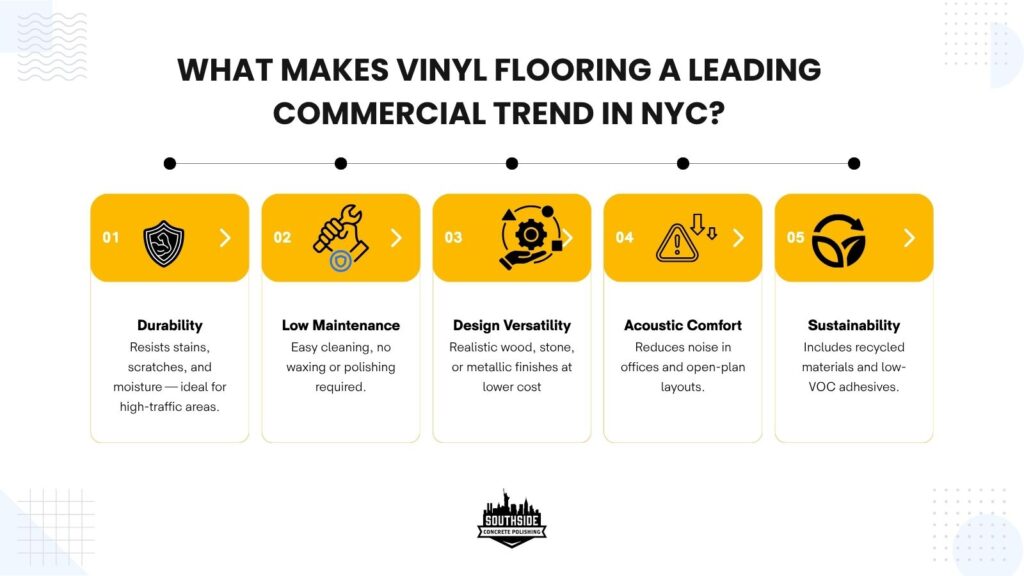
Vinyl flooring is a leading commercial trend in NYC because it combines durability, design flexibility, and cost efficiency in one resilient system.
Luxury Vinyl Tile (LVT) and Luxury Vinyl Plank (LVP) are now the go-to choices for offices, healthcare facilities, and retail outlets. These materials use multi-layer construction, including a rigid core and protective wear layer, providing strong resistance to stains, moisture, and scratches.
Functional advantages of vinyl flooring include:
-
Resilience: Maintains structure and appearance under heavy foot traffic, making it ideal for busy commercial areas such as offices, clinics, and retail stores.
-
Ease of maintenance: Requires only simple cleaning with no need for waxing or polishing, minimizing downtime and maintenance costs.
-
Design versatility: Available in realistic wood, stone, or metallic finishes, allowing businesses to achieve premium aesthetics without the high price tag.
-
Water and stain resistance: Offers excellent protection against spills, moisture, and stains, making it suitable for kitchens, lobbies, and restrooms.
-
Acoustic comfort: Provides sound absorption that reduces footstep noise, improving comfort in high-traffic or open-plan environments.
-
Slip resistance: Many commercial-grade vinyl options come with textured surfaces or safety-rated finishes to reduce slip hazards.
-
Sustainability: Modern LVT and LVP products include recycled content and low-VOC adhesives, supporting eco-friendly building goals.
Why Is Epoxy Concrete Flooring So Popular in Modern Commercial Interiors?
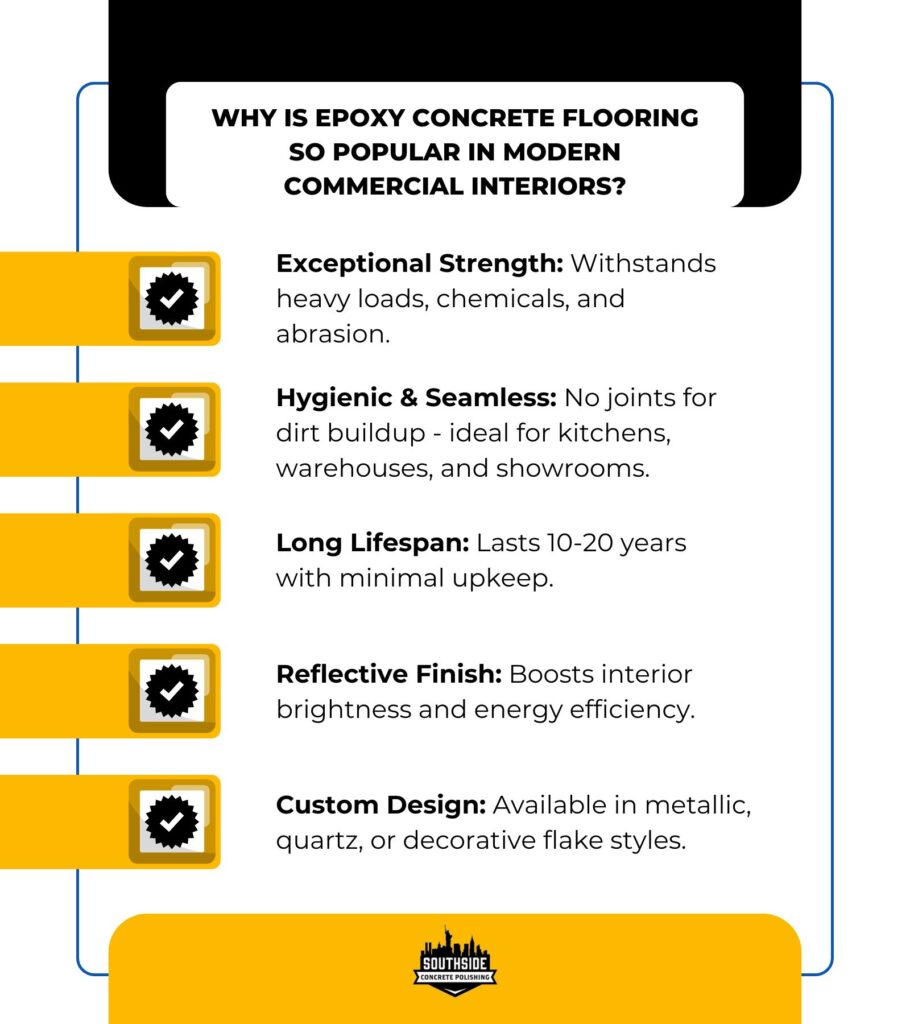
Epoxy concrete flooring is popular in modern commercial interiors because it delivers exceptional strength, chemical resistance, and visual appeal. In New York's industrial and hospitality sectors, epoxy flooring is particularly valuable for environments such as commercial kitchens, showrooms, and warehouses. Its seamless surface resists dust accumulation, making cleaning efficient, an essential feature for businesses operating under strict hygiene and maintenance standards.
Epoxy coatings form a seamless, high-gloss finish that bonds chemically with the underlying concrete slab. The system's durability comes from the combination of resin and hardener, creating a thermosetting polymer that resists heavy impacts and chemical exposure.
Key advantages of epoxy flooring include:
-
Extended lifespan: Lasts 10--20 years with minimal upkeep.
-
Reflectivity: Increases ambient light reflection by up to 300%, improving brightness and energy efficiency.
-
Resistance: Withstands abrasion, water, and chemical spills.
-
Aesthetic options: Available in decorative flakes, quartz, or metallic finishes.
How Does Polished Concrete Flooring Redefine Commercial Spaces in New York?
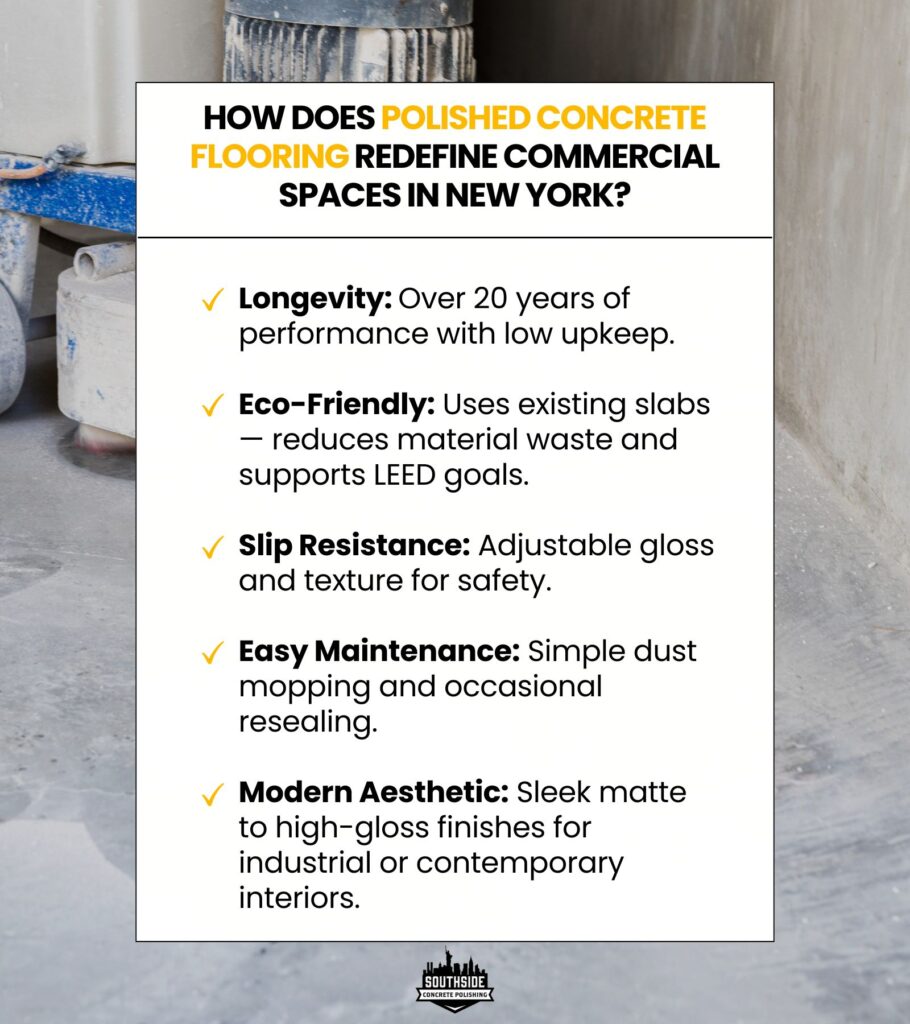
Polished concrete flooring redefines commercial spaces in New York by combining industrial strength with modern elegance. For New York facilities that value low maintenance and contemporary design, polished concrete offers a sustainable solution that aligns with LEED certification goals and urban architectural aesthetics.
This system involves diamond grinding and chemical densification to produce a smooth, reflective surface that enhances both durability and aesthetics. Polished concrete can increase a slab's surface hardness by up to 50%, making it one of the most durable flooring options for high-traffic areas like retail stores and offices.
The benefits of polished concrete are as follows:
-
Longevity: Offers a service life exceeding 20 years with proper maintenance, making it one of the most durable commercial flooring solutions.
-
Sustainability: Utilizes the existing concrete substrate, minimizing additional material use and supporting environmentally conscious building practices.
-
Slip resistance: Achieved through customizable gloss levels and surface treatments that enhance safety without compromising appearance.
-
Immediate usability: Floors are used the same day after installation, minimizing business downtime.
-
Low maintenance: Requires only periodic dust mopping and occasional resealing, reducing long-term maintenance costs.
-
Reflectivity: Increases natural and artificial light reflection, improving energy efficiency and visual brightness in interior spaces.
-
Aesthetic versatility: Available in matte, satin, or high-gloss finishes to complement a range of modern and industrial design styles.
What Role Does Decorative Concrete Play in Commercial Design?
Decorative concrete plays an important role in commercial design by merging visual creativity with structural performance. In a visually competitive city like New York, decorative concrete helps restaurants, hotels, and retail spaces differentiate their interiors, aligning aesthetic appeal with brand experience.
Through techniques such as staining, stamping, and overlays, concrete transforms from a functional surface into an architectural element. Businesses use decorative concrete to integrate branding into their interiors, employing company colors, logos, or custom textures.
Notable features of decorative concrete include its high level of customization, offering a wide range of color, gloss, and pattern options to match any commercial design aesthetic. Its durability is enhanced through polymer-modified overlays that resist cracks and delamination, ensuring long-term structural integrity even in high-traffic spaces.
Decorative concrete improves light reflectivity, enhancing interior brightness and helping reduce overall lighting costs, making it a functional and energy-efficient design choice for modern commercial environments.
Are Tile Floors Still Relevant in Modern Commercial Design?
Tile floors remain relevant in modern commercial design because of their proven strength, hygiene, and timeless appearance. With innovations in digital printing, floor tiles now replicate the texture of wood, marble, or concrete, offering the elegance of luxury materials with reduced maintenance demands.
Porcelain and ceramic tiles are preferred for lobbies, washrooms, and restaurants where water exposure and wear resistance are critical. Porcelain, in particular, offers high compressive strength and stain resistance, making it suitable for heavy-use areas. For New York's commercial interiors, tile is a reliable and stylish flooring solution that withstands both aesthetic and practical tests.
How Do Sustainability and Maintenance Influence Commercial Flooring Choices?
Sustainability and maintenance influence commercial flooring choices by shaping how materials perform over time while aligning with green building standards.
Modern businesses in NYC prioritize eco-conscious materials that reduce environmental impact, such as low-VOC sealers, recycled aggregates, and energy-efficient finishes. Polished concrete and LVT with recycled content meet these sustainability benchmarks.
Maintenance is equally crucial. Flooring that resists stains, abrasion, and moisture minimizes downtime and repair costs. Epoxy and polished concrete floors, for instance, require only routine sweeping and occasional resealing, cutting lifecycle expenses by as much as 40% compared to traditional tile or carpet systems.
Choosing flooring with both sustainable sourcing and low-maintenance design supports long-term ROI while contributing to environmental compliance in LEED or WELL-certified buildings.
Why Is Professional Installation Critical for Commercial Flooring Performance?
Professional installation is critical for commercial flooring performance because it ensures the structural integrity, finish quality, and long-term durability of the system.
Flooring installation involves precise substrate assessment, moisture testing, and temperature control, factors that directly affect adhesion and curing. Certified contractors follow ASTM and ICRI standards to prevent delamination, uneven surfaces, or color inconsistencies.
In New York, where humidity and temperature variations challenge curing processes, professional expertise ensures correct preparation and finish. This precision maximizes lifespan and prevents costly post-installation failures that disrupt commercial operations.
How Do Commercial Flooring Trends Reflect New York City's Design Evolution?
Commercial flooring trends reflect New York City's design evolution by integrating industrial functionality with contemporary aesthetics. Businesses now favor multi-performance systems that deliver comfort, hygiene, and visual sophistication within compact urban spaces.
Vinyl and epoxy floors dominate in retail and healthcare settings due to their seamless appearance and resilience. Polished and decorative concrete attracts architects seeking minimalist elegance and eco-performance. Meanwhile, tile retains its place in historic or luxury interiors for its refined, timeless appeal.
As the city continues modernizing older buildings, flooring choices align with energy efficiency, LEED standards, and creative adaptability. The combination of form, function, and sustainability defines New York's current commercial flooring landscape, where every surface contributes to the identity and endurance of the space.
What Makes Epoxy Coated Concrete the Most Durable Commercial Option for High-Traffic Areas in NYC?
Exceptional mechanical strength, chemical resistance, and seamless adhesion to concrete substrates make epoxy coated concrete the most durable commercial option for high-traffic areas in NYC. Its dense, cross-linked polymer matrix absorbs impact from heavy machinery and foot traffic while resisting abrasion, chipping, and cracking.
Epoxy floors repel oils, chemicals, and moisture, preventing surface degradation and maintaining structural integrity over years of continuous use. The ability to customize textures and finishes for slip resistance further enhances safety in busy commercial spaces.
These properties of epoxy flooring collectively ensure long-lasting performance with minimal maintenance, making epoxy coated concrete**** flooring the optimal solution for high-demand NYC environments.
Is Polished Concrete a Good Alternative to Epoxy Flooring for Commercial Flooring?
Yes, polished concrete is a suitable alternative to epoxy flooring for commercial spaces. It offers excellent durability, low maintenance, and a long lifespan while providing a sleek, reflective finish that enhances interior aesthetics.
While epoxy excels in chemical resistance and heavy industrial traffic, polished concrete performs well under moderate commercial use and is more cost-effective for large open areas. Its non-porous surface is easy to clean and maintain, making it a practical choice for offices, galleries, and retail spaces.
For businesses seeking a durable and visually appealing flooring solution without the specialized installation of epoxy, polished concrete is an excellent option that combines functionality with design flexibility.
Which commercial flooring options are best for sustainability and LEED certification?
Polished concrete, LVT with recycled content, and low-VOC epoxy systems are the leading sustainable flooring solutions. These materials minimize environmental impact through long service life, reduced waste, and low emissions, helping New York businesses meet LEED and WELL building standards.
How long does professional commercial flooring installation take in NYC?
Installation time depends on the flooring system and site conditions. Vinyl and tile installations typically take 2--4 days, while epoxy and polished concrete systems require 4--7 days, including curing. Professional contractors assess substrate conditions, humidity, and traffic to schedule minimal disruption to business operations.