Concrete overlays rejuvenate damaged concrete by restoring surface strength, appearance, and function without the expense of full replacement. Overlays correct cracks, spalling, and discoloration while enhancing long-term performance by resurfacing existing slabs with a thin, durable layer of polymer-modified or cement-based material.
In New Jersey, where freeze--thaw cycles and humidity accelerate surface wear, overlays provide a resilient alternative that resists moisture intrusion and thermal stress. According to the New Jersey Concrete and Aggregate Association, property owners extend the service life of existing concrete surfaces by up to 15 years through professional overlay installation.
This process not only revitalizes driveways, patios, pool decks, and commercial floors but also supports sustainable construction by reducing demolition waste. With compressive strengths reaching 5,000--8,000 psi, concrete overlays deliver structural reinforcement and design versatility, offering a practical, cost-efficient, and visually transformative solution for both residential and commercial applications.
How Concrete Overlay Fix Damaged Concrete?
Concrete overlay fixes damaged concrete by applying a thin, durable layer of specially formulated material over an existing slab to restore both strength and appearance. The process begins with thorough surface preparation, through grinding or shot-blasting, to remove contaminants and create a profile that ensures optimal adhesion.
Any cracks, chips, or minor structural imperfections are repaired before the overlay is applied. The overlay mixture, whether cementitious, polymer-modified, or micro-topping, is then poured or sprayed onto the prepared surface and finished to achieve the desired texture, pattern, or decorative effect.
Concrete overlay not only renews worn or cracked concrete but also enhances its durability and aesthetic appeal
What Are the Common Types of Concrete Overlays to Rejuvenate Damaged Concrete?
The common types of concrete overlays used to rejuvenate damaged concrete include stained concrete overlays, stamped concrete overlays, and sprayed concrete overlays. Each type of concrete overlay is suited to specific performance and design goals.
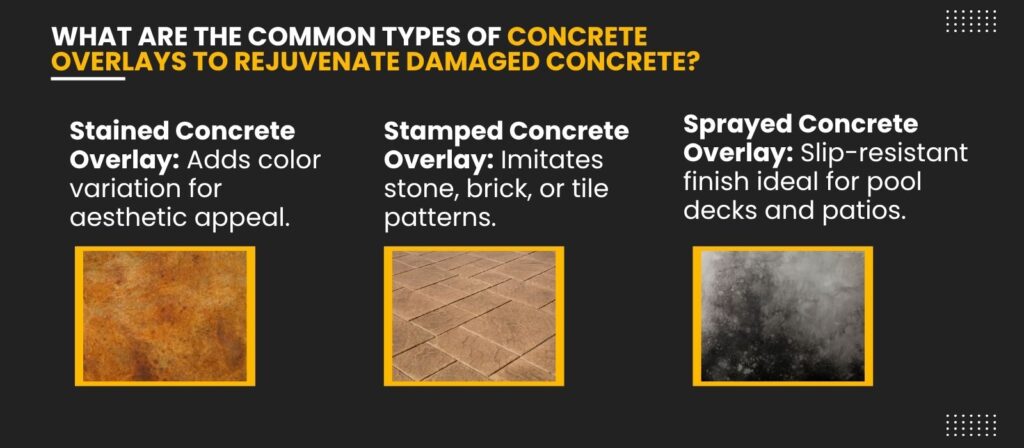
The common types of concrete overlays used to rejuvenate damaged concrete are as follows:
-
Stained Concrete Overlay: A polymer-modified layer is applied, then treated with chemical or water-based stains to achieve natural color variations. Common in retail and office environments where aesthetic appeal is key.
-
Stamped Concrete Overlay: Patterns are imprinted on the wet overlay to replicate stone, brick, or tile textures. Ideal for driveways, patios, and walkways seeking decorative finishes with the strength of concrete.
-
Sprayed Concrete Overlay (Knockdown Finish): Applied using a spray gun for a lightly textured, slip-resistant surface. Often used in pool decks and outdoor patios where safety and cooling properties are important.
How Does Concrete Overlay Work?
Concrete overlays work by chemically bonding to the old surface and mechanically adhering through the roughened substrate. When applied correctly, they form a unified system that resists delamination, cracking, and wear. This approach allows homeowners and facility managers to renew damaged concrete while saving up to 60% compared to full replacement costs.
Why Is Applying a Concrete Overlay Better Than Replacing the Slab?
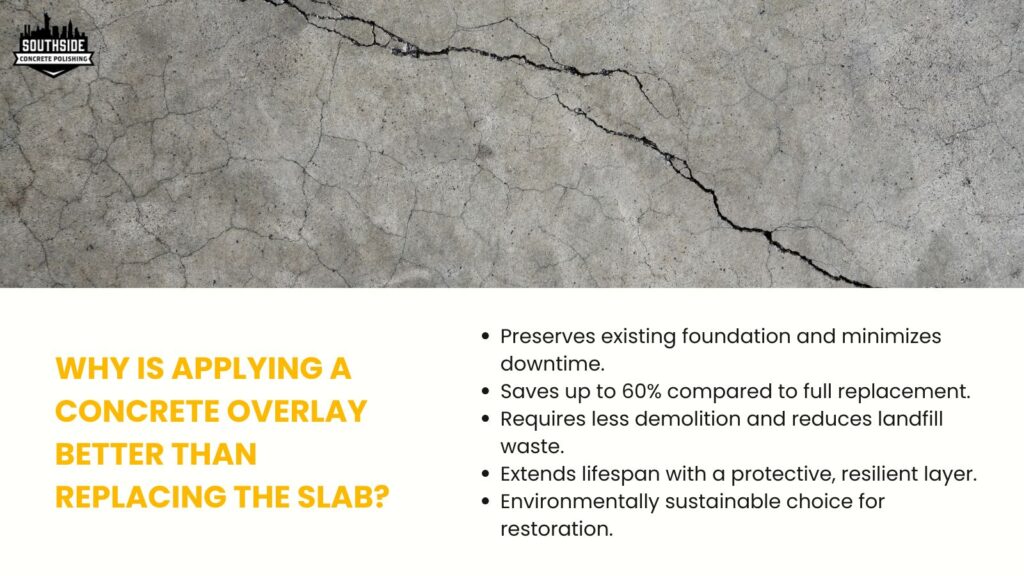
Applying a concrete overlay is better than replacing the slab because it preserves the existing foundation, reduces cost, and minimizes downtime. Full slab replacement involves demolition, disposal, curing time, and structural rework. This entire task of replacing the concrete flooring is labor-intensive and environmentally taxing.
Concrete overlays require minimal demolition. They rejuvenate the surface within days instead of weeks and extend the lifespan of the base concrete by adding a protective, resilient layer. From an environmental perspective, concrete overlays also reduce landfill waste and material consumption, making them a sustainable flooring restoration choice.
What Are the Main Benefits of Concrete Overlays?
The main benefits of concrete overlays include design versatility, low-cost fit, and affordability. These qualities make overlays an optimal balance between form and function, ensuring longevity and appeal for indoor and outdoor environments.
The main benefits of concrete overlays are as follows:
-
Design versatility: Overlays are tinted, stained, stamped, or textured to achieve any desired look. They mimic natural stone, wood, or tile while maintaining the resilience of concrete.
-
Low profile fit: Since overlays are typically ¼ inch thick, they integrate seamlessly with existing surfaces without altering door frames, thresholds, or HVAC vents.
-
Affordability: They cost less than full slab replacement or other flooring materials like tile or natural stone.
-
Durability: With a compressive strength ranging between 5,000--8,000 psi, overlays resist abrasion, impact, and weathering when sealed properly.
-
Eco-friendly restoration: By reusing the base concrete, overlays minimize waste and material consumption, supporting sustainable construction practices.
When Should You Use a Concrete Overlay?
You should use a concrete overlay when the surface is structurally sound but has cosmetic or minor functional damage. Overlays are not meant to fix deep structural cracks or severely compromised foundations, but they are ideal for restoring moderately worn slabs.
Common use cases of concrete overlays include:
-
Resurfacing patios, pool decks, and driveways with new texture and color.
-
Leveling uneven floors in basements or commercial areas.
-
Renewing discolored or stained concrete without full replacement.
-
Improving slip resistance around wet areas such as pools or garages.
-
Decorative enhancement in restaurants, retail stores, or showrooms.
What Are the Functional and Decorative Purposes of Concrete Overlays?
The functional and decorative purposes of concrete overlays include improving surface performance, extending durability, and enhancing design aesthetics. These purposes vary based on the project's structural and visual requirements, making overlays ideal for both residential and commercial use.
The functional purposes of concrete overlays are as follows:
-
Surface Restoration: Concrete overlays repair surface defects such as cracks, spalling, and scaling, restoring the original strength and smoothness of the floor.
-
Improved Skid Resistance: Textured overlays increase traction and safety in high-traffic areas, driveways, and pool decks, reducing slip hazards.
-
Enhanced Drainage: Properly applied overlays correct surface slope issues, improving water runoff and preventing pooling or erosion.
-
Increased Load Capacity: Overlays reinforce the structural performance of existing slabs, enabling them to handle heavier foot or vehicle traffic.
-
Environmental and Moisture Protection: They shield concrete from freeze--thaw cycles, deicing salts, and chemical exposure, reducing long-term deterioration.
The decorative purposes of concrete overlays are as follows:
-
Aesthetic Enhancement: Overlays rejuvenate dull or stained concrete surfaces, creating a clean and polished look suitable for interiors and exteriors.
-
Stamped Designs: Stamped overlays mimic premium materials such as natural stone, brick, or wood, adding texture and luxury at a lower cost.
-
Staining and Coloring: Acid stains, dyes, or water-based pigments bring vibrant, custom colors to floors, patios, and showrooms.
-
Pattern Customization: Decorative overlays include geometric designs, borders, and logos, making them ideal for commercial branding or architectural detailing.
-
Gloss and Finish Control: Sealers and surface coatings produce matte, satin, or high-gloss finishes, aligning the aesthetic with modern or classic design themes.
How Should You Prepare Concrete for an Overlay?
You should prepare concrete for an overlay by thoroughly cleaning, profiling, and repairing the existing surface to ensure strong adhesion and long-term performance. Proper preparation is essential because overlays depend on the structural integrity and cleanliness of the base concrete. If the substrate is weak, dirty, or moisture-compromised, the overlay will fail prematurely.
The standard preparation steps for concrete overlay include:
-
Surface Cleaning: Remove dirt, grease, oil, and contaminants using pressure washing or degreasers. Clean surfaces allow the overlay material to form a proper chemical bond with the existing concrete.
-
Mechanical Profiling: Grinding or shot-blasting roughens the concrete surface, opening pores and creating a texture that improves mechanical adhesion between the old and new layers.
-
Crack Repair: All cracks and damaged areas must be sealed or filled before applying the overlay. This prevents reflective cracking, where existing cracks reappear through the new surface.
-
Moisture Testing: Test for vapor emission using calcium chloride or relative humidity (RH) kits. Excessive moisture leads to delamination or blistering, so only apply overlays when readings are within the manufacturer's specified limits.
How Do Concrete Overlays Contribute to Sustainability?
Concrete overlays contribute to sustainability by extending the life of existing structures and reducing material waste. Overlays prevent demolition debris from entering landfills and lower the demand for new raw materials by reusing the original slab. Many concrete overlay formulations are low-VOC, making them environmentally safer for indoor applications.
Reflective coatings reduce heat absorption, improving building energy efficiency, particularly valuable in urban areas like New Jersey and New York, where heat islands are common.
How Do Professional Contractors Ensure Long-Term Overlay Performance?
Professional concrete contractors ensure long-term overlay performance by applying engineering precision and using certified products. Their expertise extends beyond aesthetics; they analyze substrate conditions, control environmental variables, and follow ASTM and ACI standards for bond strength and curing.
Contractors maintain the quality of concrete overlay by:
-
Using moisture-tolerant primers to prevent blistering.
-
Applying consistent thickness to avoid weak spots.
-
Using industrial sealers that enhance chemical and abrasion resistance.
-
Testing surface adhesion and curing with professional-grade instruments.
What Is the Best Overlay for Concrete Floors, Patios, and Driveways?
The best overlay for concrete floors, patios, and driveways is a durable, specially formulated layer that restores structural integrity while enhancing appearance. It is customized with stamping, staining, or sprayed finishes to achieve aesthetic appeal, slip resistance, and long-lasting performance.
Ooverlay is ideal for high-traffic areas, worn slabs, and uneven surfaces, providing both functional reinforcement and visual enhancement. Choosing thebest overlay ensures your concrete surfaces remain strong, safe, and visually appealing.
Epoxy Flooring vs Concrete Overlay: Which Is Better for Your Project?
Choosing between epoxy flooring and concrete overlay depends on the surface's structural condition, exposure to chemicals or moisture, and desired finish. Epoxy flooring creates a seamless, chemical-resistant coating that protects concrete, simplifies maintenance, and enhances visual clarity, making it ideal for industrial, commercial, and residential applications. Concrete overlay adds structural reinforcement while offering decorative versatility for high-traffic or damaged surfaces. For projects requiring a durable, glossy, and low-maintenance finish, epoxy flooring**** is the preferred solution.