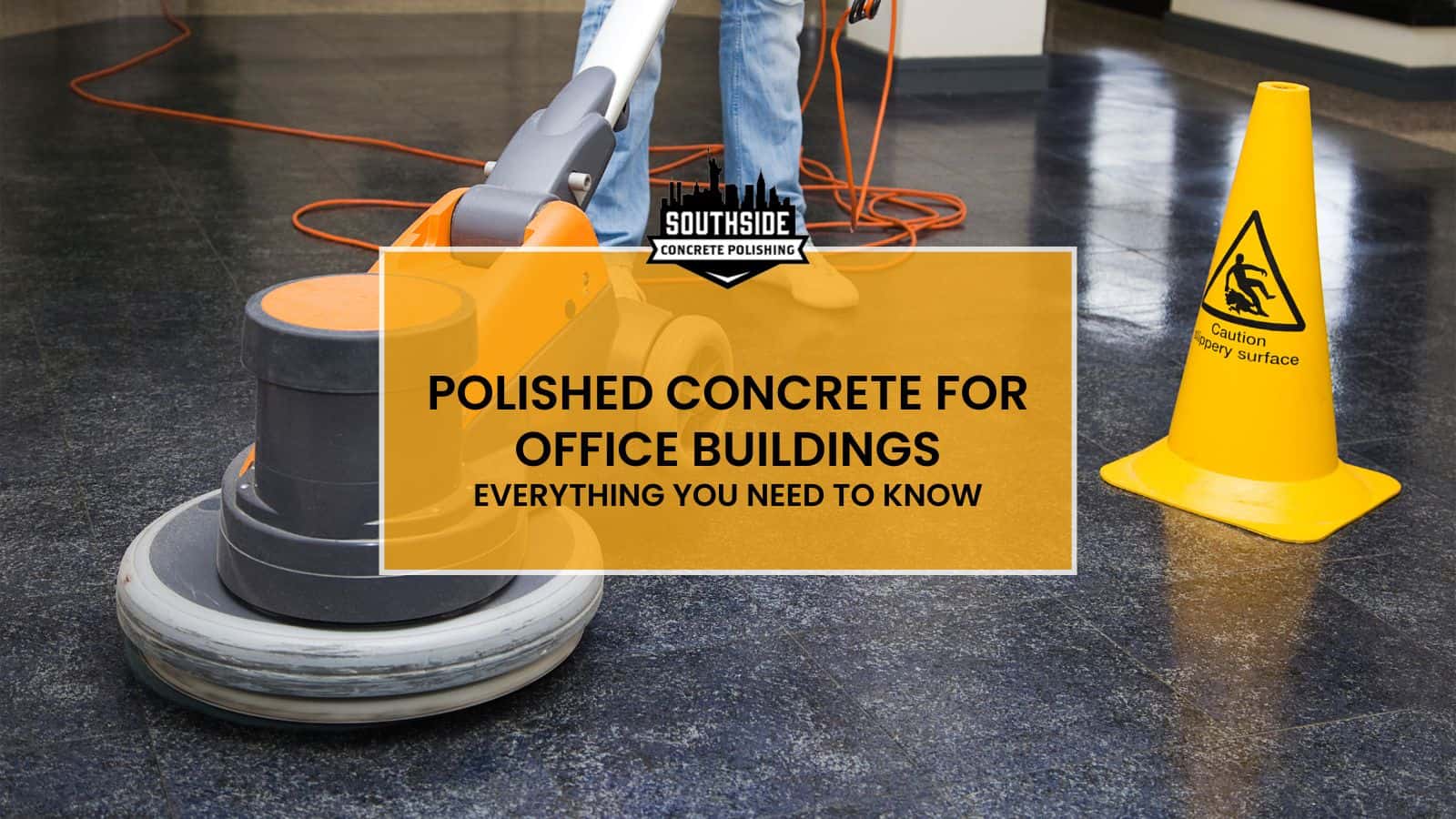
Polished concrete is a mechanically refined concrete slab that's ground, densified, and polished to a specified sheen, delivering a hardwearing, low‑maintenance surface with contemporary, light‑reflective aesthetics suited to your office.
Polished concrete offers durable, low-maintenance, aesthetically pleasing, cost-effective, and environmentally sustainable flooring solutions for office buildings.
Various types of polished concrete, including cream, salt-and-pepper, medium/full aggregate, platinum/high-gloss, dye-enhanced, and grind-and-seal options, cater to diverse aesthetic and functional needs in office buildings.
The installation of polished concrete involves essential steps like surface preparation, grinding, polishing, optional staining, and sealing.
What Are The Benefits Of Using Polished Concrete In Office Buildings?
The benefits of using polished concrete in office buildings are durability, minimal upkeep, versatile aesthetics, and cost-effectiveness.
Here are the benefits of using polished concrete in office buildings in detail:
-
Durable Floors: Polished concrete is a highly durable surface that withstands heavy foot traffic and resists cracks, stains, and moisture better than carpet or laminate. Its non-porous finish reduces deep cleaning and replacement cycles while minimizing dust and allergens for healthier indoor air. Compared with laminate, you will find it less prone to scratching or warping, maintaining a clean, attractive look at a lower life-cycle cost.
-
Low maintenance: Polished concrete requires only routine sweeping and occasional damp mopping with a pH‑neutral cleaner to stay in top condition. Because it needs no waxing or frequent recoating, ongoing labor, materials, and repair costs are significantly reduced in busy office settings. Its reflective finish also improves ambient brightness, which lowers lighting needs and overall operating costs.
-
Aesthetics and reflection: Polished concrete supports a wide range of design choices, including colors, patterns, decorative overlays, and custom finishes that align with brand identity. Its reflective surface amplifies both natural and artificial light, creating brighter, more inviting workspaces that support productivity. These customization options combine visual impact with practical benefits in modern offices.
-
Cost-effective: Polished concrete is a cost-effective option. The initial spend varies, but it pays back through a long service life and low upkeep, reducing the total cost of ownership. Light reflectance trims lighting expenditures over time, adding to operational savings. Many commercial environments report ongoing maintenance savings compared with coated, vinyl, or tiled floors. You will find that investing in polished concrete leads to significant long-term savings.
-
Environmental sustainability: Choosing polished concrete for office buildings significantly promotes environmental sustainability, contributing to LEED compliance and mitigating health hazards such as allergens associated with traditional flooring materials. By using the existing slab and low-toxicity treatments, you reduce added materials, volatile organic compounds, and waste while supporting better indoor air quality. High reflectivity improves daylighting efficiency, and a long lifespan lowers replacement frequency and associated environmental impact. The result is a durable, low-maintenance floor aligned with green building goals and occupant well-being.
What Are The Different Types Of Polished Concrete Used in Office Buildings?
The types of polished concrete used in office buildings include cream polished (bronze), salt-and-pepper (gold), medium/full aggregate (silver), platinum/high-gloss mechanical polish, dye- or stain-enhanced polished concrete, and grind-and-seal (look-alike alternative).
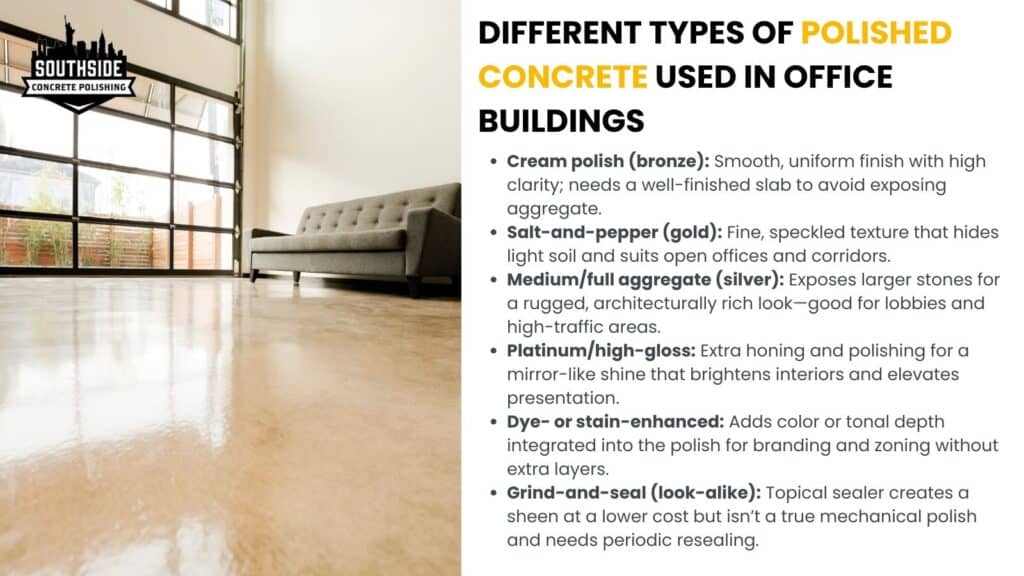
Here are the various types of polished concrete in detail below:
-
Cream polished (bronze): Cream polish preserves the surface paste for a smooth, uniform look that suits modern offices seeking a clean aesthetic. It offers high clarity without visible stone but relies on a well-finished slab to avoid accidental aggregate exposure.
-
Salt-and-pepper (gold): Salt-and-pepper reveals fine sand for a subtle, speckled texture that works well in open offices and corridors. It hides minor soil and wear better than pure cream while maintaining a refined, professional appearance.
-
Medium/full aggregate (silver): Medium to full aggregate exposes larger stones for a rugged, architectural look suited to lobbies and high-traffic zones. It increases visual interest and improves perceived traction while staying easy to clean.
-
Platinum/high-gloss mechanical polish: Platinum systems pair any exposure level with extra honing and polishing for a mirror-like shine. The high reflectance brightens interiors and elevates presentation while retaining the longevity of a true mechanical polish.
-
Dye- or stain-enhanced polished concrete: Polished slabs can be dyed or stained to add brand colors, zones, or tonal depth without extra floor layers. These treatments integrate with the polish and keep maintenance simple.
-
Grind-and-seal (look-alike alternative): Grind-and-seal grinds the slab and uses a topical sealer to create a sheen at a lower upfront cost. It is not a true mechanical polish and typically requires periodic resealing in busy offices.
What Are The Steps To Installing Polished Concrete In An Office Building?
The steps to install polished concrete start with surface preparation, grinding, polishing, and sealing.
Here are the steps ot install polished concrete below:
-
Surface Prep: Clean, level, and repair the concrete. Remove debris, fix cracks, and ensure a smooth base for proper adhesion and long-term performance.
-
Grinding: Use diamond-grit pads to grind the surface, removing flaws. Start coarse, then progress to finer grits for smoothness and prep for polishing.
-
Polishing: Polish with increasing grit levels to achieve shine. Low to high gloss options available. Machines ensure even, reflective results.
-
Staining (Optional): Add color with water-based (low odor) or solvent-based (richer color) stains. You can also use water-based or solvent-based stains, with techniques such as acid staining, stenciling, and engraving to achieve unique effects.
-
Sealing: Apply a sealer (acrylic, epoxy, or polyurethane) to protect against stains, wear, and moisture. Sealing enhances longevity and reduces maintenance.
What Are The Maintenance Tips For Polished Concrete Floors?
Maintenance tips for polished concrete floors include cleaning them regularly, resealing every 3-5 years, and never letting the damage spread.
Here are the top maintenance tips in detail below:
-
Clean Regularly: Sweep or dust mop daily. Damp mop with pH-neutral cleaner. Use microfiber mops. Avoid harsh chemicals to preserve shine.
-
Reseal Every 3--5 Years: Reapply sealer every few years (sooner in high-traffic areas) to maintain protection. Factors affecting the need for resealing include foot traffic, environmental conditions such as humidity and temperature variations, and the type of sealant used.
-
Repair Damage Promptly: Fix cracks or chips early with epoxy or patching compound. Prevents moisture damage and keeps floors looking seamless.
What Are The Potential Drawbacks Of Using Polished Concrete In Office Buildings?
The potential drawbacks of using polished concrete in office buildings include a hard, cold surface underfoot, slipperiness when wet, and acoustic challenges. It is also prone to cracking and moisture problems, and although low-maintenance, it still requires periodic upkeep to ensure its longevity and performance.
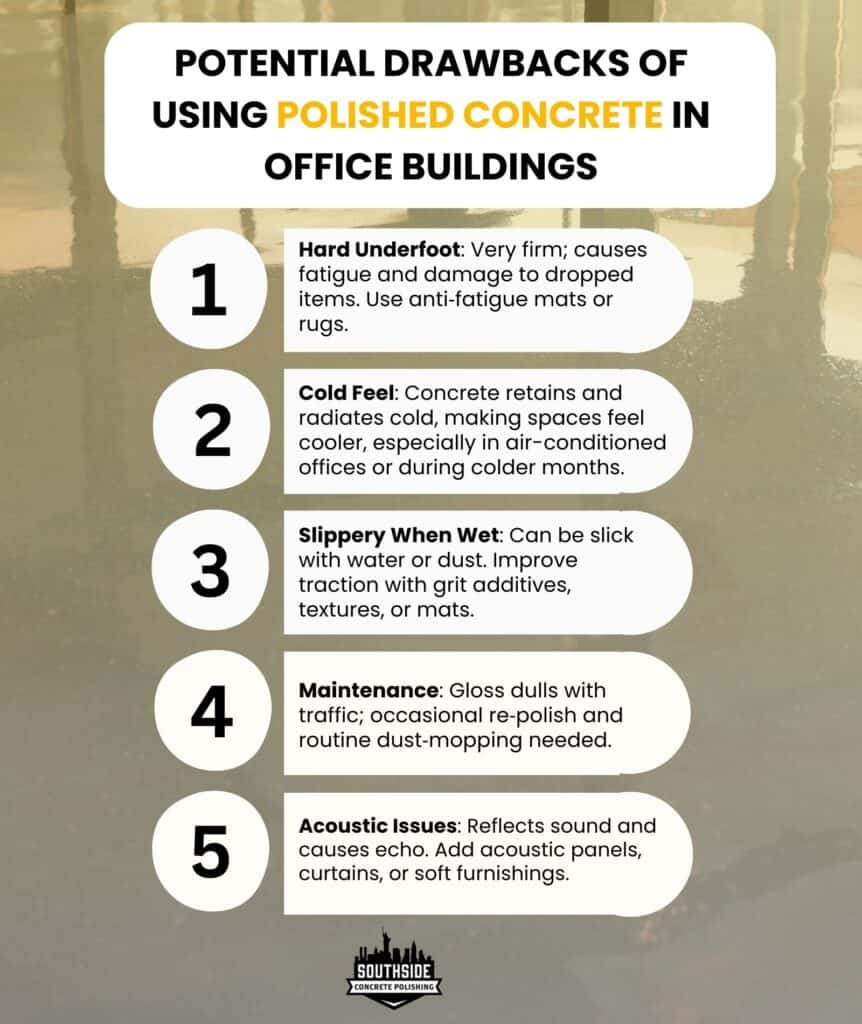
Here are the potential drawbacks of polished concrete in detail:
-
Hard underfoot: Polished concrete is very hard, which causes fatigue or joint discomfort during long periods of standing, and it is unforgiving to dropped items that may shatter on impact. Anti-fatigue mats, area rugs, or cushioned walk-off zones that mitigate discomfort in key work areas.
-
Cold feel: Concrete retains and radiates cold, making spaces feel cooler and less comfortable, particularly in air-conditioned offices or colder seasons. Rugs or radiant heating improve comfort but add cost and complexity for you.
-
Slippery when wet: Polished concrete meets slip-resistance targets, but it becomes more slippery with water, spills, or dust, increasing fall risk in kitchens, entries, or near pantries. Traction improves with grit additives, textured finishes, matting, or diligent spill control.
-
Acoustic issues: As a hard, reflective surface, polished concrete amplifies sound and creates echo, raising noise levels in open-plan offices. Sound-absorbing finishes like acoustic ceilings, wall panels, curtains, and soft furnishings help restore speech privacy and comfort.
-
Cracking and movement: Concrete slabs crack from shrinkage, movement, or thermal changes, and polishing makes hairline cracks more visible as part of the aesthetic. Proper joints, slab preparation, and crack repair plans help manage expectations and long-term appearance.
-
Moisture and vapor issues: Moisture vapor transmission, condensation, or water ingress leads to efflorescence, delamination of coatings, or staining if the slab is not properly evaluated and mitigated. Pre-assessment with RH tests, vapor barriers, and mitigation systems reduces risk before polishing.
-
Maintenance Required: Maintenance is low, but gloss dulls under abrasive traffic, and some sites choose periodic re-polishing or guard reapplication to maintain appearance. Clear instructions for dust mopping, pH-neutral cleaning, and prompt spill response help you keep finishes performing at their best.
-
Design and comfort limits: Color and pattern range is narrower than for modular finishes, and the minimalist look may feel austere without complementary interiors. Where a softer, warmer underfoot feel is essential, consider strategic area rugs or hybrid zones with alternate floor coverings.
Is Polished Concrete For Office Buildings Suitable For High-traffic Areas?
Yes, polished concrete is suitable for high-traffic areas like office buildings, making it a great choice for office buildings. It is resistant to scratches, stains, and wear and tear, making it a low-maintenance and long-lasting flooring option.
What Is The Cost To Polish Concrete In New York?
The cost to polish concrete is about $3--$12 per square foot for a true mechanical polish, with many NYC projects landing closer to $8--$12 per square foot depending on slab condition, finish level, and access.
Can Polished Concrete Be Customized To Match The Decor Of An Office Building?
Yes, polished concrete can be customized in various ways to match the aesthetic of an office building. This includes adding different colors, aggregates, or patterns to the concrete before the polishing process. You can also seal it with different finishes, such as matte or high-gloss, to achieve the desired look.