Waterproofing solutions for concrete combine chemical, mechanical, and membrane-based methods to create barriers that block moisture at different levels, either within the concrete matrix or across its surface. Waterproofing concrete is one of the most effective ways to preserve structural integrity and surface performance across residential and commercial applications. Because concrete is inherently porous, moisture infiltration leads to cracking, corrosion, and freeze--thaw deterioration.
In climates such as New York, where average annual precipitation exceeds 46 inches and winter freeze cycles intensify structural stress, proper waterproofing can extend concrete lifespan by up to 40--50% compared to untreated slabs (U.S. DOE, 2023).
Each waterproofing method for concrete offers unique advantages based on exposure, load, and design requirements, from penetrating sealers and crystalline systems to flexible membrane coatings and integral admixtures.
Implementing the right waterproofing method ensures long-term durability, improved aesthetics, and reduced maintenance across basements, driveways, patios, and structural foundations.
Why Is Concrete Waterproofing Important for Longevity?
Concrete waterproofing is important for longevity because moisture is the main factor that weakens concrete's physical and chemical structure over time. When water penetrates concrete, it reacts with cement compounds, leading to efflorescence, corrosion of steel reinforcement, and freeze--thaw cracking.
The presence of water also supports biological growth, such as mold and mildew, compromising both hygiene and aesthetics. Waterproofing prevents these issues by forming a barrier that blocks water ingress, thereby maintaining the concrete's compressive strength and durability. It also enhances surface resistance to chemical exposure, salts, and pollutants common in urban environments.
In outdoor settings, a well-sealed concrete surface resists deicing salts, UV degradation, and spalling for decades, making waterproofing an essential preventive maintenance step rather than a cosmetic upgrade.
What Are the Best Methods to Waterproof Concrete?
The best methods to waterproof concrete include penetrating sealers, film-forming sealers, crystalline waterproofing systems, membrane coatings, and integral waterproofing admixtures. Selecting the right method depends on surface type, structural location, and environmental exposure. Each technique enhances concrete durability by forming a moisture-resistant barrier to protect against cracking, corrosion, and long-term water damage.
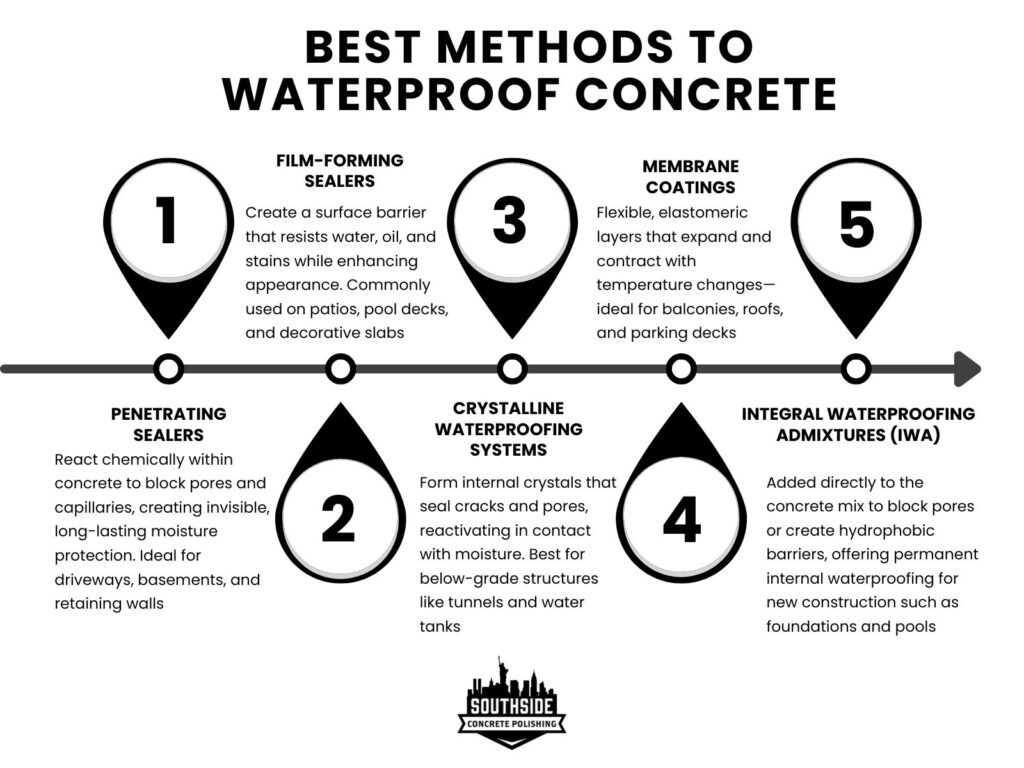
The best methods to waterproof concrete are as follows:
Penetrating Sealers
Penetrating sealers are among the most effective waterproofing solutions because they work deep within the concrete substrate instead of forming a surface film. These sealers chemically react with minerals such as calcium hydroxide to form insoluble compounds that block microscopic capillaries.
This reaction creates an invisible hydrophobic layer that prevents moisture intrusion without altering the surface appearance. Penetrating sealers are ideal for driveways, basements, retaining walls, and other concrete structures exposed to constant moisture or freeze--thaw cycles.
Penetrating sealers last between seven and ten years, offering durable, low-maintenance protection against water, de-icing salts, and surface deterioration. Common types of penetrating sealers include silane, siloxane, and lithium-based sealers, each known for their long-term stability and natural finish retention.
Film-Forming Sealers
Film-forming sealers, also known as topical sealers, create a continuous protective layer on the concrete surface that prevents water, oil, and chemical penetration. These coatings form a physical barrier rather than altering the concrete's internal structure. They are preferred for decorative applications where a glossy, satin, or semi-gloss finish enhances color and texture.
Film-forming sealers are ideal for patios, pool decks, garage floors, and other exposed slabs where both aesthetic enhancement and moisture resistance are desired. Although they deliver immediate visual appeal, they require more frequent maintenance, every one to three years, to retain their performance and sheen. Acrylic, epoxy, and polyurethane sealers are the most common formulations, offering varying degrees of UV resistance, hardness, and chemical durability.
Crystalline Waterproofing Systems
Crystalline waterproofing systems represent an advanced technology that transforms concrete into a self-sealing structure. When water enters the pores or microcracks, the active chemicals within these products react with calcium hydroxide to form insoluble crystalline structures.
These crystals grow inward, filling micro-voids and sealing capillary pathways that water could otherwise travel through. The result is a permanent internal waterproofing system that reactivates whenever new moisture appears.
This self-healing capability makes crystalline systems ideal for below-grade structures such as basements, tunnels, and water tanks. Because the waterproofing becomes part of the concrete matrix, its lifespan often matches that of the structure itself, requiring little to no maintenance over decades of use.
Membrane Coatings
Membrane coatings are elastomeric or polyurethane-based materials that form a flexible, waterproof layer over concrete surfaces. Unlike rigid sealers, these membranes can expand and contract with temperature changes or minor substrate movement without cracking.
The flexibility makes them ideal for horizontal or exterior applications such as balconies, rooftops, and parking decks where heavy rain or standing water is common. Membrane coatings resist UV radiation, weather exposure, and chemical attack, maintaining performance even under high thermal stress.
Membrane coatings are applied using rollers, sprayers, or trowels, depending on the desired thickness and surface conditions. When properly applied and maintained, these coatings create a durable, impermeable skin that prevents structural moisture damage while supporting thermal stability and load-bearing performance.
Integral Waterproofing Admixtures
Integral waterproofing admixtures (IWA) provide a proactive approach by incorporating waterproofing properties directly into the concrete mix before it is poured. These admixtures either block pores by forming hydrophobic barriers or initiate crystallization reactions that fill internal voids during curing.
IWAs offer long-term structural waterproofing that does not rely on surface coatings by reducing capillary absorption and permeability at the molecular level. This makes them particularly suitable for new construction projects like basements, foundations, bridges, and swimming pools.
Integral admixtures protect the entire concrete mass, ensuring uniform resistance to moisture, chloride ingress, and chemical corrosion. Their inclusion during the mixing process reduces maintenance costs and eliminates the need for periodic resealing, resulting in permanent and cost-efficient waterproofing protection.
What Is the Difference Between Penetrating and Film-Forming Sealers?
The difference between penetrating and film-forming sealers lies in their mechanism of protection and aesthetic outcome. Penetrating sealers, also called impregnating sealers, absorb into concrete, chemically bonding with silica to form a hydrophobic layer that repels water and contaminants. Because they work below the surface, they do not alter texture or sheen, making them ideal for driveways, patios, and walkways where a natural appearance is desired. They offer protection lasting 7--10 years, even under heavy exposure.
Film-forming sealers, by contrast, create a visible, glossy finish that enhances color and adds decorative appeal. These are often acrylic or epoxy-based coatings that physically block moisture on the surface. They are excellent for indoor spaces or areas with aesthetic value but typically require reapplication every 2--3 years due to wear.
The difference between penetrating and film-forming sealers is explained below:
How Do You Prepare Concrete for Waterproofing?
Preparing concrete for waterproofing involves cleaning, repairing, and drying the surface to ensure maximum adhesion and penetration of sealers. Without proper preparation, waterproofing compounds fail to bond or cure correctly, reducing their effectiveness.
The preparation process of concrete waterproofing includes:
-
Cleaning the Surface: Use a concrete cleaner or trisodium phosphate (TSP) solution to remove dust, oil, and contaminants. Rinse thoroughly and allow the surface to dry.
-
Repairing Cracks: Fill visible cracks and voids with an epoxy or polymer-modified patching compound to ensure an even substrate.
-
Drying the Concrete: Confirm moisture levels are within recommended limits using a calcium chloride test. Applying waterproofing to damp concrete traps moisture and causes blistering.
-
Profiling the Surface: For coatings, lightly grind or etch the surface to create a mechanical bond between the sealer and the concrete.
How to Apply Concrete Sealers for Effective Waterproofing?
Applying concrete sealers for effective waterproofing involves coating or impregnating the concrete in a controlled, multi-step process to ensure even distribution and full coverage. For film-forming sealers, avoid applying under direct sunlight or high humidity to prevent bubbling. For penetrating sealers, ensure full surface saturation before wiping off excess.
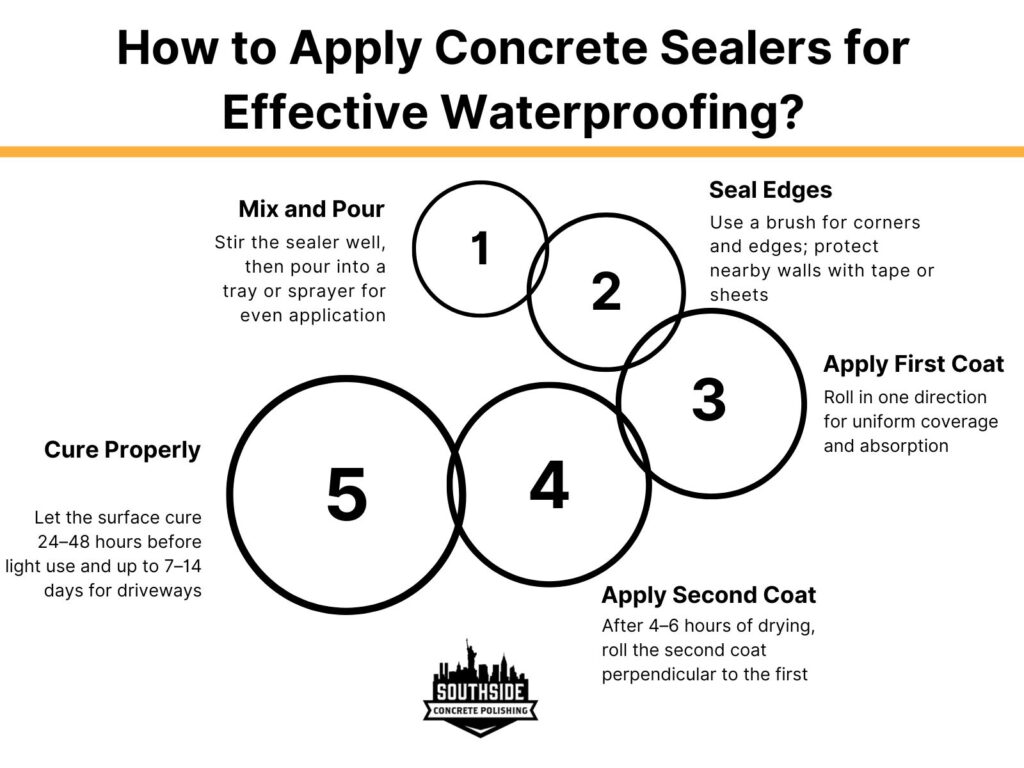
The following are the application steps of concrete sealers for effective waterproofing:
-
Mix and Pour: Stir the sealer thoroughly and pour it into a painter's tray or sprayer.
-
Edge Sealing: Use a brush for corners and edges, avoiding wall staining by applying painter's tape or protective sheets.
-
Rolling the Surface: Use a long-handled roller to apply the first coat in one direction for uniform absorption.
-
Second Coat Application: After drying (typically 4--6 hours), apply a second coat in the opposite direction to ensure total coverage.
-
Curing: Allow the sealer to cure undisturbed for 24--48 hours before use, extending to 7--14 days for driveways.
How to Maintain Waterproofed Concrete for Long-Term Protection?
Maintaining waterproofed concrete for long-term protection involves regular inspection, resealing, and gentle cleaning practices to preserve the waterproof barrier. A well-maintained waterproofed surface retains its strength, color, and resistance to moisture intrusion for decades.
Key maintenance steps for concrete waterproofing include:
-
Regular Cleaning: Sweep or rinse debris regularly to prevent abrasion. Use mild detergents instead of acidic cleaners.
-
Resealing: Reapply film-forming sealers every 2--3 years or penetrating sealers every 7--10 years, depending on exposure levels.
-
Crack Repair: Address cracks immediately to prevent water infiltration and freeze--thaw damage.
-
Avoid Harsh Treatments: Refrain from using power washers above 2,000 psi or deicing salts that may erode the protective layer.
Can You Waterproof Concrete Yourself or Should You Hire a Professional?
Yes, you can waterproof concrete yourself if you have the correct tools, surface preparation knowledge, and time. However, hiring a professional ensures consistent coverage, proper curing, and product compatibility with local environmental conditions.
A DIY application is suitable for small residential areas like patios or garages, using penetrating sealers. For large-scale or critical structures such as basements and retaining walls, professional-grade waterproofing systems and equipment are recommended.
Professionals use moisture meters, industrial sprayers, and high-grade products that achieve deeper penetration and more uniform coating, ensuring long-term reliability.
What Are the Long-Term Benefits of Waterproofing Concrete?
The long-term benefits of waterproofing concrete include improved durability, reduced maintenance costs, and support for sustainable building practices.
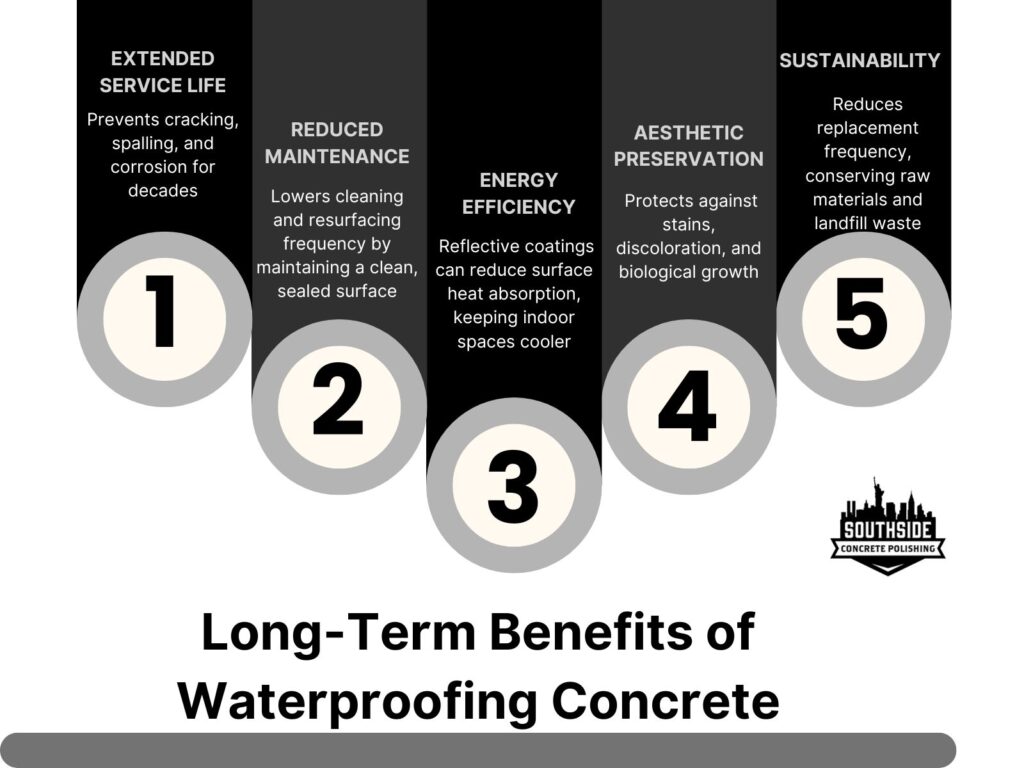
The long-term benefits of waterproofing concrete are as follows:
-
Extended Service Life: Prevents cracking, spalling, and corrosion for decades.
-
Reduced Maintenance: Lowers cleaning and resurfacing frequency by maintaining a clean, sealed surface.
-
Energy Efficiency: Reflective coatings can reduce surface heat absorption, keeping indoor spaces cooler.
-
Aesthetic Preservation: Protects against stains, discoloration, and biological growth.
-
Sustainability: Reduces replacement frequency, conserving raw materials and landfill waste.
Can Epoxy Flooring Be Used for Concrete Waterproofing?
Yes, epoxy flooring can be used for concrete waterproofing because it forms a seamless, non-porous layer that prevents moisture penetration and surface degradation. Epoxy coatings bond tightly to the concrete substrate, sealing out water, oil, and chemicals while improving surface strength and hygiene. Epoxy flooring is especially effective in basements, garages, and commercial spaces where constant exposure to moisture or spills may weaken untreated concrete.
How Do Decorative Concrete Overlays Help Protect Against Water Damage?
Decorative concrete overlays help protect against water damage by resurfacing existing slabs with polymer-modified materials that resist moisture penetration and cracking. These overlays act as a waterproof skin over damaged or porous concrete, reducing permeability while enhancing appearance. When sealed properly, concrete overlays prevent water from entering capillaries or freeze--thaw fractures that cause spalling and surface deterioration.
When Should You Choose Concrete Resurfacing Instead of Simple Waterproofing?
You should choose concrete resurfacing instead of simple waterproofing when the surface shows signs of cracking, scaling, or delamination that compromise structural integrity. While waterproofing prevents moisture ingress, concrete resurfacing restores both strength and finish by applying a new cementitious or polymer-based coating over the damaged slab.