To remove spray paint from concrete, homeowners and property managers are increasingly seeking effective solutions to tackle stubborn stains. Spray paint on concrete, whether from graffiti, accidental overspray, or DIY projects, quickly marks the appearance of driveways, sidewalks, patios, and other outdoor surfaces. Concrete's porous texture makes it especially prone to absorbing paint, which makes stains difficult to remove without proper techniques. With the rise of professional cleaning services and eco-friendly paint removers, more people are successfully restoring their concrete surfaces without causing damage.
The trend of spray-painted concrete in New Jersey has been on the decline, as communities prioritize cleaner, more polished outdoor spaces and enforce stricter anti-graffiti measures. Today, pressure washing, chemical paint removers, and environmentally safe abrasive techniques are popular options. Regular maintenance and sealing also help prevent future stains, keeping concrete looking fresh and well-kept.
Why is Spray Paint Difficult to Remove from Concrete?
Spray Paint is difficult to remove from concrete because the concrete's porous surface absorbs paint deeply, allowing pigments to penetrate tiny crevices where they cling stubbornly. Unlike smooth surfaces, these pores make stains harder to lift, and over time, exposure to sunlight, moisture, and temperature changes sets the paint even more firmly. The chemical composition of spray paint, containing strong resins and solvents, further bonds to the concrete, making simple scrubbing ineffective. As a result, removing spray paint usually requires specialized cleaners, pressure washing, or mechanical methods to fully restore the surface. Regular sealing of concrete helps prevent future stains and makes maintenance easier.
What are the Methods to Remove Spray Paint from Concrete?
The methods to remove spray paint from concrete include a variety of effective techniques designed to restore the clean, professional appearance of commercial and industrial surfaces. Whether dealing with graffiti on a building façade, overspray in a warehouse, or stains on a parking lot, choosing the right removal method ensures minimal damage while achieving the best results. With the right approach, property managers maintain the aesthetic appeal and longevity of their concrete surfaces.
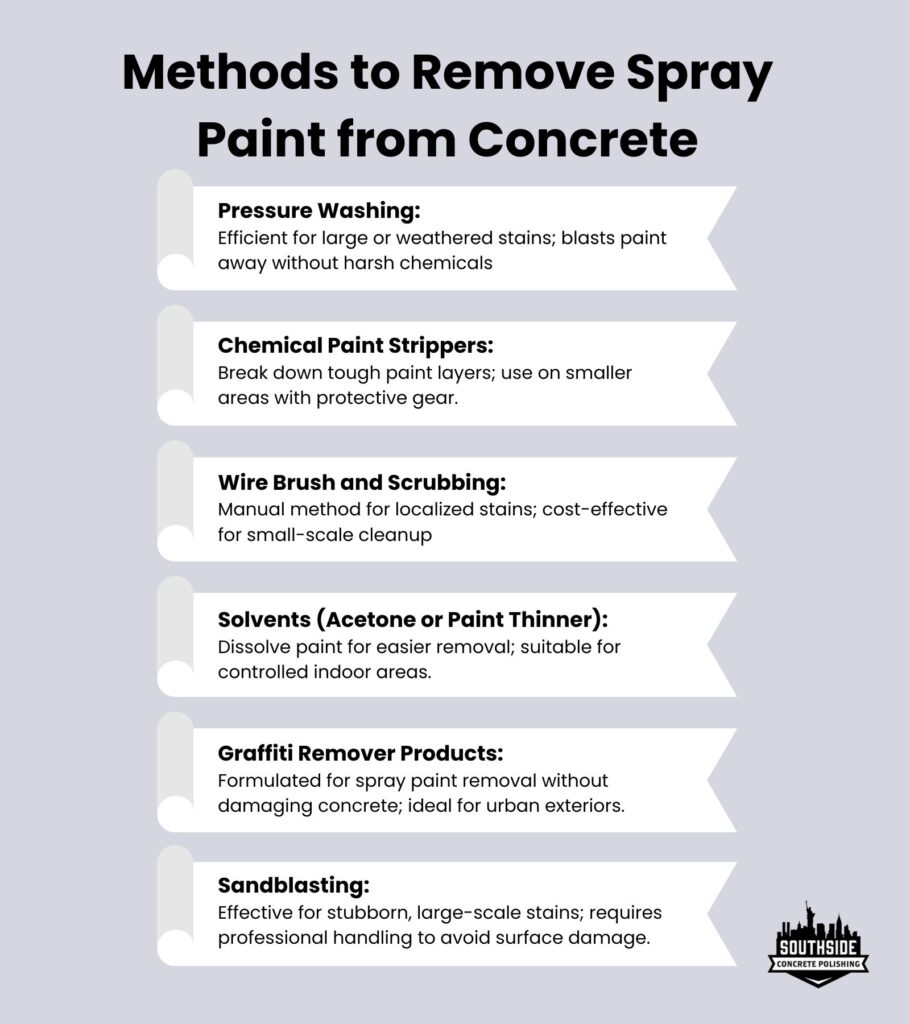
Here are the most effective methods for removing spray paint from concrete:
Pressure Washing
Pressure washing is one of the most efficient ways to remove spray paint from large concrete areas or older, weathered stains. Using a high-pressure washer with the appropriate nozzle allows the paint to be blasted away without harsh chemicals. Start by testing on a small area to find the correct pressure, then move the wand in sweeping motions across the stain. This method is especially suitable for commercial driveways, loading docks, or sidewalks where quick results are needed.
Chemical Paint Strippers
Chemical paint strippers are ideal for breaking down tough paint layers that have adhered to concrete. Apply the stripper to the stain, allow it to penetrate according to the manufacturer's instructions, and then gently scrape with a wire brush or scraper. Always use protective gear and ensure proper ventilation. This method works well for smaller areas on commercial properties where precision and surface protection are priorities.
Wire Brush and Scrubbing
For localized stains or thicker paint layers, manual scrubbing with a wire brush is effective. Apply firm pressure and scrub in a back-and-forth motion until the paint begins to lift. Wipe away residue and rinse with water. This method is cost-effective and ideal for maintenance crews handling small-scale spray paint issues on concrete floors or walkways.
Solvents like Acetone or Paint Thinner
Solvents such as acetone or paint thinner dissolve spray paint, making it easier to wipe away. Apply a small amount to the stained area, let it sit for a few minutes, then rub gently with a cloth or rag. Repeat as needed and rinse thoroughly. This method is suitable for commercial interiors, garages, or other concrete surfaces where chemical use is manageable and controlled.
Graffiti Remover Products
Commercial graffiti removers are specifically formulated to tackle spray paint without damaging concrete. Follow the product instructions carefully for optimal results. These are particularly useful for urban commercial properties, building exteriors, and public-facing concrete areas.
Sandblasting (Optional for Heavily Stained Areas)
For extremely stubborn or large-scale stains, sandblasting removes spray paint effectively. It involves blasting fine abrasive material at high pressure to strip away the paint. This method is best for industrial or commercial sites with durable concrete surfaces, but requires professional handling to avoid surface damage.
These methods ensure that commercial properties maintain a clean, professional appearance while effectively managing spray paint issues.
How to Remove Spray Paint from Concrete?
To remove spray paint from concrete, you must follow safety precautions and proper procedures to protect yourself, the concrete surface, and the surrounding areas. Commercial properties, such as office buildings, warehouses, and parking lots, require careful handling to maintain a professional appearance while effectively removing stubborn paint stains. Using the right products and techniques ensures the surface is restored without causing long-term damage.
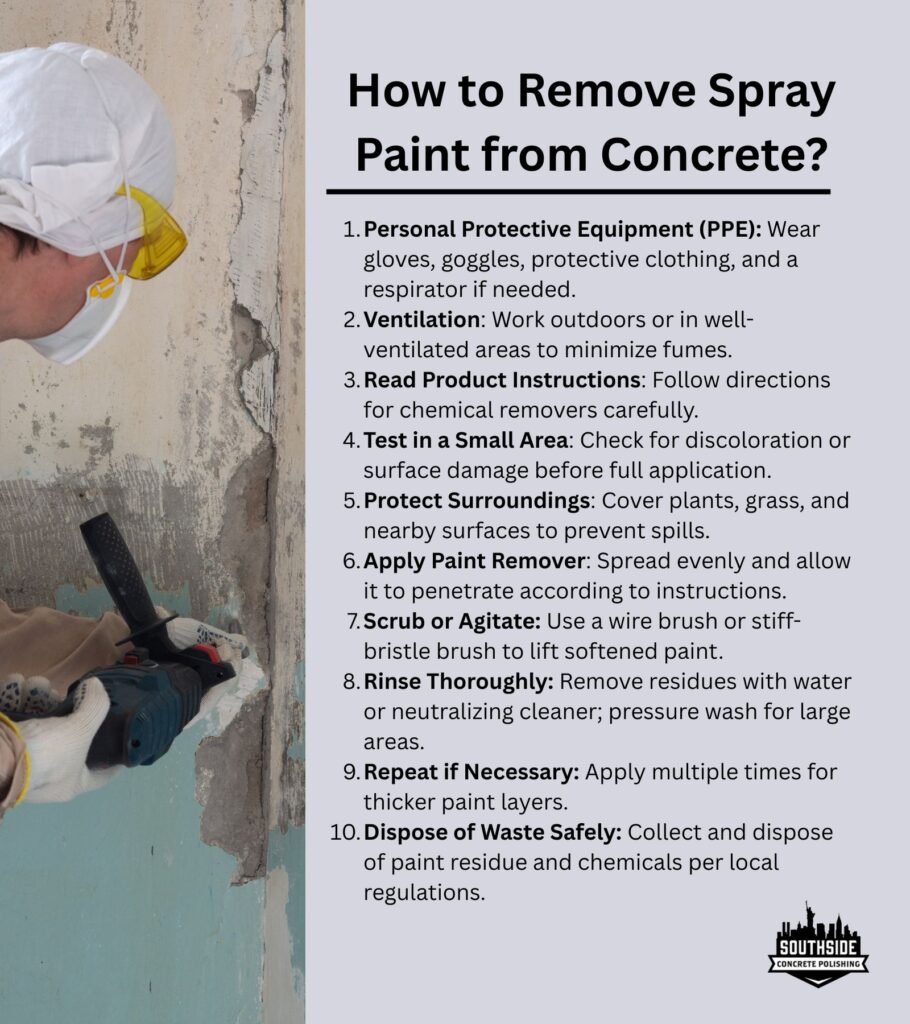
Here are detailed steps to safely and effectively remove spray paint from concrete
1. Personal Protective Equipment (PPE)
-
Wear chemical-resistant gloves to prevent skin irritation.
-
Use safety goggles or a face shield to protect your eyes from splashes or fumes.
-
Don protective clothing, such as long sleeves and pants, to avoid chemical contact with skin.
-
Consider a respirator mask if working with strong chemical strippers or in poorly ventilated areas.
2. Ventilation
-
Always work outdoors or in a well-ventilated area.
-
Proper airflow minimizes inhalation of fumes from solvents or chemical removers.
3. Read Product Instructions
-
Each chemical paint remover has specific usage directions, including dwell time and application method.
-
Following instructions ensures safety and maximizes the effectiveness of the product.
4. Test in a Small Area
-
Apply the remover to an inconspicuous section of the concrete.
-
Testing helps identify any adverse effects, such as discoloration or surface damage.
5. Protect Surrounding Areas
-
Cover plants, grass, and nearby surfaces to prevent accidental damage from chemicals.
-
Use plastic sheeting or tarps to contain spills.
6. Apply the Paint Remover
-
Spread chemical strippers, solvents, or graffiti removers evenly over the paint stain.
-
Allow the product to penetrate for the recommended time, loosening the paint without harming the concrete.
7. Scrub or Agitate the Surface
-
Use a wire brush, stiff-bristle brush, or scrub pad to lift the softened paint.
-
Work in the direction of the concrete's texture for the best results.
8. Rinse Thoroughly
-
Use water or a neutralizing cleaner to remove all chemical residues.
-
Pressure washing is effective for large commercial areas.
9. Repeat if Necessary
-
Multiple layers of paint require repeated applications.
-
Ensure each layer is fully removed before moving on to the next.
10. Dispose of Waste Safely
-
Collect paint residue, rags, and leftover chemicals according to local disposal regulations.
-
Safe disposal protects the environment and maintains compliance with regulations.
What are the Factors Affecting the Removal of Spray Paint From Concrete?
The factors affecting the removal of spray paint from concrete include several key elements that determine how easily or effectively paint is eliminated from the surface. Concrete's porous nature, the type of paint, and environmental conditions all influence the removal process. Understanding these factors helps commercial property managers and maintenance teams select the most appropriate cleaning methods and achieve optimal results without damaging the surface.
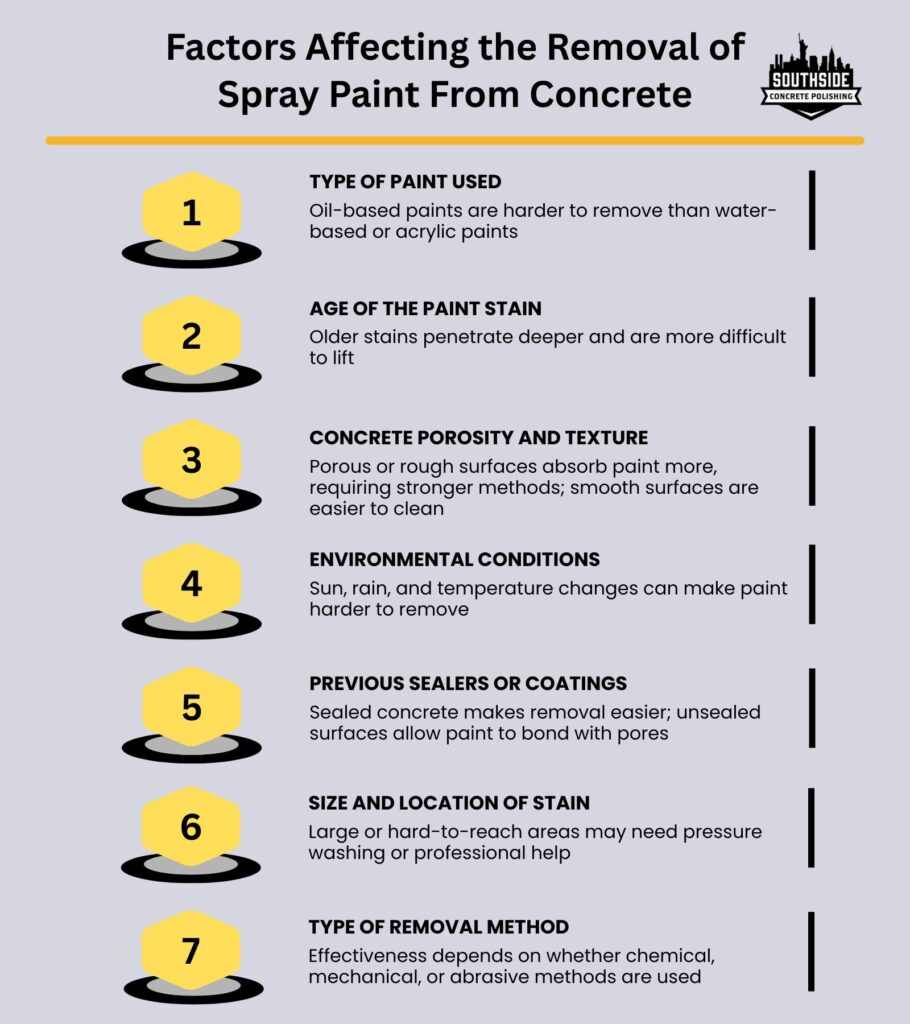
Here are the main factors that affect spray paint removal from concrete:
-
Type of Paint Used: Different spray paints, such as acrylic, enamel, or oil-based, adhere to concrete differently. Oil-based paints are more stubborn and require stronger chemical strippers or longer dwell times, while water-based paints are generally easier to remove.
-
Age of the Paint Stain: Older stains penetrate deeper into the porous concrete, making them harder to remove. Fresh paint lifted more easily with solvents or pressure washing.
-
Concrete Porosity and Texture: Highly porous or rough-textured concrete absorbs paint more readily, requiring more aggressive or repeated removal methods. Smooth concrete surfaces are easier to clean.
-
Environmental Conditions: Exposure to sunlight, rain, and temperature changes causes the paint to set over time. Paint that has been weathered requires stronger chemical treatments or mechanical scrubbing.
-
Previous Sealers or Coatings: Concrete surfaces treated with sealers prevent paint from penetrating deeply, making removal easier. Untreated surfaces allow the paint to bond directly with the pores, complicating the process.
-
Size and Location of the Stain: Large areas or stains in hard-to-reach locations require specialized equipment like pressure washers or professional cleaning services to ensure complete removal.
-
Type of Removal Method Used: The effectiveness of the chosen removal technique, chemical, mechanical, or abrasive, plays a major role in how quickly and thoroughly the paint is removed.
These factors combined help determine the best approach for spray paint removal, ensuring commercial concrete surfaces are restored efficiently and safely.
How to Remove Spray Paint from Concrete Using Household or DIY Methods?
To remove spray paint from concrete using household or DIY methods includes several safe and accessible techniques that help manage light to moderate paint stains without the need for professional chemical strippers. While these methods are not as powerful as industrial solutions, they are effective for small areas, fresh paint, or minor overspray. Understanding the limitations of each approach ensures realistic results and prevents damage to the concrete surface.
Here are some household or DIY methods to remove spray paint from concrete:
Bleach
-
Bleach is a common household cleaner, but it is not effective for spray paint removal.
-
Concrete's porous nature allows paint to penetrate deeply, while some pigments and binders resist bleach.
-
Bleach slightly lightens or fades paint, but it usually does not fully remove it.
Baking Soda
-
Baking soda is versatile for general cleaning and minor stains, but it has limited effectiveness on spray paint.
-
It lacks the chemical strength to break down paint that has adhered to concrete.
-
Best suited for light surface cleaning rather than stubborn or older paint stains.
Vinegar
-
Vinegar's acidity help loosen light or fresh paint from concrete.
-
Mix equal parts vinegar and water, apply to the stain, and let it sit for 10--15 minutes.
-
Scrub with a stiff brush in circular motions and rinse thoroughly with water.
-
Multiple applications are needed for slightly older paint, but heavy or layered paint requires stronger methods.
Rubbing Alcohol or Isopropyl Alcohol
-
Effective on water-based paints, alcohol dissolves paint for easier scrubbing.
-
Apply the stain, allow it to sit briefly, and scrub with a brush or pad.
-
Repeat as necessary and rinse with water.
While household or DIY methods handle minor spray paint issues, older, stubborn, or multiple layers of paint require professional-grade chemical removers, sanding, or mechanical abrasion for complete removal.
What is the best method for removing spray paint from concrete?
The best method for removing spray paint from concrete depends on the size of the stain, the type of paint, and the condition of the concrete surface. For most commercial and industrial settings, professional-grade chemical paint strippers combined with mechanical agitation or pressure washing provide the most effective results. These methods thoroughly remove paint while minimizing damage to the concrete.
Is it safe to use chemical solutions like TSP on concrete?
Yes, it is safe to use chemical solutions like TSP (trisodium phosphate) on concrete when used correctly. TSP effectively cleans and degreases concrete surfaces, helping to prepare them for paint removal or resurfacing. However, you must follow manufacturer instructions, wear protective gear, and rinse the area thoroughly to prevent residue buildup or environmental harm.
Is pressure washing safe for removing spray paint from concrete?
Yes, pressure washing is a safe and effective method for removing spray paint from concrete when used correctly. Pressure washing can clean large areas quickly, but it's most effective when paired with a suitable paint remover or degreasing solution for stubborn stains.
Can removing spray paint help renew an outdoor stained concrete patio?
Yes, removing spray paint helps renew an outdoor stained concrete patio. If you carefully remove spray paint from concrete surfaces, it helps restore and refresh the appearance of your patio. By eliminating unwanted paint without damaging the underlying stain, you can effectively renew an outdoor stained concrete patio and maintain its vibrant, polished look.
Can removing spray paint improve the look of decorative concrete overlays for patios?
Yes, removing spray paint improves the look of decorative concrete overlays for patios. It helps preserve the design and color of decorative concrete overlays for patios. Proper cleaning restores the surface's appearance, maintaining its aesthetic appeal and extending the life of decorative concrete overlays for patio finishes.