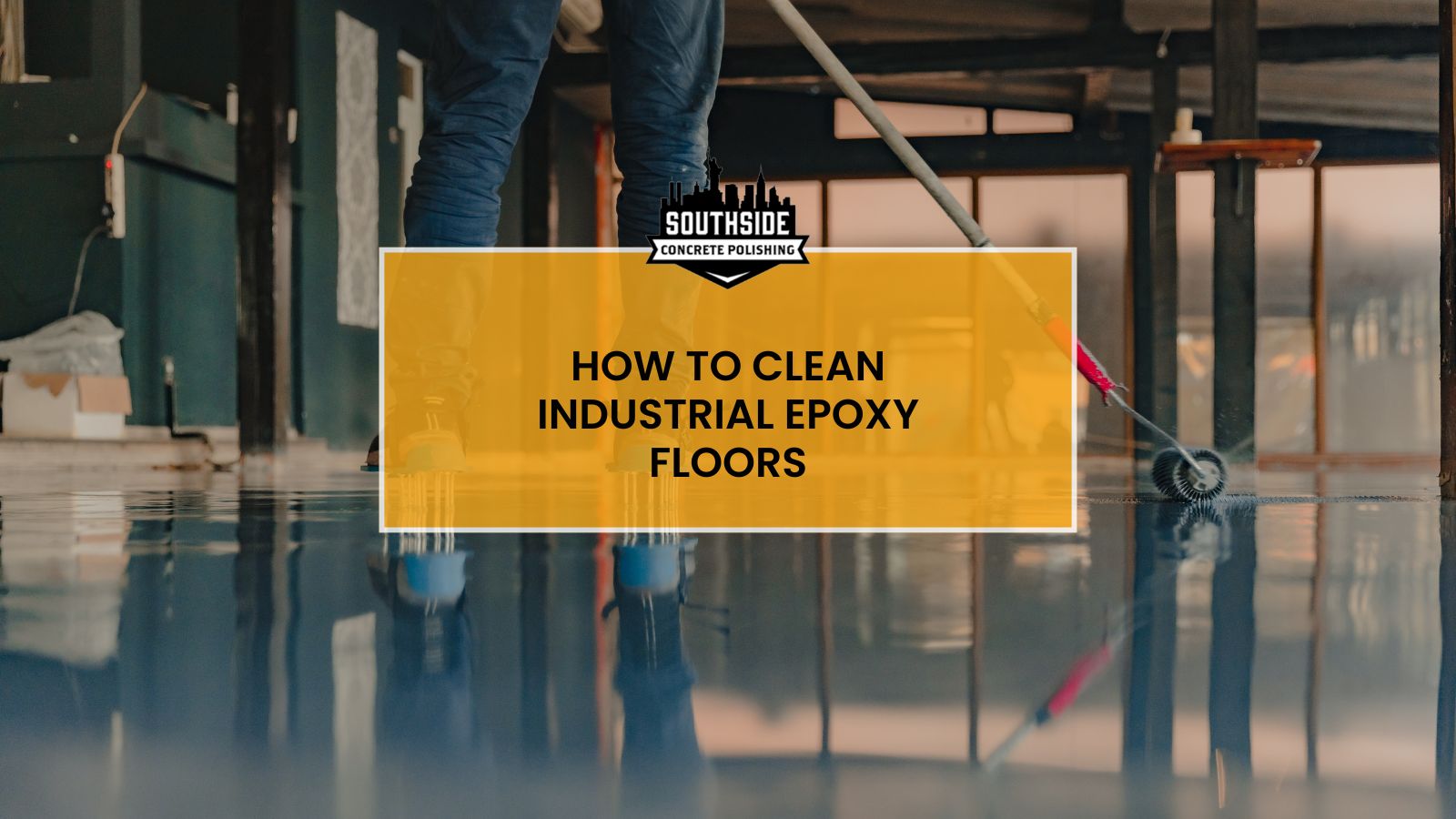
To clean industrial epoxy floors effectively, you must apply a structured maintenance process designed to protect their chemical composition and gloss. Industrial epoxy floors in warehouses, factories, logistics hubs, and garages endure heavy traffic, constant abrasion, and exposure to oils, solvents, and chemical residues.
Without consistent cleaning, these epoxy coatings lose reflectivity and traction, increasing both safety and maintenance costs. Regular maintenance ensures long-term performance, with studies by the American Coatings Association (ACA) showing that properly maintained epoxy floors retain up to 92% of their surface gloss after five years of use. The cleaning process for epoxy floors involves staged actions, debris removal, sweeping, mopping, and periodic deep cleaning to prevent embedded dirt and micro-scratching.
Industrial epoxy floor cleaning also includes managing spills, avoiding harsh detergents, and using protective materials under heavy equipment. Facility managers preserve epoxy's structural bond, maintain hygiene standards, and extend operational lifespan, ensuring performance reliability in demanding industrial environments by following a systematic approach.
Why Industrial Epoxy Floors Require Specialized Cleaning?
Industrial epoxy floors require specialized cleaning because they are continuously exposed to abrasion, oils, and chemical residues that ordinary cleaners cannot handle. The smooth, non-porous surface of epoxy resists stains and impacts, but dirt, grit, and residues can embed over time, dulling the gloss and reducing traction. Regular, methodical cleaning helps retain the coating's reflectivity, safety, and mechanical strength.
Epoxy flooring is composed of resin and hardener that chemically bond with concrete. This creates a seamless surface that repels water and oil, making it easy to clean if the right products and tools are used. Harsh detergents, acids, or abrasive tools disrupt this molecular bond, causing the coating to weaken or discolor.
How Should You Begin Cleaning an Industrial Epoxy Floor?
Cleaning an industrial epoxy floor begins with debris removal. Loose debris, such as dust, paper, or metal shavings, acts like sandpaper under heavy machinery, leading to micro-scratches that accumulate over time. Start by manually collecting large debris and sweeping or vacuuming smaller particles.
A vacuum fitted with a soft brush attachment is the most efficient tool for large areas. It removes dust without leaving marks or static streaks. For open spaces such as manufacturing floors, automated sweepers with non-abrasive brushes provide a fast and consistent clean.
Why Is Regular Sweeping and Mopping Important for Epoxy Floors?
Regular sweeping and mopping are important for epoxy floors because fine dirt and grit gradually dull the surface and compromise its resistance layer. When forklifts, carts, or foot traffic move over embedded grit, the floor loses its clarity and smoothness.
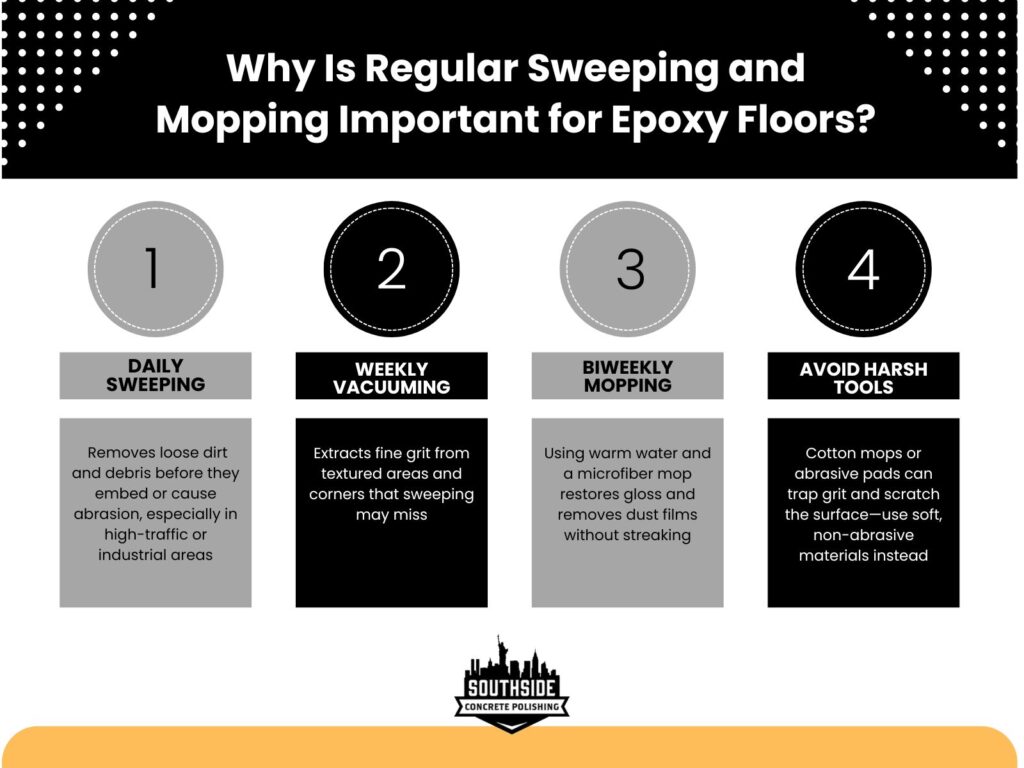
Regular sweeping and mopping are important for epoxy floors because of the following reasons:
-
Sweep daily with a soft-bristle broom or dust mop: This removes loose dirt, dust, and debris before they scratch or embed into the surface. Daily sweeping is especially crucial in high-traffic areas or where machinery operates.
-
Vacuum weekly to remove deeper residue: A vacuum with a soft brush attachment reaches into surface texture and corners, extracting grit that sweeping alone misses. This prevents gradual wear and maintains the epoxy's shine.
-
Mop twice a week with warm water and a microfiber mop: Regular mopping eliminates fine dust films and restores the floor's luster. Microfiber mops are non-abrasive and effective at lifting grime without leaving streaks.
-
Avoid cotton mops or harsh cleaning pads: Cotton fibers can trap grit and drag it across the floor, causing micro-scratches. Stick to synthetic or microfiber materials to protect the coating's integrity.
What Is the Best Way to Spot Clean Spills or Soiling on Epoxy Floors?
The best way to spot clean spills or soiling on epoxy floors is to act immediately after the spill occurs. Prompt cleaning prevents chemical reactions and staining. For most non-hazardous spills, a soft mop or absorbent towel and warm water are sufficient.
Use an ammonia-water mixture (approximately three ounces of ammonia per gallon of water) for oil or grease spills. This solution breaks down oily residues without damaging the epoxy finish. Always rinse the area thoroughly afterward to remove residue.
If chemical spills occur, follow the manufacturer's safety data sheets (SDS) to neutralize and clean safely. Prolonged exposure to acids, solvents, or strong alkalis softens or discolors the floor.
When Should You Perform Deep Cleaning on Industrial Epoxy Floors?
Deep cleaning on industrial epoxy floors should be performed every one to three months, depending on the level of traffic, type of operations, and exposure to contaminants. Deep cleaning removes embedded grime, oil residues, and film buildup that routine sweeping and mopping cannot eliminate. This process keeps the epoxy surface reflective, hygienic, and slip-resistant, maintaining both performance and appearance.
Steps for thorough cleaning of epoxy floors include:
-
Remove all movable machinery and obstacles: Clearing the workspace ensures that no debris or equipment blocks access to hidden areas, allowing a complete and even clean.
-
Sweep and vacuum the entire area: Use an industrial-grade vacuum with a soft-brush attachment to capture dust and grit from expansion joints, corners, and the textured regions that collect buildup.
-
Mop with warm water and a mild ammonia solution: Mix three ounces of ammonia per gallon of hot water. This neutral solution lifts oil and grime without damaging the epoxy's chemical resistance layer.
-
Allow the solution to sit for five minutes: Letting it rest breaks down embedded dirt and softens residue, making it easier to remove without excessive scrubbing.
-
Scrub gently with a hard foam mop or soft-bristle floor scrubber: This helps dislodge dirt without scratching the epoxy surface. Avoid abrasive pads or stiff brushes that dull the finish.
-
Rinse thoroughly with clean water and let the floor dry naturally: Proper rinsing removes all cleaning residues, preventing streaking and preserving the glossy, reflective surface.
Why Should You Avoid Soap-Based or Acidic Cleaners on Epoxy Floors?
Soap-based or acidic cleaners should be avoided because they leave residues and damage the coating. Soap solutions form a film that builds up over time, resulting in a cloudy appearance and reduced slip resistance. Acidic agents such as vinegar, citrus, or bleach react with epoxy catalysts, causing fading or surface etching.
Instead, use neutral pH cleaners designed for resin-based flooring. These formulas lift dirt without altering surface chemistry. Always follow the manufacturer's dilution instructions and test a small area before large-scale use.
How Can You Remove Stains and Rust Without Damaging the Floor?
You can remove stains and rust from epoxy floors without damaging them by using mild cleaning techniques. For light stains, warm water and a non-abrasive scrubbing pad usually suffice. For rust or deep marks, gently rub the affected area using a sponge dipped in an ammonia-water mix.
Avoid abrasive pads, steel wool, or powdered cleansers, as these create micro-abrasions that trap more dirt in the future. Consistent gentle cleaning prevents long-term staining and preserves the floor's seamless texture.
How Should You Handle Automotive or Chemical Spills on Epoxy Surfaces?
Handling automotive or chemical spills on epoxy surfaces requires immediate response. Engine oil, gasoline, paint thinner, or brake fluid penetrate the coating if left unattended.
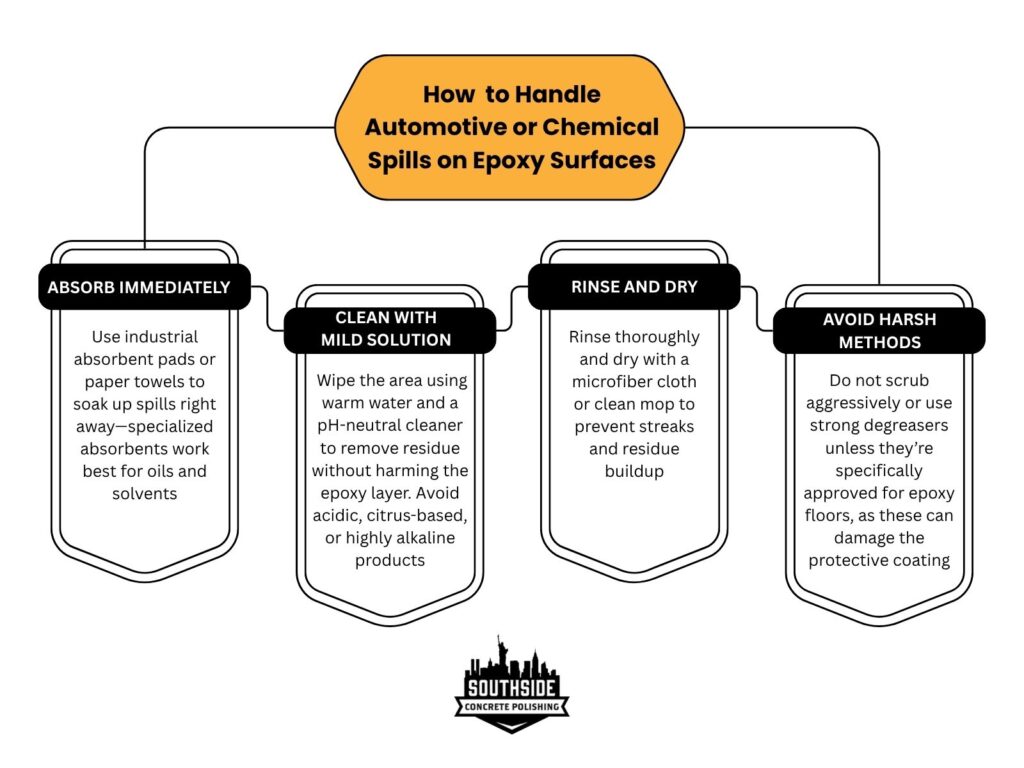
Steps for handling automotive or chemical spills on epoxy surfaces include:
-
Absorb spills immediately using industrial absorbent pads or paper towels: Quick absorption prevents the liquid from penetrating the coating and minimizes potential chemical reactions. Use absorbent materials designed for hydrocarbons or solvents if dealing with automotive fluids.
-
Wipe the affected area with warm water and a mild, pH-neutral cleaner: This removes any film or residue without degrading the epoxy's chemical resistance layer. Avoid cleaners with citrus, acids, or strong alkalinity, as they react with the resin surface.
-
Rinse thoroughly and dry with a microfiber cloth or clean mop: Complete drying prevents streaks and ensures no residue remains that dulls the finish or attracts dust.
-
Avoid scrubbing aggressively or using industrial degreasers unless specified for epoxy flooring: Harsh chemicals or abrasive scrubbing tools erode the protective topcoat or alter the surface texture.
How Can You Protect Industrial Epoxy Floors from Long-Term Damage?
You can protect industrial epoxy floors from long-term damage by preventing mechanical stress and thermal exposure. While epoxy coatings are highly durable, preventive measures significantly extend their lifespan.
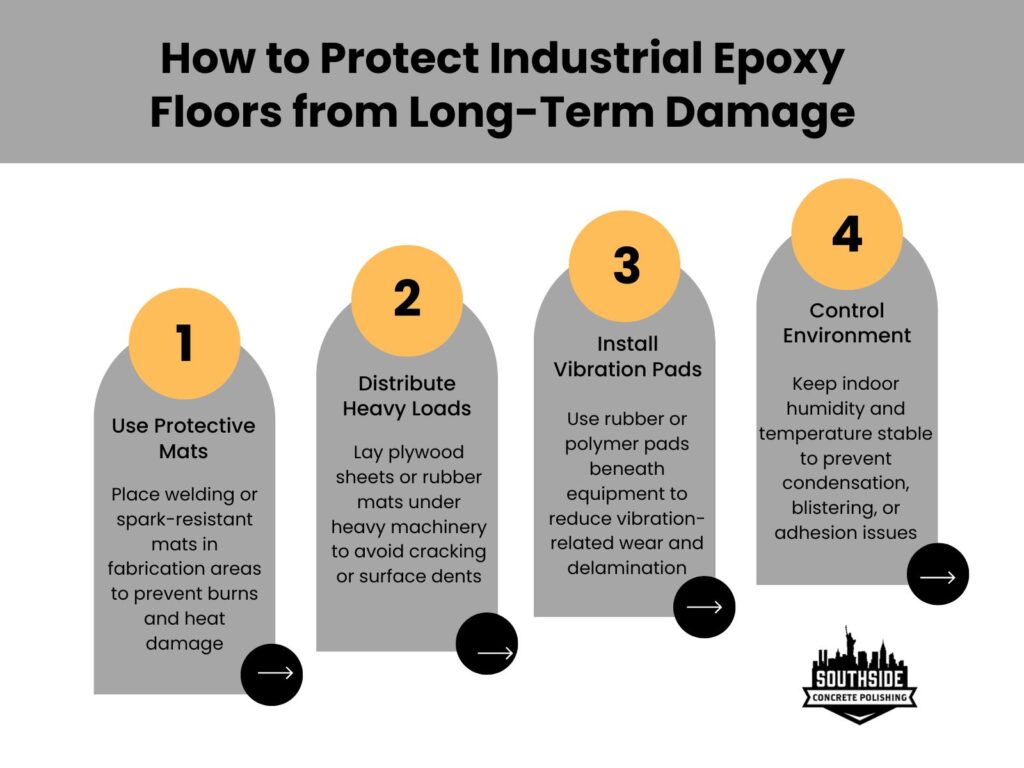
Steps to protect industrial epoxy floors from long-term damage include:
-
Use protective mats in welding or fabrication zones: Welding mats or spark-resistant coverings prevent surface burns, pitting, and heat marks caused by metalwork or thermal exposure. This ensures the epoxy retains its gloss and chemical stability.
-
Lay plywood sheets or load-distribution panels under heavy machinery: Plywood or rubberized mats evenly distribute weight and reduce point-load pressure from forklifts, compressors, or pallet racks, preventing surface indentation or cracking.
-
Install vibration-dampening pads beneath equipment: Rubber or polymer pads absorb mechanical vibration from industrial machinery, minimizing frictional wear and delamination along expansion joints.
-
Control indoor humidity and temperature levels: Maintaining stable environmental conditions prevents condensation under the epoxy layer, which leads to blistering or adhesion failure over time.
Should Industrial Epoxy Floors Ever Peel or Chip?
Industrial epoxy floors should not peel or chip when properly installed and maintained. Peeling occurs due to improper concrete preparation or moisture trapped beneath the coating. During installation, the concrete must be ground, cleaned, and primed to allow strong adhesion.
If peeling appears in small areas, it indicates localized chemical damage or impact. Repair these immediately by sanding the area and applying fresh epoxy to maintain a seamless finish.
How Does Regular Cleaning Extend the Lifespan of Industrial Epoxy Floors?
Regular cleaning extends the lifespan of industrial epoxy floors by maintaining surface integrity and preventing chemical erosion. When dust, oil, and debris are removed regularly, the epoxy's reflective surface stays clear, reducing light absorption and heat buildup. Clean surfaces are also safer for workers, reducing slip and trip risks.
Over time, a clean epoxy coating maintains its bond with the substrate, ensuring optimal performance for 10 to 20 years under proper care.
How Proper Cleaning Enhances the Benefits of Epoxy Flooring in Industrial Settings?
Proper cleaning enhances the benefits of industrial epoxy floors by removing dust, grit, and chemical residues that dull the surface, reduce slip resistance, and gradually erode the epoxy's protective layer.
Timely spot cleaning of spills prevents staining and chemical damage, while periodic deep cleaning restores gloss and maintains surface integrity. Consistent cleaning ensures that the benefits of epoxy flooring, including durability, chemical resistance, and ease of maintenance, are fully realized in high-traffic industrial environments.
What's the Connection Between Cleaning and Preventive Maintenance for Epoxy Floors?
The connection between cleaning and preventive maintenance for epoxy floors lies in consistency. Cleaning is not only cosmetic; it prevents deterioration at a structural level. Preventive maintenance includes scheduled inspections for chips, stains, or abrasions, allowing for prompt corrections before damage spreads. Facilities maintain a professional, hygienic environment that supports safety and operational efficiency by combining daily cleaning with quarterly inspections and protective coverings for epoxy floors.