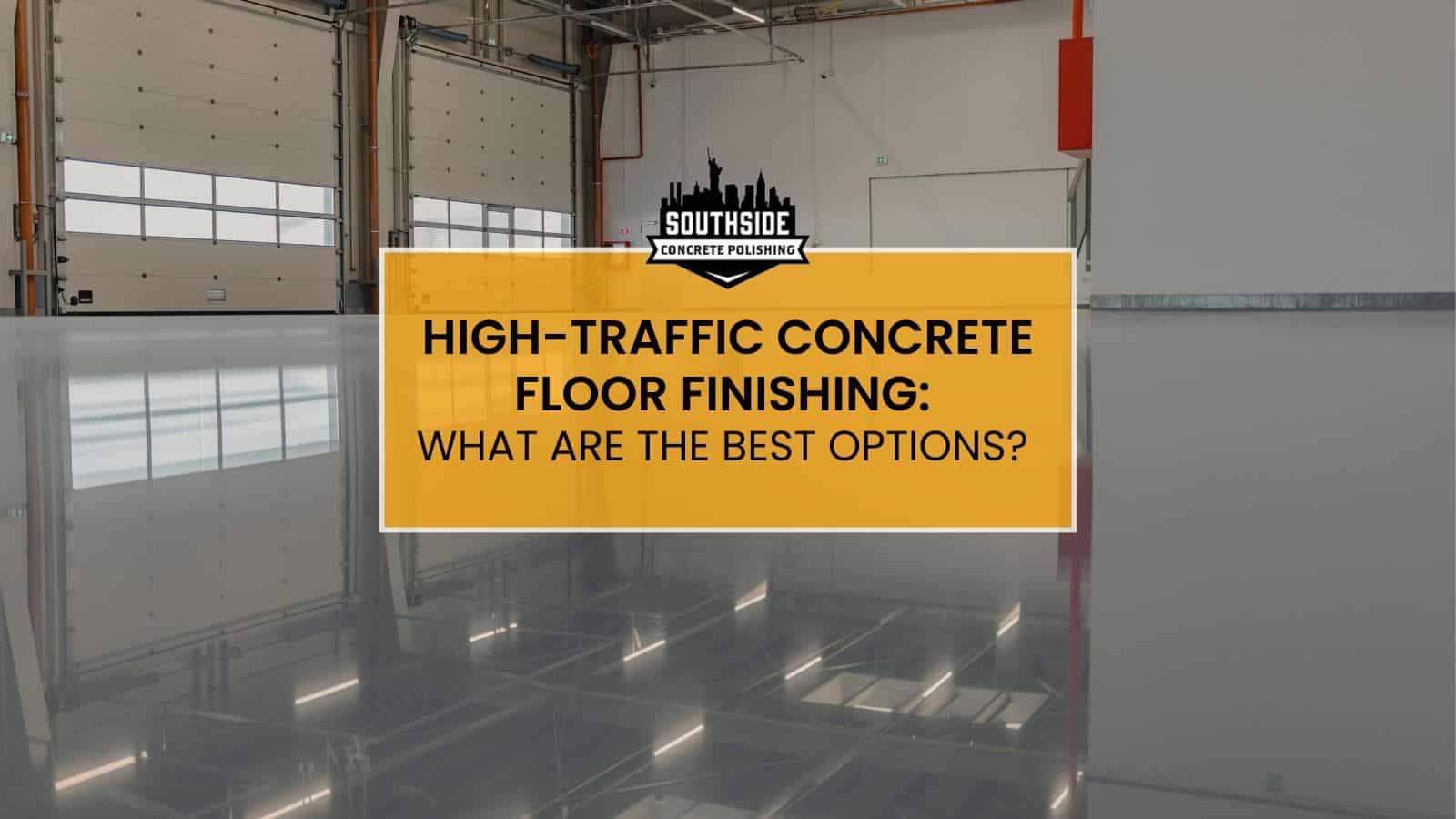
The best options for high-traffic concrete floor finishing include polished concrete, epoxy coating, and stained concrete, among others. These floor finishes require more than just strength. They need the proper protection. The right floor finish improves durability, reduces maintenance, enhances appearance, and increases safety. Whether you operate a warehouse, retail store, office, or manufacturing facility, investing in the best concrete finish for high-traffic areas is essential for long-term performance.
In New York, commercial buildings account for over 450 million square feet of concrete flooring, much of which experiences daily high-volume foot and equipment traffic, as reported by the NYC Department of Buildings. Choosing the right floor finish helps minimize costly repairs, which average $3 to $7 per square foot annually without protective coatings, according to the Concrete Polishing Association of America.
What Are the Best Concrete Floor Finishes for High-Traffic Areas?
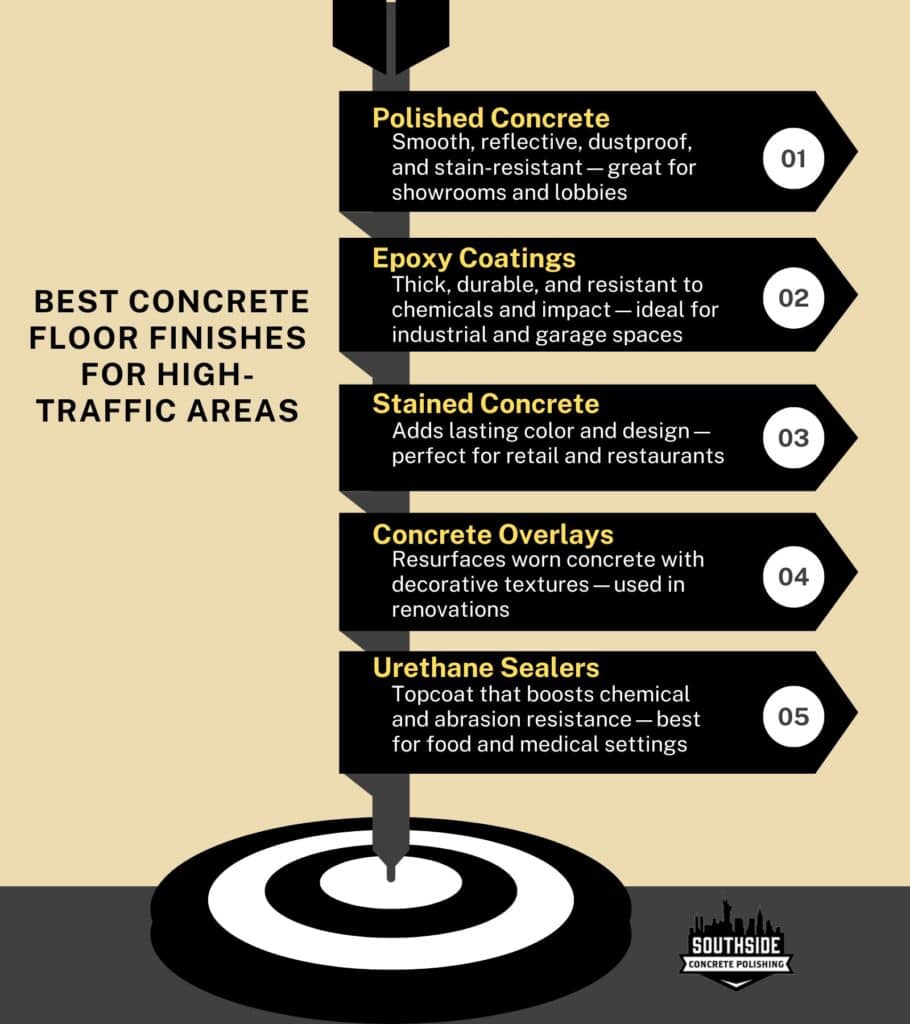
The best concrete floor finishes for high-traffic areas include polished concrete, epoxy coatings, stained concrete, concrete overlays, and urethane sealers. These finishes are designed to protect the floor from wear, moisture, chemicals, and physical damage, all while improving the overall look of the space.
1. Polished Concrete
A Polished concrete finish is created by mechanically grinding and polishing the concrete surface to achieve a smooth, reflective look. It is dustproof, stain-resistant, and long-lasting, ideal for high-visibility spaces such as showrooms and office lobbies.
2. Epoxy Coatings
Epoxy flooring creates a thick, durable surface that resists abrasions, chemicals, oil, and impacts. Commonly used in industrial and commercial garages, epoxy coatings are available in a wide range of colors and textures for both utility and style.
3. Stained Concrete
A Stained concrete adds permanent color to concrete, allowing you to customize the appearance of your floor. Both acid-based and water-based stains are available, making this an excellent choice for spaces like restaurants and retail stores where visual appeal is essential.
4. Concrete Overlays
A concrete overlay involves applying a new surface layer over existing concrete. These are ideal for resurfacing old or worn concrete while adding decorative texture or pattern.
5. Urethane Sealers
Applied as a topcoat, urethane sealers enhance chemical and abrasion resistance. These finishes are especially useful in areas requiring regular cleaning and sanitation, like food production and medical environments.
What Makes a Concrete Finish Suitable for High-Traffic Commercial Use?
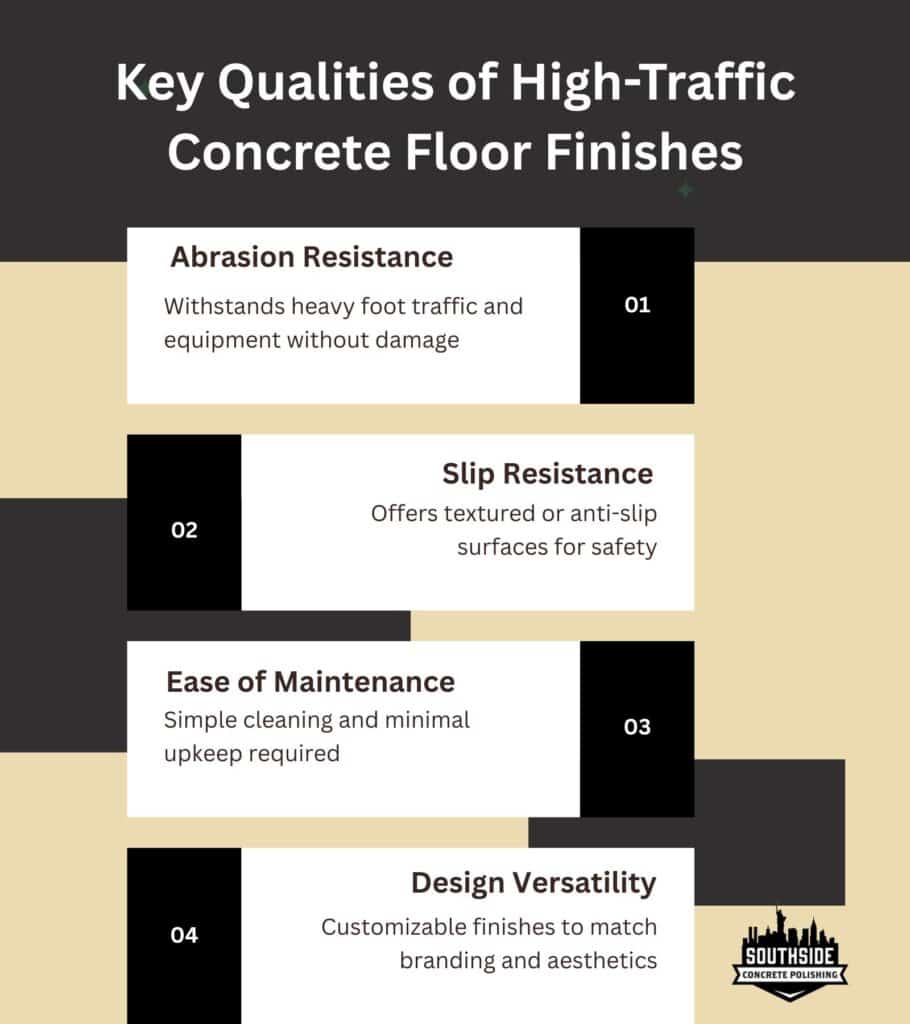
A concrete floor finish is considered suitable for high-traffic commercial use if it combines strength, safety, easy maintenance, and aesthetic flexibility. Unlike residential settings, commercial environments require finishes that hold up under pressure while still presenting a professional appearance.
Key qualities of high-traffic concrete floor finishes include:
-
Abrasion Resistance: Commercial floors are exposed to rolling carts, heavy foot traffic, and equipment. The finish must resist scratches, chips, and surface damage over time.
-
Slip Resistance: Safety is crucial in busy areas. Many finishes offer anti-slip additives or textured surfaces to reduce the risk of accidents, especially in entryways and kitchens.
-
Ease of Maintenance: High-traffic floors must be easy to clean and maintain. Most finishes on this list are designed to require minimal upkeep beyond regular sweeping and occasional resealing.
-
Design Versatility: Finishes like staining and epoxy coatings allow businesses to align the floor's design with their brand, creating a polished and welcoming environment.
How Do You Prepare Concrete Floors for a High-Traffic Finish?
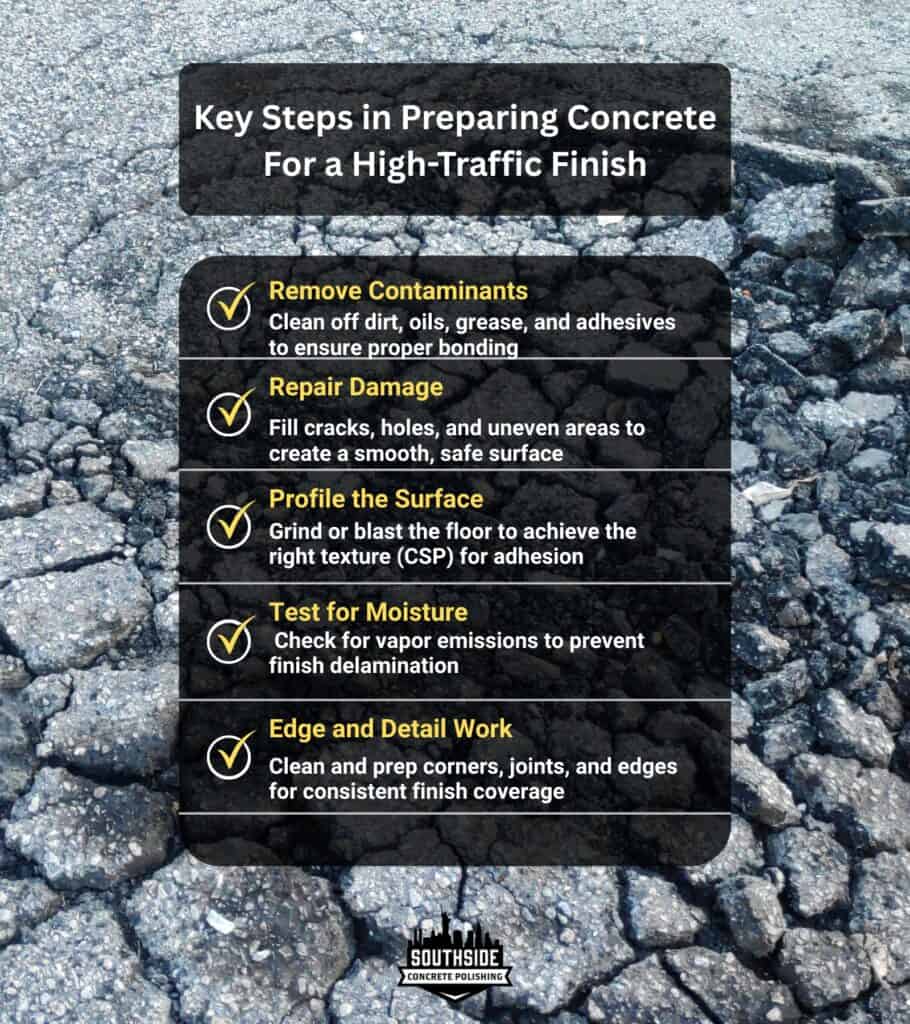
You prepare concrete floors for a high-traffic finish by thoroughly cleaning the surface, repairing any cracks or damage, profiling the concrete for proper adhesion, and testing for moisture. Proper surface preparation is paramount to ensure that the chosen floor finish bonds correctly and delivers long-term durability. Even the most potent coatings peel, bubble, or fail prematurely if applied over a poorly prepped surface.
Here are the key steps in preparing concrete for a high-traffic finish:
-
Remove Surface Contaminants: Start by clearing away all dust, dirt, oils, adhesives, paints, or grease using industrial degreasers and mechanical scrubbers. This eliminates anything that prevents the new coating from bonding to the concrete.
-
Repair Cracks and Surface Damage: Patch cracks, holes, spalls, and joints with concrete repair compounds or epoxy fillers. Uneven or deteriorated areas should be leveled to avoid telegraphing through the finish or creating trip hazards.
-
Mechanically Profile the Surface: Use shot blasting, grinding, or scarifying equipment to create the correct surface profile for your finish. Most coatings require a specific Concrete Surface Profile (CSP) rating to adhere properly, ranging from CSP 1 (smooth) to CSP 9 (rough).
-
Moisture Vapor Testing: High moisture levels cause finishes like epoxy or polyurethane to delaminate. Use calcium chloride or relative humidity testing to check for vapor emissions before coating.
-
Edge and Detail Work: Don't overlook corners, drains, expansion joints, and floor edges. These areas should be carefully cleaned, patched, and prepared to ensure a uniform application of the finish.
What Concrete Finishes Work Best for Commercial vs. Industrial Spaces?
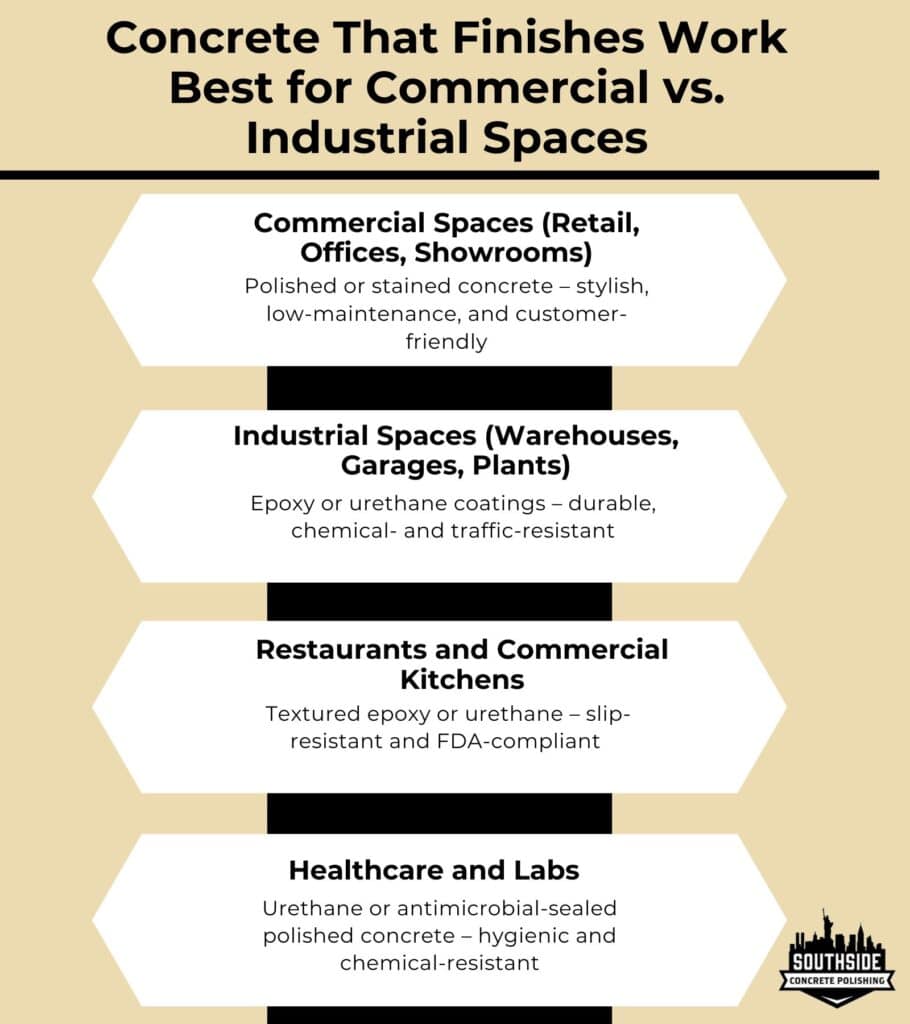
The best concrete floor finish varies depending on whether the space is commercial or industrial, as each environment has different requirements in terms of aesthetics, durability, and performance.
The following concrete finishes work best for commercial vs. industrial spaces:
-
Commercial Spaces (Retail, Offices, Showrooms): These areas benefit from polished or stained concrete. These finishes are visually appealing, easy to clean, and offer a modern, high-end look suitable for customer-facing environments.
-
Industrial Spaces (Warehouses, Garages, Plants): Epoxy or urethane coatings are better suited for industrial environments where the floor must withstand constant heavy traffic, forklift movement, chemical exposure, and temperature fluctuations.
-
Restaurants and Commercial Kitchens: These spaces require slip-resistant, FDA-compliant finishes like textured epoxy or urethane sealers that handle grease, water, and aggressive cleaning chemicals.
-
Healthcare and Labs: Urethane coatings or polished concrete with antimicrobial sealers are preferred in sterile environments that demand hygiene and chemical resistance.
How Long Do High-Traffic Concrete Finishes Last?
With proper installation and maintenance, high-traffic concrete floor finishes can last anywhere from 5 to 20 years. Lifespan depends on the type of finish, the environment, and how well the floor is maintained. Routine cleaning and reapplication of protective topcoats extend the usable life of any concrete finish significantly.
Average durability by finish type is as follows:
-
Polished Concrete: 10--20 years with minimal maintenance and occasional re-polishing.
-
Epoxy Coating: 7 to 15 years, depending on traffic levels and environmental exposure.
-
Stained Concrete: 10 to 15 years with periodic sealing to preserve color vibrancy.
-
Concrete Overlays: 5 to 10 years, depending on the thickness and level of wear.
-
Urethane Sealers: Typically last 5 to 7 years before a new topcoat is needed.
How much does it cost to finish concrete floors in high-traffic environments?
The cost to finish concrete floors in high-traffic environments varies by square footage, surface condition, and finish type. On average, expect to pay $3 to $12 per square foot for polished concrete, $4 to $15 for epoxy coatings, and $5 to $10 for decorative overlays. Additional preparation, color customization, or moisture mitigation increases pricing.
Can you apply a finish over old or damaged concrete?
Yes. Many finishes, including epoxy and overlays, are designed for resurfacing existing concrete. However, the slab must be structurally sound, and surface preparation must address cracks, holes, or unevenness before applying the finish.
Are these finishes slip-resistant enough for wet or foodservice environments?
Yes. Slip resistance is enhanced by selecting textured coatings or by adding anti-slip grit to epoxy or urethane finishes. This makes them ideal for commercial kitchens, entryways, and bathrooms where moisture is a concern.