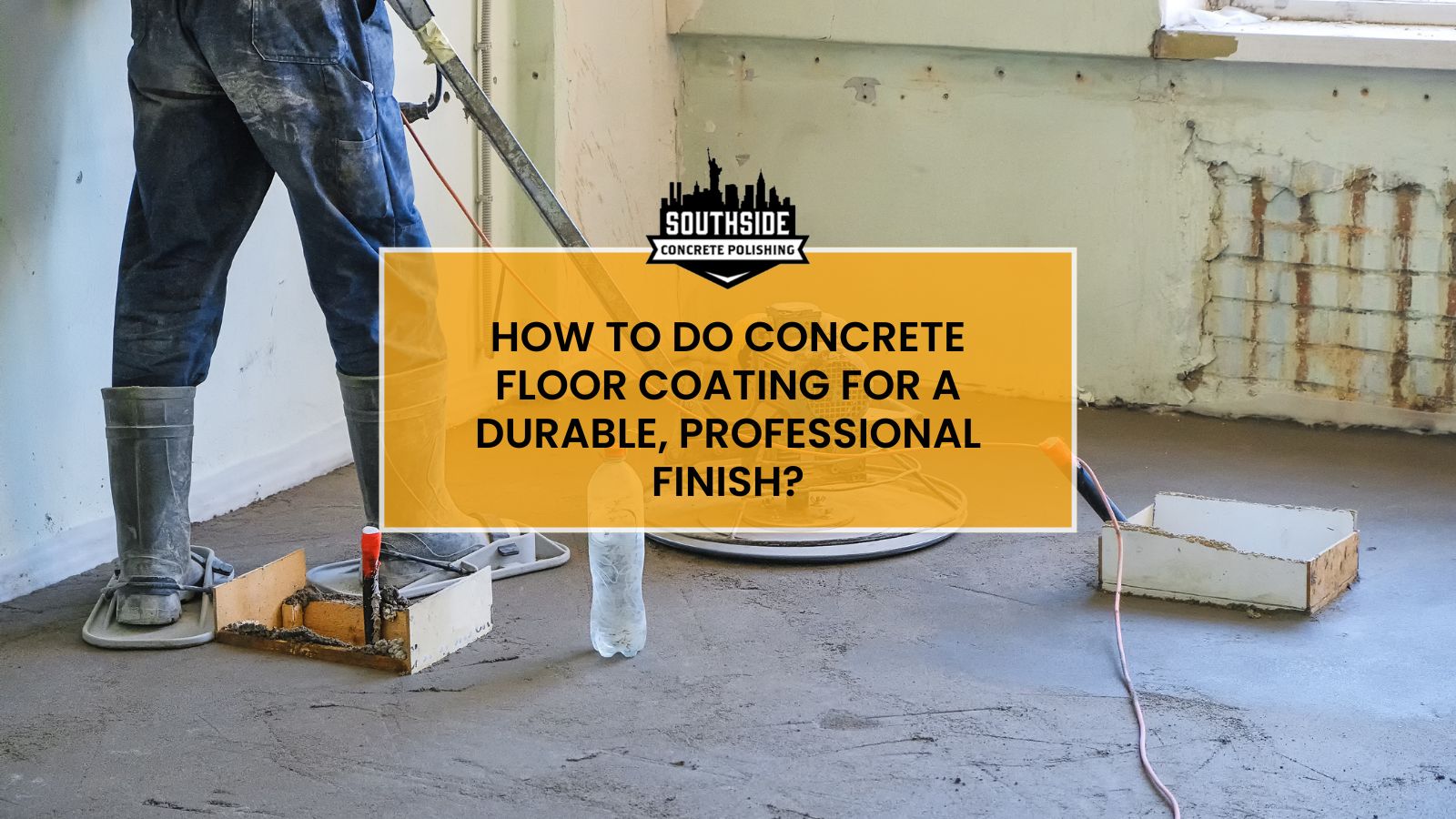
To do concrete floor coating effectively, the process must enhance surface durability, performance, and visual appeal across commercial and industrial environments. It requires meticulous surface preparation, careful selection of the coating system, and precise application under controlled conditions to ensure long-term adhesion, chemical resistance, and a professional-grade finish.
According to the American Coatings Association, more than 65% of U.S. commercial facilities use epoxy or polyurethane coatings to extend flooring lifespan and meet safety standards. Properly installed systems resist abrasion, moisture, and chemical exposure, reducing maintenance costs and ensuring compliance with ASTM and ACI specifications.
The key focus areas of concrete floor coating encompass its functional importance, major coating types used across industrial and commercial settings, substrate preparation methods, and the complete step-by-step application process. They also include durability factors, coating selection criteria based on facility conditions, maintenance strategies for sustained performance, and the prevention of common installation issues through professional standards.
Why Is Concrete Floor Coating Important?
Concrete floor coating is important because it strengthens, protects, and enhances concrete surfaces in demanding environments. In industrial settings, these coatings are critical to compliance with safety, sanitation, and performance standards specified by organizations such as ASTM International (ASTM D4060, D4541) and the American Concrete Institute (ACI 302.1R).
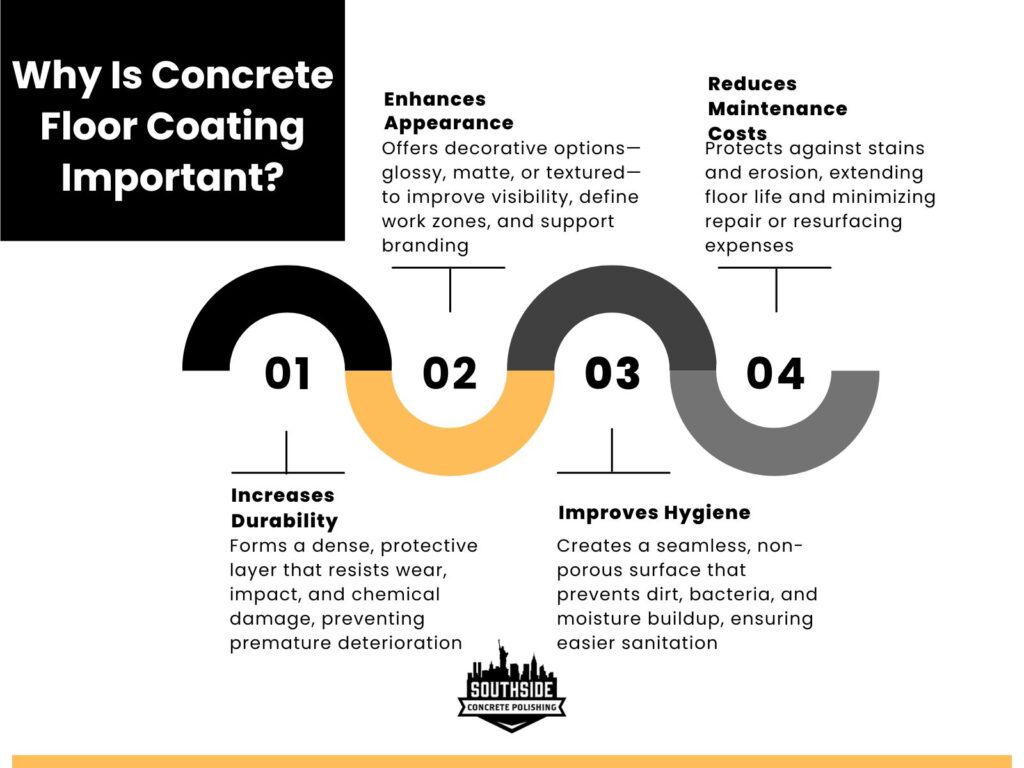
The following are the reasons why concrete floor coating is important:
-
Increase surface durability: Coatings chemically bond with the concrete substrate, forming a dense protective layer that resists abrasion, mechanical impact, and exposure to oils, acids, and solvents. This prevents early degradation in high-traffic or heavy-load areas.
-
Enhance appearance: Coatings allow a range of finishes, glossy, matte, or decorative systems with color flakes or metallic pigments, that improve visibility, define work zones, and reinforce brand identity in commercial spaces.
-
Improve hygiene: Seamless, non-porous coatings eliminate joints and crevices where dust, bacteria, or moisture accumulate, making them suitable for food processing plants, laboratories, and clean manufacturing environments.
-
Reduce maintenance costs: A properly installed coating seals the concrete against stains and surface erosion, extending its service life and reducing downtime or expense associated with frequent resurfacing and repairs.
What Are the Main Types of Concrete Floor Coatings Used in Commercial and Industrial Projects?
The main types of concrete floor coatings used in commercial and industrial settings are epoxy, polyurethane, polyaspartic, and acrylic coatings. Each has distinct mechanical and chemical properties suited for specific operational environments.
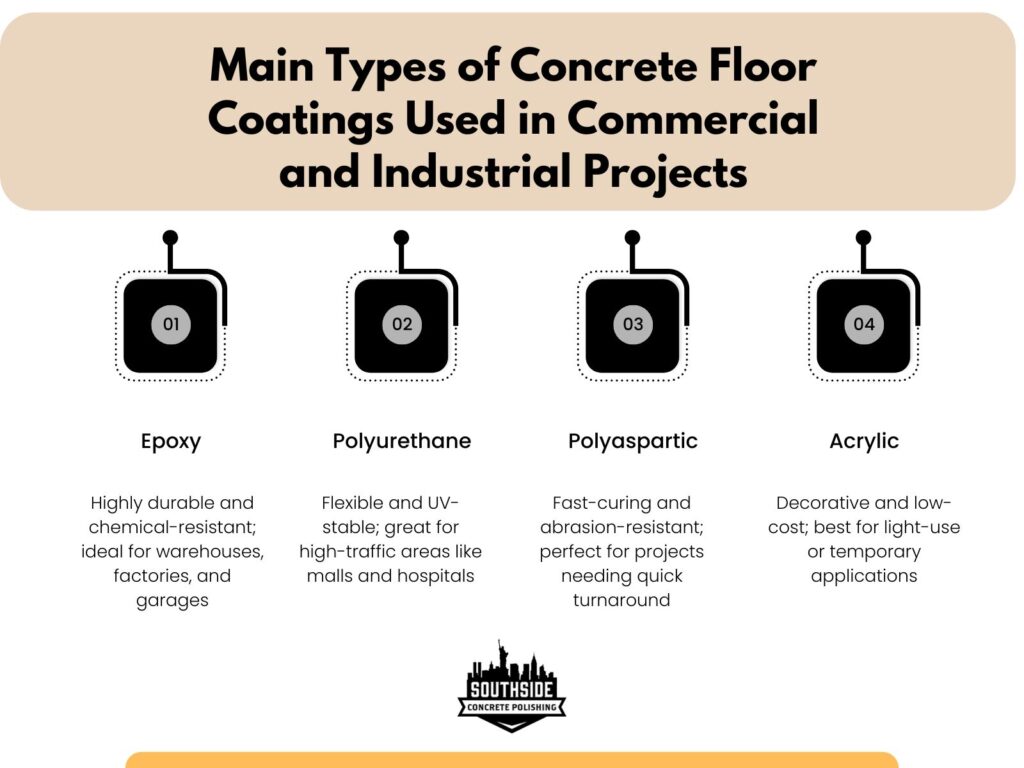
The main types of concrete floor coatings used in commercial and industrial settings are as follows:
Epoxy Coatings
Epoxy coatings are two-component systems made from a resin and a hardener that chemically bond to the concrete substrate, forming a dense, high-strength surface. This composition creates a seamless and durable layer ideal for environments requiring impact and chemical resistance.
Epoxy coatings are best suited for industrial and commercial settings such as warehouses, manufacturing plants, laboratories, and garages. Their strong adhesion makes them highly resistant to oils, solvents, and heavy mechanical stress from forklifts and machinery.
Under controlled environmental conditions, epoxy coated concrete floors last over 20 years, making them one of the most cost-effective long-term coating solutions available for concrete flooring systems.
Polyurethane Coatings
Polyurethane coatings provide greater flexibility and UV resistance compared to epoxy, making them suitable for high-traffic areas where comfort and resilience are essential. These coatings are best for spaces like malls, hospitals, airports, and retail facilities that experience constant pedestrian movement.
The slight elasticity of polyurethane allows it to absorb minor impacts and vibrations, reducing strain on both the surface and the people walking on it. This elasticity also contributes to better ergonomic comfort over prolonged standing periods.
However, polyurethane coatings are not recommended for areas with continuous moisture exposure, as excess humidity causes bubbling and adhesion failure during curing.
Polyaspartic Coatings
Polyaspartic coatings are part of the polyurethane family but stand out due to their rapid curing properties and enhanced chemical resistance. These coatings are best suited for facilities that require minimal downtime during installation, such as car dealerships, logistics centers, or showrooms.
Polyaspartic systems, when not applied in a single coat, significantly reduce labor time while still offering high clarity, gloss, and UV stability. Their fast-setting nature allows operations to resume quickly without compromising durability or appearance.
Polyaspartic coatings maintain excellent resistance to abrasion and chemical damage, ensuring a long-lasting finish even under demanding industrial conditions.
Acrylic Coatings
Acrylic coatings are water-based solutions designed primarily for decorative purposes rather than heavy-duty performance. They are best used in low-traffic commercial areas, exhibition spaces, or temporary installations where visual appeal is prioritized over structural strength.
These coatings are valued for their quick drying time, low cost, and ease of reapplication, allowing for flexible design updates. Despite these benefits, acrylic coatings have lower durability and chemical resistance compared to epoxy or polyurethane systems.
Acrylic coatings wear out faster under mechanical stress or chemical exposure, making them ideal only for environments that require short-term or light-use flooring solutions.
How To Prepare Concrete Floors for Coating?
To prepare concrete floors for coating, start by cleaning, profiling, repairing, and moisture testing the substrate before applying the coating system. Proper preparation determines coating adhesion strength; poor preparation accounts for nearly 70% of premature coating failures, as per World of Concrete technical reports.
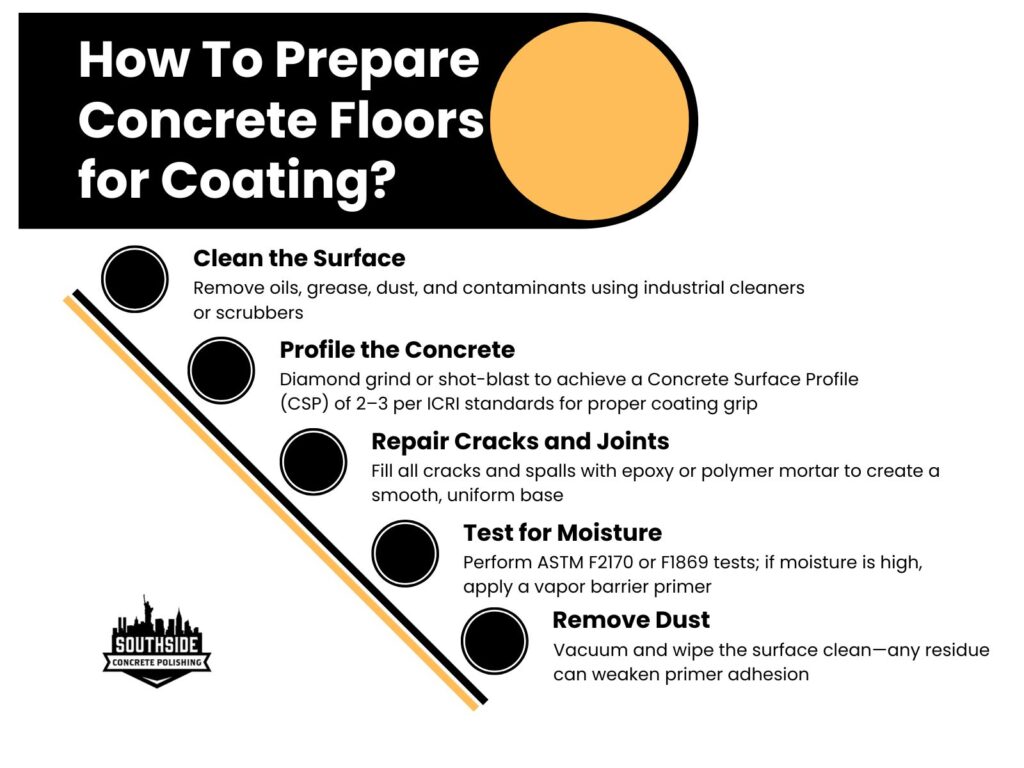
The steps are as follows to prepare concrete floors for coating:
-
Surface Cleaning: Begin by removing all oils, grease, dust, and surface contaminants using industrial degreasers or mechanical scrubbers. A clean substrate ensures that the coating bonds effectively without adhesion failure.
-
Mechanical Profiling: Use diamond grinding or shot-blasting to create a Concrete Surface Profile (CSP) between 2 and 3, following the International Concrete Repair Institute (ICRI) guidelines. Proper surface roughness allows the coating to mechanically anchor to the concrete.
-
Crack and Joint Repair: Fill all visible cracks, spalls, and expansion joints with an epoxy patching compound or polymer-modified mortar. This step levels the surface and prevents coating defects during curing.
-
Moisture Testing: Conduct moisture tests according to ASTM F2170 (in-situ RH test) or ASTM F1869 (calcium chloride test). If readings exceed 75% RH, apply a moisture vapor barrier primer before coating to prevent blistering or delamination.
-
Dust Removal: After surface preparation, vacuum thoroughly using a HEPA-filtered system and wipe down the area with clean, dry cloths. Even minor dust residues interfere with primer adhesion and final finish quality.
What Is the Correct Process for Applying Concrete Floor Coating for a Durable Professional Finish?
The correct process for applying concrete floor coating includes primer application, base coat spreading, and topcoat sealing under controlled temperature and humidity conditions. Each layer serves a distinct function: primer bonds, base coat builds thickness and strength, and topcoat seals and protects.
Follow these steps to apply a concrete floor coating for a durable, professional finish:
-
Apply the primer: Use a low-viscosity epoxy or polyaspartic primer to seal surface pores and improve chemical and mechanical adhesion. Apply evenly with a roller or sprayer and allow the primer to tack time recommended by the manufacturer before proceeding.
-
Mix and apply the base coat: Measure resin and hardener exactly to the manufacturer's ratio and mix mechanically until uniform. Work in manageable batches. Spread the base coat with a notched squeegee or roller to achieve full coverage and the specified film thickness.
-
Broadcast decorative media (optional): While the base coat remains wet, broadcast flakes or colored quartz uniformly until rejection. Keep the broadcast consistent for even appearance. Allow the base to cure to the proper recoat window before removing excess media if required.
-
Apply intermediate coat (if specified): For multilayer systems, apply a second epoxy or polyurethane layer to encapsulate media and increase chemical and abrasion resistance. Maintain wet-on-tack timing per product instructions to ensure intercoat adhesion.
-
Finish with a topcoat: Roll or spray a UV-stable polyurethane or polyaspartic topcoat to protect against abrasion, chemicals, and yellowing. Ensure full, even coverage and the manufacturer's minimum film thickness for service conditions.
-
Cure under controlled conditions: Maintain ambient temperature between 60--85°F and relative humidity below 70% during treatment. Respect the pot life and recoat the windows. Avoid traffic until the coating reaches the recommended cure hardness.
-
Inspect and protect: After curing, inspect for pinholes, delamination, or sheen inconsistency. Touch up as needed and protect the new surface from heavy loads or aggressive cleaning for the first 7--14 days.
What Are the Key Factors That Influence the Durability of Concrete Floor Coatings?
The key factors that influence the durability of concrete floor coatings include substrate condition, coating system selection, and ongoing maintenance practices. The durability of concrete floor coatings depends on how effectively these elements are controlled during and after installation.
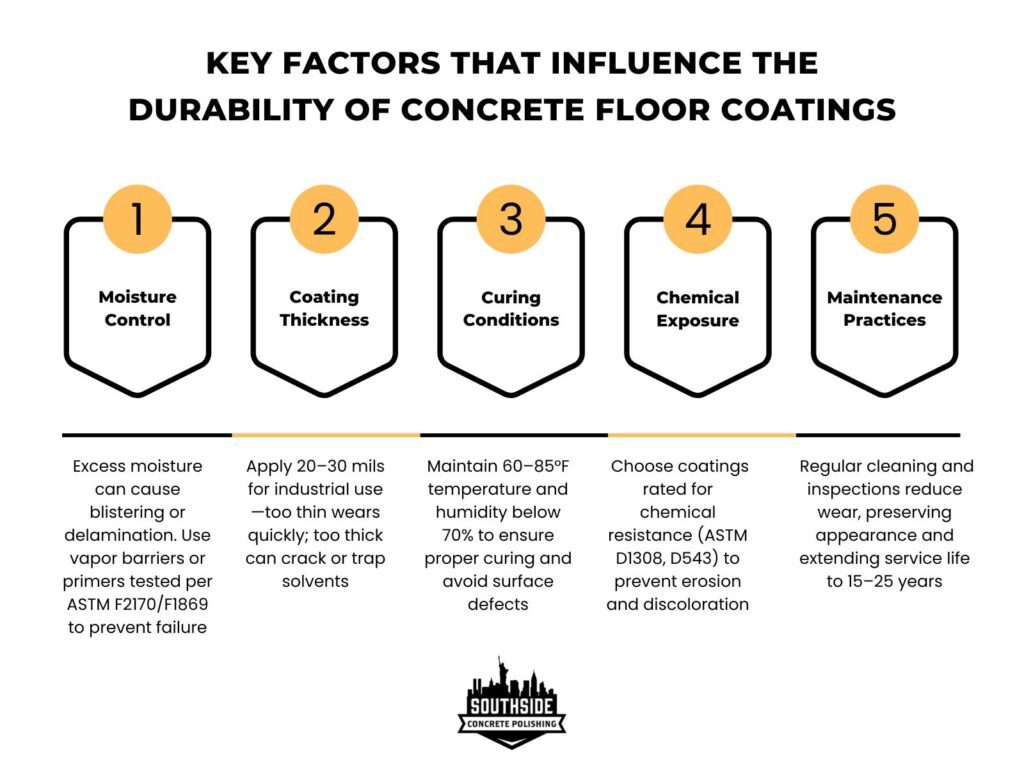
The following are the key factors that influence durability:
-
Substrate moisture control: Excess moisture migrating through the concrete causes blistering or delamination. Proper vapor barrier systems or moisture mitigation primers, tested per ASTM F2170 or F1869 standards, prevent coating failure and extend service life.
-
Correct coating thickness: Industrial and commercial coatings typically require a dry film thickness of 20--30 mils to handle heavy loads and abrasion. Thin coatings wear prematurely, while overly thick films crack or trap solvents during curing.
-
Curing and ambient conditions: Maintaining optimal ambient temperature (60--85°F) and humidity (<70%) ensures full polymerization. Improper conditions lead to issues like amine blush, soft spots, or surface defects that reduce coating lifespan.
-
Chemical exposure level: Facilities handling oils, acids, or solvents should select coatings rated for chemical resistance according to ASTM D1308 and D543 standards. Matching the formulation to exposure type prevents discoloration, swelling, and erosion.
-
Maintenance schedule: Regular sweeping, pH-neutral cleaning, and periodic inspection prevent buildup and mechanical wear. Implementing a documented maintenance plan preserves coating gloss and structural performance, extending its usable life beyond 15--25 years.
How Do You Choose the Right Concrete Floor Coating for Your Facility?
You choose the right concrete floor coating for your facility by aligning the coating's technical properties with its operational environment, load requirements, and design goals. Facilities that operate heavy machinery or forklifts benefit most from rigid, high-compressive-strength epoxy systems that resist abrasion and impact.
Spaces exposed to acids, oils, or solvents, such as manufacturing plants or laboratories, require chemically resistant coatings like polyurethane or novolac epoxy to prevent surface degradation. Areas with constant foot traffic, such as malls or hospitals, perform better with flexible polyurethane or polyaspartic systems that absorb vibration and reduce wear.
Metallic or decorative flake epoxy enhances reflectivity and professional appearance if aesthetics and brand presentation are priorities. For time-sensitive projects, polyaspartic coatings cure rapidly, minimizing downtime.
A professional assessment of the substrate's condition, moisture level, and ambient environment ensures the selected coating system delivers long-term durability and compliance with ASTM and ACI standards.
How to Maintain Concrete Floor Coatings for a Professional Finish?
To maintain concrete floor coatings for a professional finish, implement a routine cleaning and inspection schedule to prevent wear accumulation and surface contamination. Regular maintenance ensures coating integrity, preserves gloss, and upholds hygiene standards in commercial environments.
Recommended maintenance practices for professional finish of concrete floor coatings:
-
Sweep or vacuum daily to remove dust and debris.
-
Use pH-neutral cleaners for mopping; avoid acids or alkaline solutions.
-
Wipe spills immediately to prevent chemical staining.
-
Reapply topcoat every 5--7 years in high-traffic areas for renewed gloss and protection.
-
Conduct annual inspections for wear, cracks, or delamination signs.
What Are Common Problems in Floor Coating Application and How Can You Avoid Them?
Common problems in floor coating application include bubbling, peeling, and discoloration. You can avoid them through moisture testing, correct mixing, and environmental control. Adhering to ASTM D7234 pull-off adhesion standards ensures reliable performance and reduced failure rates.
Why Professional Installation Matters for Concrete Coating Performance?
A professional installation matters for concrete coating performance because it ensures that all environmental, material, and procedural variables are managed according to performance specifications.
Expert installers use industrial grinding equipment, moisture mitigation systems, and metered mixing tools to achieve even curing and adhesion. Poorly executed DIY coatings fail prematurely due to uneven application or lack of vapor testing.
How long does concrete floor coating take to install?
Concrete floor coating takes 3--5 days, depending on floor area, number of coating layers, and curing time. Fast-curing polyaspartic systems are completed in 24 hours.
Can concrete coatings be applied in cold or humid environments?
Yes, concrete floor coatings can be applied in cold and humid environments, but environmental control is essential. Specialized formulations exist for low-temperature curing, and dehumidifiers are used to manage high ambient moisture.
How does concrete coating differ from concrete polishing?
Concrete coating differs from concrete polishing as coating adds a protective resin layer over the surface, while polishing densifies and mechanically refines the concrete itself. Coatings are ideal where chemical or moisture resistance is required, even compared to concrete polishing.