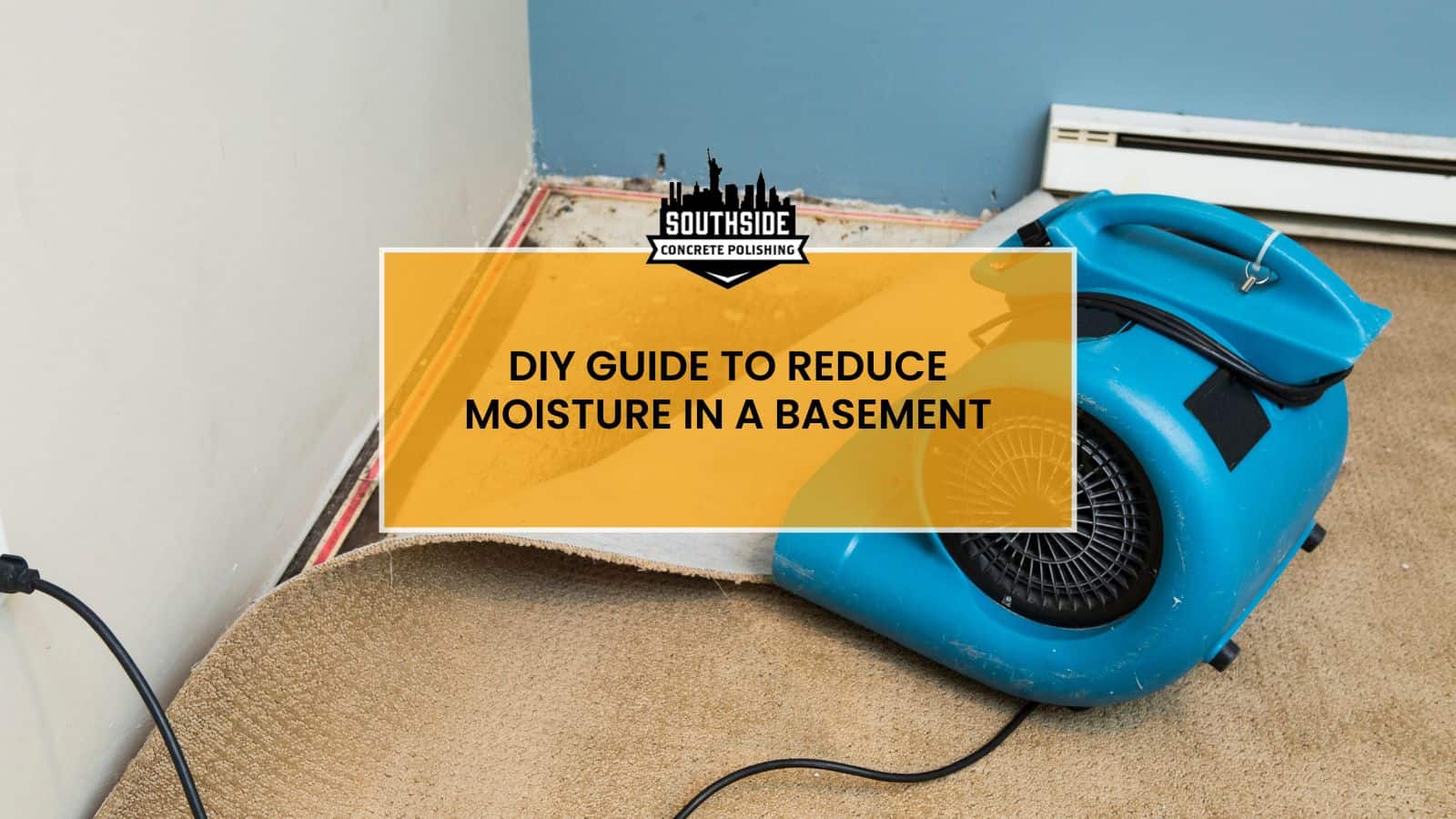
Reducing moisture in a basement begins with identifying the source and implementing corrective steps that balance ventilation, drainage, and insulation. Basement moisture is more than an aesthetic concern; it weakens structural integrity, encourages mold growth, and increases repair costs over time.
Studies by the U.S. Environmental Protection Agency show that maintaining indoor relative humidity below 60% prevents most moisture-related issues. Yet, basements are especially prone to higher levels due to their proximity to soil and limited airflow.
Locating, controlling, and preventing basement moisture with practical, evidence-based methods allows homeowners to manage humidity and dampness effectively without specialized equipment. Each method targets specific environmental, mechanical, or structural factors that contribute to moisture buildup below ground level.
What Causes Basement Moisture and Why Does It Matter?
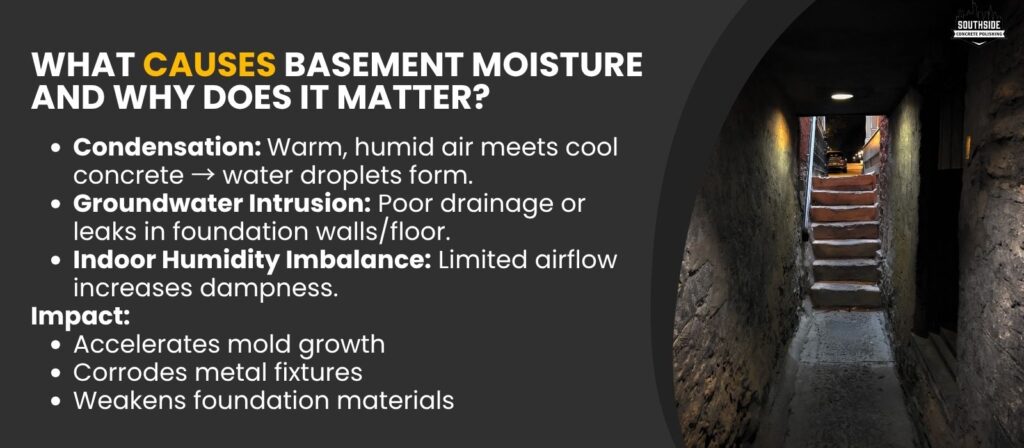
A combination of condensation, groundwater intrusion, and indoor humidity imbalance causes basement moisture. When warm, humid air contacts cooler concrete surfaces, it condenses into water droplets, forming a persistent damp layer. Poor exterior drainage, leaking plumbing lines, or unsealed cracks allow additional moisture to infiltrate the space.
Excess basement humidity matters because it accelerates mold growth, promotes corrosion of metal fixtures, and compromises foundation materials over time. Research from the Building Science Corporation notes that water vapor pressure differentials between soil and air drive up to 10--15 gallons of moisture per day into an average basement if left untreated. Understanding and managing these pathways is the foundation of lasting moisture control.
How Do You Check and Fix Dryer Vent Leaks That Add Moisture to a Basement?
You check and fix dryer vent leaks that add moisture to a basement by ensuring the exhaust duct is properly connected, sealed, and vented outdoors. When dryers operate, they release warm, moisture-rich air that escapes into the room if the vent line is loose or damaged. This raises indoor humidity and encourages condensation on concrete walls.
Inspect behind the dryer to confirm that the metallic exhaust pipe is tightly clamped to both the appliance and the wall vent. Run the dryer while observing for visible air leaks. If moisture or lint escapes, reseal the connection using aluminum foil tape designed for high-heat applications.
Replacing a damaged duct with a rigid metal vent rather than a flexible plastic one improves efficiency and reduces fire risk. Properly vented dryers remove up to 80% of moisture from the air during each cycle, making this one of the simplest yet most effective basement moisture fixes.
How Does a Sump Pump Help Prevent Moisture Accumulation?
A sump pump helps prevent moisture accumulation by collecting and redirecting excess groundwater before it seeps into the basement floor. The sump pit, located below the slab level, serves as a drainage reservoir during periods of heavy rain or rising water tables. Without a sealed lid, water from the pit evaporates, adding humidity to the air.
Install a tight-fitting sump lid with a rubber gasket or screw-on closure to create an airtight seal to reduce this source of basement moisture. Verify that the pump's discharge pipe directs water away from the foundation and that the check valve prevents backflow.
Regular maintenance, including clearing sediment buildup and testing the float switch, ensures consistent performance. A properly functioning sump system lowers relative humidity by 10--20%, keeping the basement environment balanced and dry.
How Can Water Seepage Be Controlled at the Wall and Floor Joints?
You can control water seepage at wall and floor joints by sealing cracks, improving drainage, and managing hydrostatic pressure. Seepage occurs where the foundation wall meets the slab or through fine fissures in the concrete caused by settlement or freeze--thaw cycles.
Repair minor cracks using epoxy or polyurethane injection systems that expand to fill voids and block moisture intrusion. For persistent leaks, install an interior drain channel along the floor perimeter to collect and redirect groundwater into the sump system.
Applying a waterproof membrane or crystalline coating on the wall interior provides a secondary barrier against vapor transmission. Combined, these techniques reduce the risk of mold development and surface staining while improving the long-term durability of the concrete structure.
How Do Plumbing Leaks Contribute to Basement Moisture Problems?
Plumbing leaks contribute to basement moisture problems by releasing hidden water behind walls, under floors, or within utility enclosures. These leaks go unnoticed until they create visible staining or musty odors. Over time, trapped water promotes microbial growth, weakens drywall, and corrodes pipes.
Observe water supply lines and shut-off valves for condensation or corrosion to detect leaks. Test by running nearby fixtures and checking for pressure drops or damp patches. Repair damaged joints using compression fittings or PEX couplers, and replace rusted sections promptly.
Insulating exposed pipes prevents condensation on cold-water lines. Routine inspection every six months helps prevent slow leaks from evolving into structural or air-quality issues.
How Can Crawl Space Moisture Be Managed to Protect the Basement Environment?
Crawl space moisture can be managed to protect the basement environment by isolating ground vapor, enhancing airflow, and preventing water intrusion. Moisture rising from unsealed soil floors migrates into adjacent basement areas, increasing humidity and odor.
Install a 6--10 mil polyethylene vapor barrier across the entire crawl space floor, overlapping seams and securing edges to the wall. For persistently damp conditions, use a sump system or perimeter drain to remove standing water.
Avoid placing dehumidifiers directly on dirt floors, as rapid drying destabilizes the supporting soil beneath the foundation. Instead, maintain controlled ventilation using a low-speed fan or passive venting to equalize air pressure. Proper crawl space encapsulation reduces basement humidity levels by up to 30%, improving air quality and energy efficiency.
What Moisture Absorption Methods Are Most Effective for Basements?
The most effective moisture absorption methods for basements involve a combination of dehumidification, air circulation, and desiccant materials. A standard electric dehumidifier removes 30--70 pints of water daily, maintaining optimal humidity between 40--50%. Place the unit away from walls to ensure unrestricted airflow.
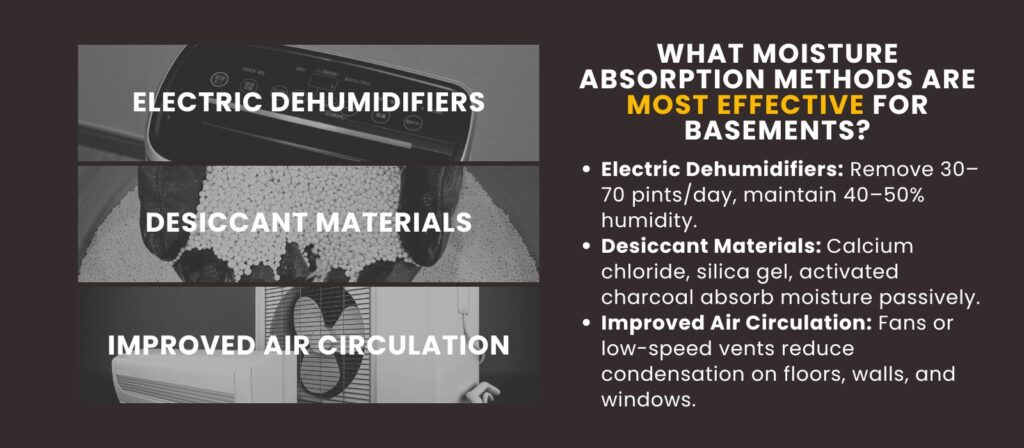
The most effective moisture absorption methods for basements are as follows:
-
Electric Dehumidifiers: These mechanical units extract moisture directly from the air, condensing it into a removable water tank or drainage system. Continuous operation maintains relative humidity below the mold growth threshold and prevents damp odors.
-
Desiccant Materials: Calcium chloride pellets, silica gel packs, and activated charcoal containers absorb ambient moisture passively. They are ideal for enclosed areas such as closets, under-stair storage, or small corners where airflow is limited.
-
Improved Air Circulation: Oscillating fans or low-speed exhaust vents increase air movement, allowing damp surfaces to dry faster. Enhanced circulation supports evaporation, reducing condensation buildup on floors, walls, and windows.
What Preventive Maintenance Practices Reduce Long-Term Basement Moisture Risk?
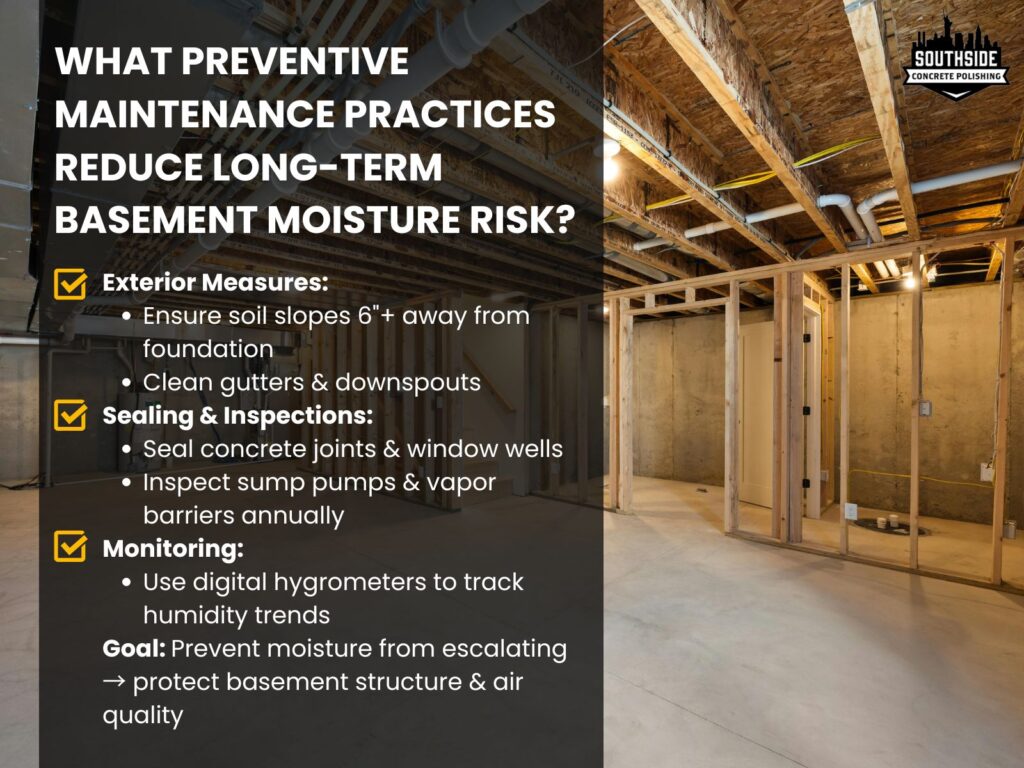
Preventive maintenance practices that reduce long-term basement moisture risk include routine inspection, exterior grading correction, and gutter maintenance. Ensure that soil slopes at least 6 inches downward over the first 10 feet away from the foundation to divert surface runoff. Clean gutters and downspouts regularly, directing water discharge several feet from the base of the structure.
Seal visible concrete joints and window wells with elastomeric caulk or hydraulic cement. Inspect sump pumps and vapor barriers annually to confirm integrity. Installing a digital hygrometer helps monitor humidity trends and detect early spikes that signal developing issues. Consistent upkeep prevents small moisture sources from escalating into structural damage, extending the lifespan of both the basement and the foundation system.
How Can You Ensure Long-Term Basement Dryness Through Integrated Control?
You can ensure long-term basement dryness through integrated control that combines structural sealing, environmental regulation, and mechanical ventilation. Each system component must work cohesively to balance air pressure and vapor diffusion.
Addressing foundation cracks without controlling indoor humidity only yields temporary relief, while excessive dehumidification without drainage management strains the structure. The most effective approach integrates sealed concrete joints, vapor barriers, and climate control technology calibrated to seasonal conditions. Continuous monitoring using smart humidity sensors allows real-time adjustments that sustain optimal conditions year-round.
Maintaining a dry basement is not only a matter of comfort but of structural health. A well-controlled basement reduces energy loss, prevents mold-related health risks, and preserves property value for decades.
When to Consider Concrete Polishing in Moisture-Sensitive Basements?
Concrete polishing is ideal when the basement slab is structurally sound, free of major cracks, and primarily needs improved gloss, hardness, and ease of cleaning. Polishing enhances durability and helps prevent dust and minor moisture absorption on the surface.
For homeowners looking to maintain a sleek, low-maintenance basement floor that resists dampness while enhancing visual appeal, polished concrete provides a reliable and long-lasting option.
Anchor text incorporated: …making it a practical solution for finished basements or areas with light to moderate foot traffic, which is why many property owners prefer polished concrete.
When is Concrete Resurfacing Needed for Damp Basements?
Concrete resurfacing is recommended when the basement floor shows visible cracks, spalling, or surface damage caused by persistent moisture exposure. Resurfacing restores structural integrity, creates a uniform surface, and provides an added layer of protection against damp conditions.
Resurfacing of concrete is particularly useful in basements with heavy water intrusion or uneven slabs, as it reinforces the concrete while improving aesthetics. Homeowners extend floor longevity and safeguard against moisture-related deterioration by applying concrete resurfacing to moisture-prone basements.
Sealing vs. Polishing: Which is Better for Basement Floors?
Sealing is effective for creating a moisture-resistant barrier on concrete surfaces but does not improve surface hardness or gloss. Concrete polishing mechanically densifies the concrete, enhances durability, and provides a low-maintenance, reflective finish that also helps resist minor moisture absorption.
For basements that experience high humidity or occasional dampness, polishing delivers superior long-term performance as compared to concrete sealing while reducing cleaning effort.
Is Epoxy Flooring Ideal For Basements?
Yes, epoxy flooring is ideal for basements because it creates a moisture-resistant, durable, and sealed surface that protects the concrete from dampness, staining, and microbial growth. Its non-porous finish prevents vapor penetration and makes cleaning easier in environments naturally prone to humidity, which is why many homeowners prefer epoxy flooring for basementprotection.