The top 4 concrete waterproofing methods include cementitious coatings, liquid waterproofing membranes, bituminous systems, and polyurethane membranes, each offering distinct levels of protection against moisture intrusion, corrosion, and structural decay. These methods are essential for preserving the lifespan and durability of concrete in both residential and commercial applications.
According to a 2024 construction report by the New York Building Congress, over 68% of concrete structure failures in the Northeast are directly linked to inadequate waterproofing or water-related deterioration, emphasizing the critical role of these protective systems in modern infrastructure.
Each waterproofing method serves a specific purpose: cementitious coatings offer rigid protection for below-grade and water-retaining structures, and liquid membranes provide flexible, seamless coverage for irregular surfaces. Bituminous coatings and membranes deliver heavy-duty resistance in submerged or damp environments, and polyurethane systems ensure advanced elasticity and UV resilience for exposed areas.
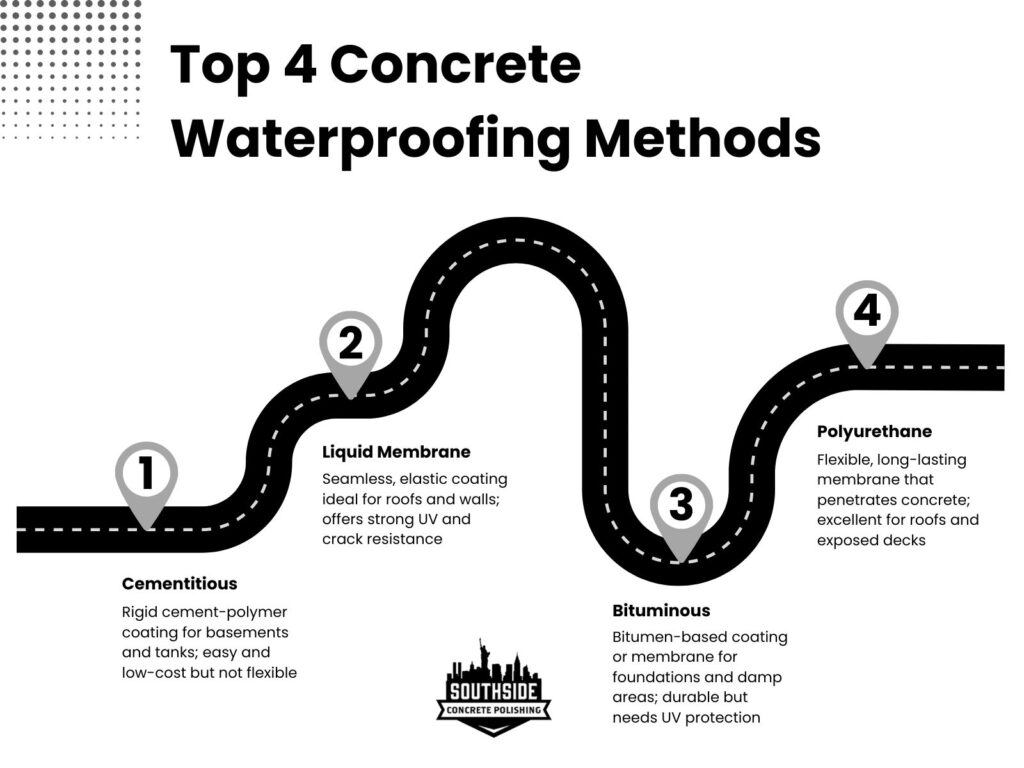
The top 4 concrete waterproofing methods are as follows:
1. Cementitious Waterproofing
Cementitious waterproofing is a widely used and straightforward technique that involves mixing cement with polymer-based bonding agents to form a dense, impermeable slurry. When applied to concrete, this slurry fills pores and microcracks, creating a durable moisture barrier that resists hydrostatic pressure.
This method is particularly well-suited for below-grade or water-retaining structures, including basements, water tanks, tunnels, and foundations. Its main advantages lie in the availability of materials, ease of mixing, and minimal technical requirements during application.
Before applying, the surface must be free from debris, grease, and laitance. All visible cracks are filled with repair mortar, and the surface is dampened to enhance adhesion. Two coats of cementitious mixture are applied using a trowel, brush, or sprayer. Once cured, the coating becomes a part of the structure, providing a rigid, long-term waterproof layer.
While it offers excellent performance for stationary concrete, cementitious waterproofing lacks flexibility and does not suit surfaces subject to movement or vibration. Still, it remains one of the most cost-effective waterproofing systems for permanent, moisture-exposed environments.
2. Liquid Waterproofing Membrane
A liquid waterproofing membrane forms a seamless, elastic film over concrete surfaces once it cures. It is applied as a liquid, using a roller, brush, or sprayer, and hardens into a flexible, joint-free layer that resists cracking under temperature fluctuations or structural shifts.
The primary advantage of liquid membranes is uniform coverage. Because the coating is applied in liquid form, it reaches corners, edges, and irregular surfaces that sheet membranes miss. The membrane's elasticity also allows it to expand and contract with changing weather conditions, preventing delamination or leaks.
Liquid membranes are used on roofs, decks, balconies, and exterior walls, providing durable protection against moisture, UV rays, and chemical exposure. Multiple coats are applied to ensure the desired film thickness and complete surface sealing to achieve optimum results.
This system's eco-friendliness, ease of repair, and long-term resilience make it one of the most versatile waterproofing solutions in both residential and industrial construction.
3. Bituminous Waterproofing
Bituminous waterproofing uses bitumen-based compounds, known for their sticky, viscous, and highly water-resistant properties. Bitumen, derived from asphalt or coal tar, forms a robust, flexible barrier that protects concrete from moisture ingress and corrosion.
There are two main types of bituminous systems:
-
Bituminous Coating: Applied as a liquid that dries into a continuous, protective layer ideal for foundations and retaining walls.
-
Bituminous Membrane: Installed in sheets, heat-applied, providing strong adhesion and superior protection on low-sloped roofs or underground structures.
Bituminous waterproofing excels in damp and submerged environments, such as dams, swimming pools, and basements. However, it degrades under prolonged sunlight exposure, so it is modified with acrylic or polyurethane additives to enhance UV resistance and elasticity.
This method's high tensile strength and water impermeability make it a preferred choice for heavy-duty, long-term applications. Its combination of cost efficiency and reliable performance makes it one of the oldest yet most dependable waterproofing methods still in use.
4. Polyurethane Waterproofing
Polyurethane waterproofing provides one of the most advanced and durable solutions for concrete protection. It consists of two main components, polyol (base) and isocyanate (reactor), that chemically react to form a single-component or dual-component liquid membrane.
When applied, polyurethane penetrates deep into the concrete surface, sealing pores and forming a smooth, elastic, and continuous film. Its high flexibility allows it to withstand structural movement, vibrations, and extreme temperature shifts without cracking or peeling.
This method is especially effective for flat roofs, exposed decks, and post-construction waterproofing projects. Polyurethane membranes are resistant to UV rays, chemicals, and harsh environmental factors, offering exceptional performance even under heavy foot traffic or direct weather exposure.
The substrate's moisture content must be carefully tested before application, as excess humidity causes blistering or delamination. When installed correctly, polyurethane systems provide a sleek, long-lasting, and low-maintenance waterproof finish ideal for both residential and commercial structures.
How to Choose the Right Waterproofing Method for Concrete Structures?
Selecting the correct waterproofing system depends on your structure's location, function, and environmental exposure. Each method has unique properties that cater to specific conditions. Balancing these variables ensures optimal performance and durability. Following a concrete waterproofing guide or consulting with a waterproofing professional helps determine the best match for your project.
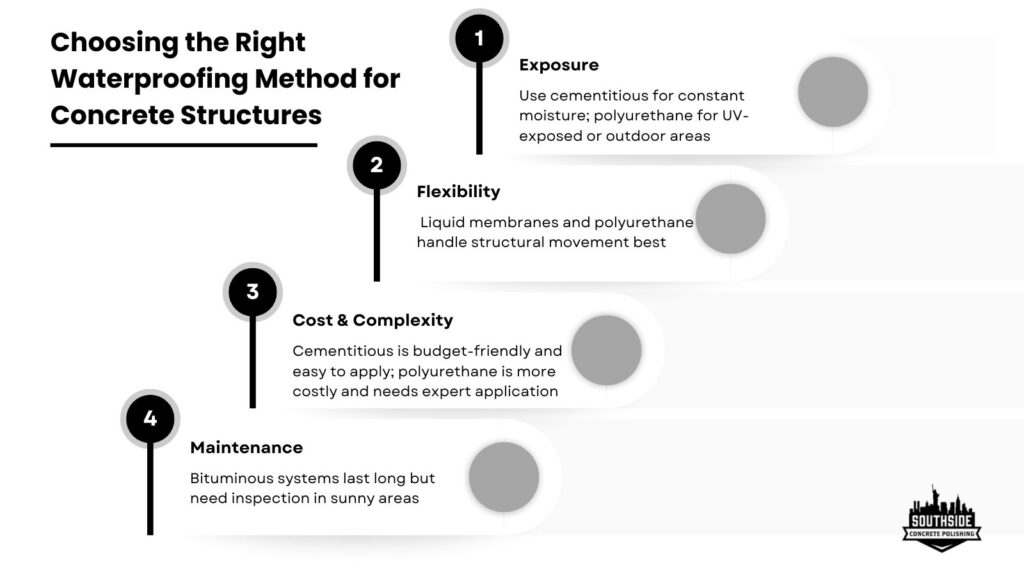
Key selection criteria for concrete waterproofing include:
-
Exposure Conditions: Cementitious coatings are best for constant water exposure, while polyurethane is suitable for outdoor environments with UV exposure.
-
Flexibility Requirements: Liquid membranes and polyurethane systems adapt better to structural movement.
-
Cost and Complexity: Cementitious coatings are affordable and simple to apply, while polyurethane requires higher investment and professional precision.
-
Maintenance Expectations: Bituminous systems offer long service life but require inspection in sun-exposed areas.
Why Is Professional Concrete Waterproofing Application Essential?
A professional waterproofing application is essential because even high-grade waterproofing materials fail without proper surface preparation and skilled application. Professionals ensure accurate substrate cleaning, moisture testing, and primer selection, factors critical for adhesion and performance.
Certified contractors use calibrated equipment and follow curing protocols that align with manufacturer specifications for concrete waterproofing. They also assess environmental factors such as humidity, temperature, and exposure to direct sunlight before application.
Partnering with an experienced provider ensures consistent results and long-term waterproofing performance. The team's expertise spans residential, commercial, and industrial applications, offering precision and reliability in every project.
How to Protect Concrete Structures for Long-Term Use?
To protect concrete structures for long-term use, it's essential to implement a comprehensive waterproofing strategy. The methods include cementitious, liquid membrane, bituminous, or polyurethane systems. Each provides unique protection against moisture infiltration, corrosion, and surface deterioration, depending on the structure's location and environmental conditions.
A properly designed and applied waterproofing system enhances the concrete's durability, prevents costly structural damage, and supports sustainability by minimizing the need for frequent repairs or material replacements. This proactive approach ensures that the structure maintains its integrity, functionality, and visual appeal over decades of use.