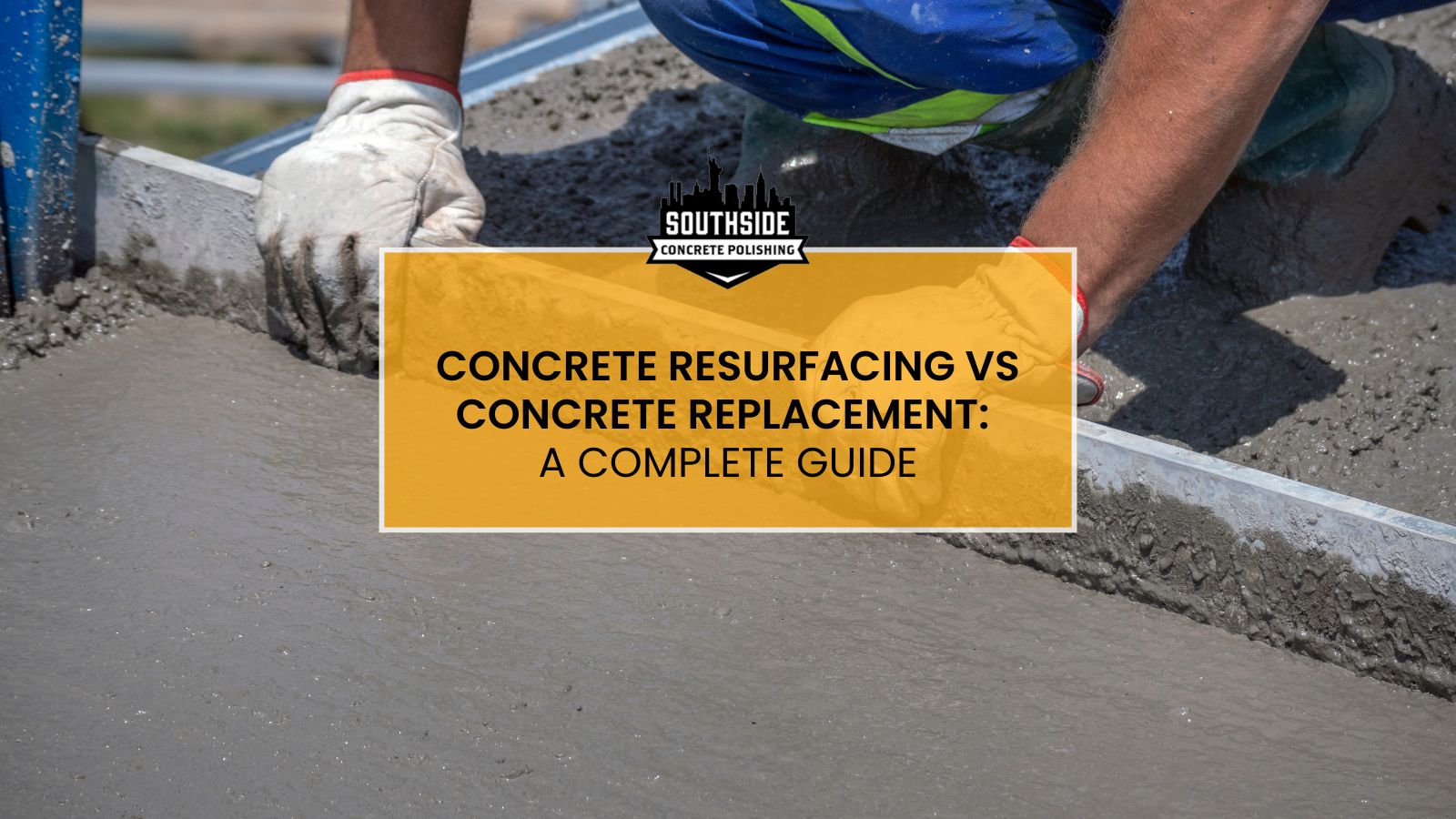
The decision between concrete resurfacing and concrete replacement is one of the most important when your patio, driveway, or floor starts showing its age. Concrete Resurfacing means applying a new top layer over the existing slab, while Concrete Replacement means removing the old concrete entirely and installing a new one. Concrete resurfacing is best when the base is still sound, and damage is mostly cosmetic, while replacement is required when there's structural cracking, settling, or serious underlying issues.
The resurfacing market in North America is growing steadily, with the global market for concrete resurfacers valued at over USD 4.3 billion in 2025 and projected to reach nearly USD 6.9 billion by 2035 (CAGR ~4.7 %). As you weigh your options, using cost, timelines, longevity, and the condition of the slab as your decision drivers saves time and money down the road.
What is Concrete Resurfacing?
Concrete resurfacing is the process of restoring existing concrete surfaces by applying a thin, durable overlay made from polymer-modified cement. This method repairs minor cracks, discoloration, and surface wear without removing the original slab. In commercial environments, it offers a cost-effective way to renew floors, walkways, and parking areas while minimizing downtime. The result is a stronger, smoother, and more visually appealing surface that enhances both durability and aesthetics.
What is Concrete Replacement?
Concrete replacement is the process of completely removing and re-pouring an existing concrete slab that has suffered from severe damage or structural failure. This method is necessary when cracks, settling, or foundation issues make resurfacing impractical. In commercial properties, replacement ensures long-term structural integrity and load-bearing capacity for high-traffic areas such as warehouses, driveways, and industrial floors. It provides a brand-new, durable surface built to meet modern performance and safety standards.
What is the Importance of Maintaining Concrete Surfaces?
The importance of maintaining concrete surfaces lies in preserving both their durability and appearance, particularly in commercial properties with heavy foot or vehicle traffic. Regular maintenance prevents cracks, spalling, and structural damage, extending the lifespan of floors, parking lots, and walkways. It also enhances safety by reducing slip and trip hazards and ensures a professional, polished look that reflects positively on your business or facility.
What is the Difference Between Concrete Resurfacing and Concrete Replacement?
The difference between concrete resurfacing and concrete replacement lies in the extent of repair and intervention required. Resurfacing restores the top layer of existing concrete to improve appearance and minor surface defects, while replacement involves removing the old slab entirely to address deep structural issues. Choosing the right method depends on the condition of the concrete, project budget, and long-term durability needs.
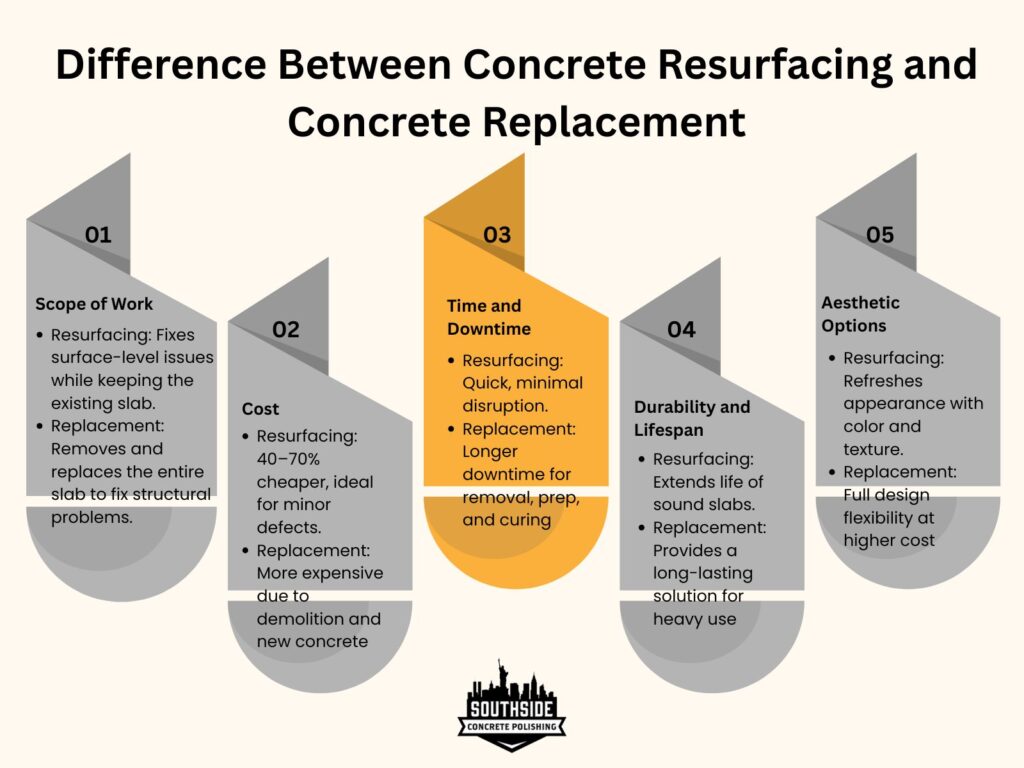
Here are the key differences:
Scope of Work:
-
Resurfacing addresses only surface-level issues such as cracks, stains, or wear, leaving the underlying slab intact.
-
Replacement removes the entire concrete slab, fixing foundational or structural problems.
Cost:
-
Resurfacing is generally more cost-effective, often 40--70% less than full replacement, making it ideal for large commercial floors or parking areas.
-
Replacement is more expensive due to demolition, disposal, and pouring new concrete, but necessary for severe damage.
Time and Downtime:
-
Resurfacing is quicker, with minimal disruption to business operations.
-
Replacement requires longer downtime as the old concrete is removed, the sub-base prepared, and new concrete cured.
Durability and Lifespan:
-
Resurfacing extends the life of a sound slab but is not a solution for structural failures.
-
Replacement provides a brand-new, long-lasting surface capable of supporting heavy commercial traffic.
Aesthetic Options:
-
Resurfacing allows for color, texture, and finish customization to refresh worn commercial spaces.
-
Replacement offers complete design flexibility but comes with a higher cost and effort.
Is Concrete Resurfacing More Cost-Effective Than Replacement?
Yes, concrete resurfacing is more cost-effective than replacement. Resurfacing restores the surface of existing concrete without the need for full demolition, significantly reducing labor, material, and disposal costs. For commercial properties, this makes it an ideal solution for large floors, parking areas, or walkways that need a fresh, durable surface quickly. While it may not address deep structural issues, resurfacing provides a high-quality, long-lasting finish at a fraction of the cost of full replacement.
What are the Factors To Consider When Choosing Between Concrete Resurfacing and Concrete Replacement?
The factors to consider when choosing between concrete resurfacing and concrete replacement include the condition of the existing slab, budget constraints, intended use, and long-term durability requirements. Assessing these elements helps commercial property owners make an informed decision that balances cost, efficiency, and performance.
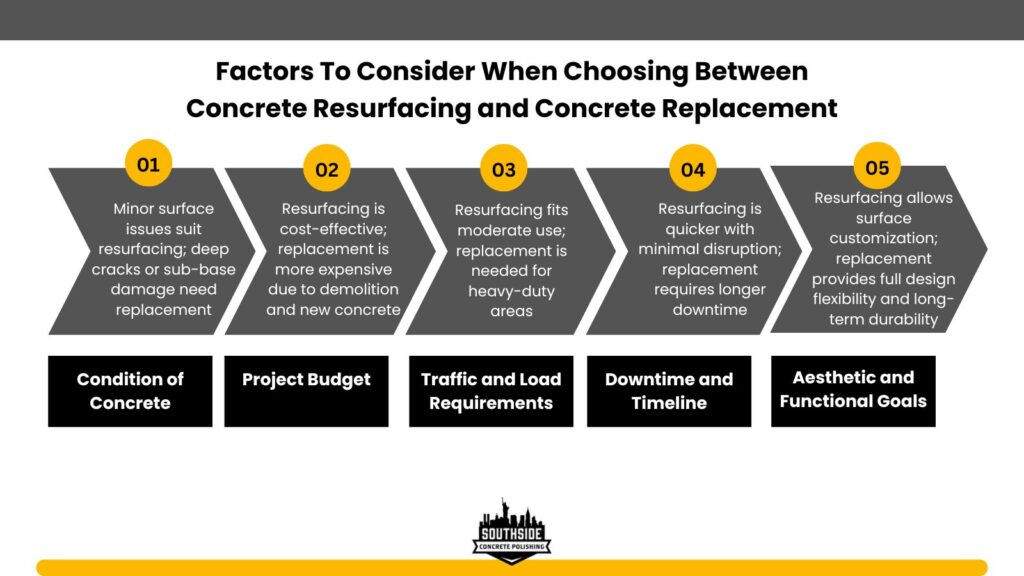
Key Factors to Evaluate:
Condition of the Concrete:
-
Minor surface cracks, discoloration, or wear can be addressed with resurfacing.
-
Deep structural cracks, settling, or damaged sub-base require full replacement.
Project Budget:
-
Resurfacing is more cost-effective and ideal for properties needing a quick aesthetic and functional upgrade.
-
Replacement involves higher costs due to demolition, disposal, and new material installation.
Traffic and Load Requirements:
-
Resurfacing works well for moderate commercial use or light vehicle traffic.
-
Replacement is necessary for high-traffic areas like industrial floors, warehouses, or heavy-duty parking lots.
Downtime and Project Timeline:
-
Resurfacing minimizes operational disruptions with faster completion times.
-
Replacement requires longer downtime for removal, base preparation, and curing.
Aesthetic and Functional Goals:
-
Resurfacing allows for surface customization in color, texture, and finish.
-
Replacement offers full design flexibility and ensures structural reliability for long-term use.
What are the Benefits of Concrete Resurfacing Vs Concrete Replacement?
The benefits of concrete resurfacing and concrete replacement include restoring the functionality, durability, and appearance of commercial concrete surfaces while addressing the specific needs of a property. Both methods offer solutions to extend the lifespan of floors, walkways, and parking areas, depending on the severity of damage and structural requirements.
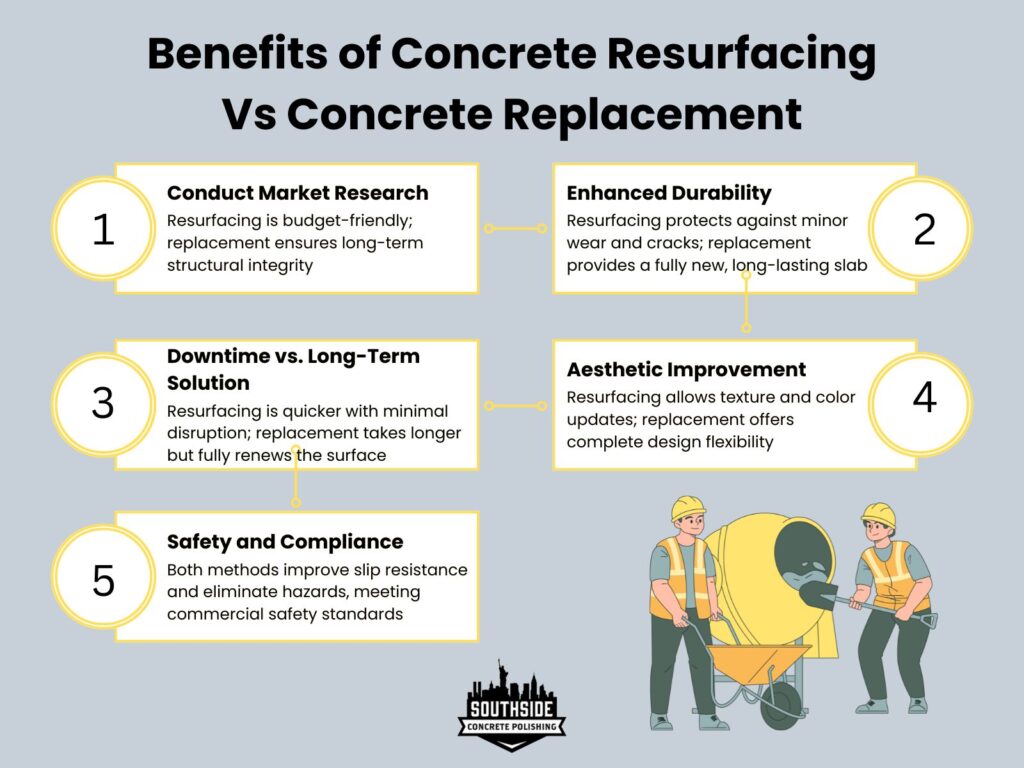
Here are the key benefits:
Cost Efficiency:
-
Resurfacing is a budget-friendly option, improving appearance and durability at a fraction of replacement costs.
-
Replacement ensures long-term structural integrity, reducing future repair expenses.
Enhanced Durability:
-
Resurfacing strengthens the surface layer, protecting against wear, minor cracks, and surface deterioration.
-
Replacement provides a completely new slab capable of handling heavy commercial traffic and long-term use.
Aesthetic Improvement:
-
Resurfacing can be customized with textures, colors, and finishes to revitalize the look of worn concrete.
-
Replacement allows full design flexibility to meet both functional and visual requirements.
Minimal Downtime vs Long-Term Solution:
-
Resurfacing is faster, minimizing disruption to business operations.
-
Replacement requires more time but results in a completely renewed, reliable surface.
Safety and Compliance:
- Both methods can improve slip resistance and eliminate hazards, ensuring compliance with safety standards in commercial spaces.
How to Choose the Right Option Between Concrete Resurfacing and Concrete Replacement For You?
To choose the right option between concrete resurfacing vs concrete replacement for you,** you must assess the condition of your existing concrete, consider budget and timeline, and evaluate the intended use of the space.** Making an informed decision ensures optimal performance, durability, and cost efficiency for your floors, walkways, or parking areas.
Key Considerations When Deciding:
Assess Concrete Condition:
-
Choose resurfacing for minor cracks, surface wear, or aesthetic issues like decorative concrete.
-
Opt for replacement if the slab has structural damage, deep cracks, or settling problems.
Evaluate Budget Constraints:
-
Resurfacing is more cost-effective and suitable for large commercial areas needing a quick upgrade.
-
Replacement involves higher costs but provides a long-term solution for severe damage.
Consider Traffic and Usage:
-
For moderate traffic areas, resurfacing can restore functionality.
-
High-traffic industrial floors, loading docks, or heavy vehicle areas require replacement.
Project Timeline and Downtime:
-
Resurfacing is faster and minimizes disruption to operations.
-
Replacement requires more time for demolition, base preparation, and curing.
Long-Term Goals and Aesthetics:
-
Resurfacing refreshes the surface and allows design customization.
-
Replacement offers complete design flexibility and ensures structural reliability for decades.
Which Option is More Cost-Effective For Commercial Properties?
Resurfacing is more cost-effective for commercial properties. It is 40--70% less expensive than full replacement, making it ideal for large commercial floors, parking areas, and walkways that need a quick and budget-friendly upgrade.
How Long Does Concrete Resurfacing Last Compared to Replacement?
Concrete Resurfacing lasts 10--15 years compared to replacement. It depends on traffic and maintenance, whereas replacement offers 20--30 years of durability for commercial applications.
Is Maintenance Required After Resurfacing or Replacement?
Yes, maintenance is required after resurfacing or replacement. The routine cleaning and preventive maintenance are recommended to maximize lifespan and retain aesthetics for both resurfaced and replaced concrete surfaces.
Can concrete overlays be used instead of full concrete replacement?
Yes, concrete overlays can be applied over existing floors to restore their appearance and durability. Concrete overlays offer a cost-effective alternative to full replacement, providing a smooth, decorative surface that can also incorporate stained concrete finishes for added visual appeal.
Can concrete engraving be applied during resurfacing instead of replacement?
Yes, concrete engraving can be applied during a resurfacing instead of replacement to create custom patterns and textures without the need for full replacement. This technique of concrete engraving enhances the visual appeal of existing concrete, allowing for decorative designs and a refreshed look while saving time and costs compared to pouring new concrete.
Is stained concrete suitable for resurfaced floors instead of full replacement?
Yes, stained concrete is suitable for resurfaced floors instead of full replacement. It works well on resurfaced floors, allowing you to add color, depth, and a polished finish without removing the existing slab. This approach of using stained concrete is cost-effective and can transform worn or dull concrete into an attractive, durable surface that mimics natural stone or other premium materials.